HR process improvement: How to work smarter, not harder


HR’s role goes far beyond admin. For every aspect of the employee experience, there’s an HR process. When this goes smoothly, it leads to a great employee experience. When done badly, it can impact engagement at work.
But despite this central status in people outcomes, recent statistics suggest that many companies could do more to leverage HR’s strategic potential. In one HR.com report, only 44% of HR leaders reported feeling like equal partners when it came to business planning initiatives.* It’s not that HR leaders don’t have the strategic wherewithal to contribute to the conversation; it’s that they’re too bogged down with admin work to do so.
If you want to lift the administrative burden from HR’s shoulders and free up their capacity and headspace, you need a reliable HR process improvement strategy. This guide will explore how to prioritize the right HR improvement ideas so HR leaders have the time to contribute to high-level decision-making.
*HR.com, 2025
What’s HR process improvement, and why does it matter?
As one HR Monitor report puts it: “The gap is widening between what’s needed from an efficient, effective HR function and what most organizations currently offer.” HR process improvement is a structured, targeted effort to close that gap, by optimizing HR workflows across the entire employee lifecycle.
Although this initiative involves streamlining operations, it’s not just about lightening your admin workload. You’ll also aim to strengthen the strategic value of your HR department in ways that positively impact the employee experience.
Other benefits include:
- Aligning HR initiatives with business goals: Improving data flow and communication keeps HR activities connected to measurable objectives, and it builds a more resilient link between talent strategy and long-term success.
- Supporting scalable growth: Organizations that are just getting by with fractured and inefficient HR systems aren’t in a position to expand. When you optimize these processes, you support teams as they handle growing demand.
- Improving manager performance: Research from Gartner shows that less than half of employees feel their managers help them prioritize work effectively. Improved HR processes make a difference by standardizing workflows and connecting managers with support systems or coaching.
Signs your organization needs HR process improvement (yesterday)
Companies don’t always recognize the significance of HR process improvement soon enough. By the time bottlenecks arise, problems have often been brewing for far too long.
Keeping an eye out for common warning signs lets you reassess core processes before small issues escalate into company-wide chaos. Look for problems like these:
- Employees experience inconsistent support: Uneven access to HR resources and support is a recipe for frustration, and it can lead employees to stop asking for help altogether.
- HR leaders lack visibility into performance: Without accurate data from a centralized source, it’s surprisingly easy to make ill-informed and reactive decisions. Limited visibility makes it hard to transition from short-term problem-solving to strategic long-term planning. You end up too busy stamping out fires to put real solutions in place.
- Managers struggle to provide actionable feedback: If performance management processes aren’t clear, reviews become overly subjective and misaligned with business objectives. A recent McKinsey report shows that this area often needs HR process improvement: 26% of surveyed employees reported not receiving any feedback in the past year.
Barriers standing in the way of improvement
But even when companies recognize the need for change, challenges like these can either delay improvement efforts or lead to weak results:
- Resistance to change: Without clear communication and support, breaking established HR patterns can trigger pushback from managers, employees, or both.
- Difficulty prioritizing: HR processes are often so interconnected that it’s hard to figure out where to focus attention for the biggest impact.
- Limited capacity: Many HR departments already have lean teams that face competing demands. Although strong improvement plans lead to long-term structural benefits, they also put immediate strain on attention and time.
The 80/20 HR framework: Targeting the right processes
It’s impractical (but tempting) to try and improve everything at once. Rather than spreading yourself too thin for marginal impact, you’ll need to strategically target processes that have strong potential to enhance ROI and people outcomes.
When deciding how to improve HR, some leaders rely on the 80/20 principle. This model assumes that 80% of outcomes come from 20% of causes. In other words, a relatively small number of processes drive the majority of employee experience and organizational performance.
High-impact HR process improvement examples
Concentrating efforts on high-impact HR project ideas gives you the best odds to generate positive results early, and create a foundation for ongoing improvement.
So, where to begin? You know your organization best, but these are some effective starting points:
- Performance management: Setting up systems for structured feedback boosts accountability and individual growth. When employees understand performance expectations and know how to improve, you transform check-ins into opportunities and support employee engagement.
- Employee development: According to Deloitte’s 2025 survey, a whopping 72% of workers say their companies don’t do enough to connect them with experience-building opportunities. Learning pathways and leadership courses are powerful ways to give high-performing employees clear reasons to stay.
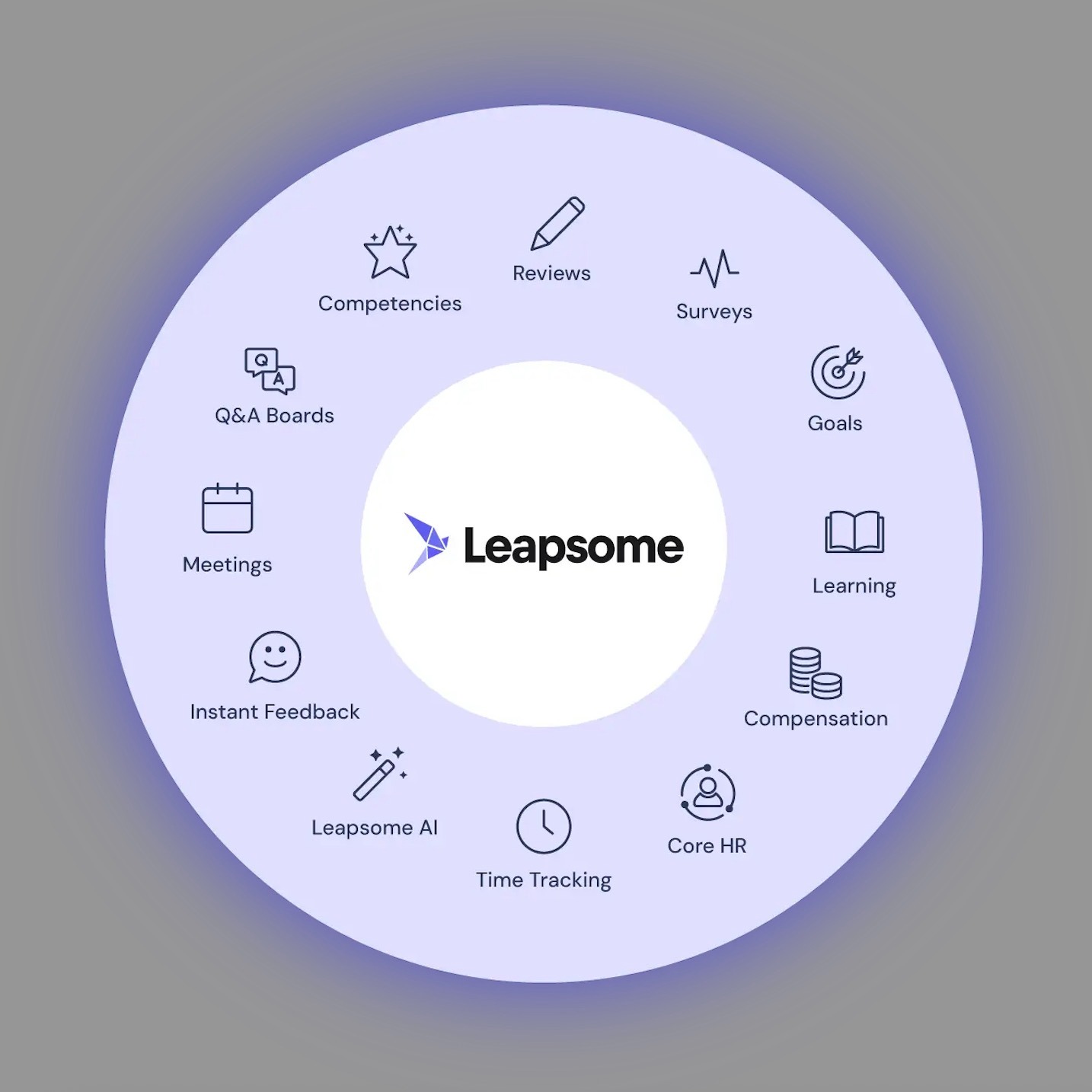
- Data centralization: One powerful way to boost team visibility is to keep all your metrics and records in a single, convenient database. Adopting an HRIS like Leapsome gives you convenient access to real-time data, helping your team make faster, better-informed decisions.
“Look for one platform that covers your key needs and integrates with your stack. Don’t scatter data across 10 or 20 disconnected tools.”
— Katerina Arsova, Head of People and Talent Operations and Partnerships at Leapsome
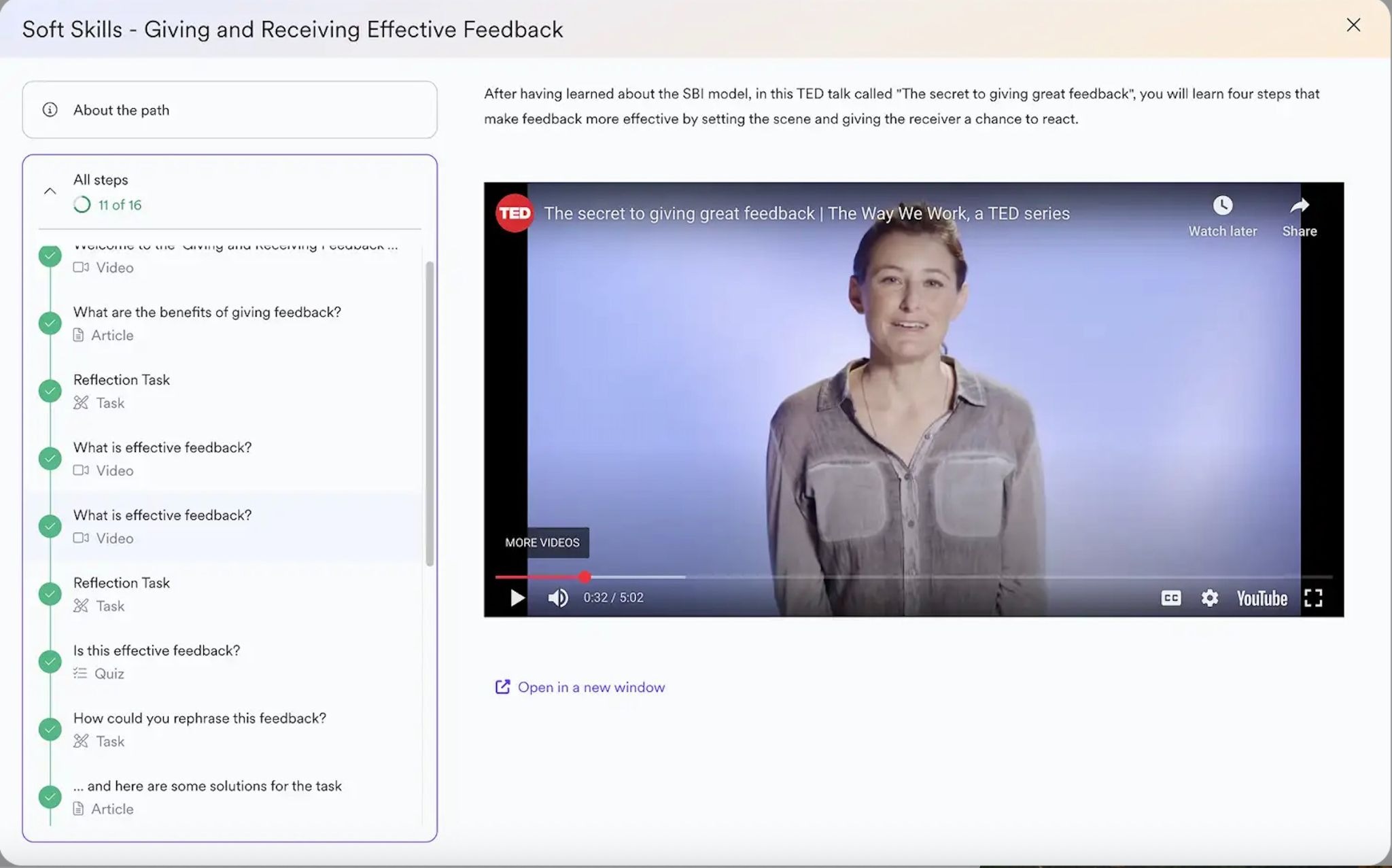
- Onboarding and reporting: First impressions shape how well employees integrate with the team, impacting everything from their sense of readiness to their long-term satisfaction. Standardizing those impressions with Leapsome’s onboarding tools makes this crucial stage smoother, and gives each new team member easy access to key resources.
🤝Create a smoother start for every new hire
Give employees the resources they need to feel supported and empowered from day one, with Leapsome’s suite of Pre-Boarding and Onboarding solutions.
👉Build a better onboarding process
Low-impact HR processes
We’re not suggesting that low-impact processes don’t matter. But they usually just need better standardization or streamlined automation, not complete overhauls.
Here’s where simpler solutions might do the trick:
- Approval chains: Approvals are straightforward but necessary for governance, so HR teams often simplify this task with automation.
- Document management: Maintaining key docs, such as contracts and employee records, is primarily about risk reduction and regulatory compliance — not broader operational efficiency.
- HR ticketing: Handling employee inquiries and service requests is an operational task rather than a strategic initiative, and is best managed via self-service tools or automation.
Three steps to improve your HR processes
You’ll incorporate your own favorite techniques and tools, but here’s a broad framework for HR optimization to get you off the ground.
1. Audit your existing systems for problem areas
Before you can improve anything, you need to understand where workflows falter, and why.
During your internal audit, review the entire employee lifecycle to catch bottlenecks or redundancies. It’s also helpful to collect feedback from managers and employees, as their experiences often reveal issues that aren’t easy to spot on process maps.
2. Define clear improvement goals and KPIs to track
Once you’ve identified an area for improvement, such as building a more consistent and reliable onboarding process, get specific about what success looks like. You might focus on the big picture and track onboarding completion rates, or measure productivity at the three-month mark to see whether new employee training produces results.
“The metrics leadership tracks should match what HR brings — data and sentiment must work together to show the full impact.”
– Luck Dookchitra, former VP of People and Culture at Leapsome
Whatever your objectives, aim for relevant, measurable KPIs while keeping your efforts aligned with business priorities. Setting clear markers instead of relying on intuition leads to stronger decisions, according to The Journal of Total Rewards. Plus, you’ll have a data-driven baseline for evaluating performance.
3. Redesign workflows and introduce automation
Now’s the time to analyze specific workflows for any unnecessary steps or inconsistencies. Also, keep an eye out for areas where technology could reduce repetitive tasks and encourage standardization.
Sometimes that means bringing in new, purpose-built tools, rather than struggling to make a ‘good enough’ tech stack do what you need. For example, fitness company BEAT81 used Leapsome to streamline its onboarding process, saving hours each month and improving the overall employee experience.
“Look for one platform that covers your key needs and integrates with your stack. Don’t scatter data across 10 or 20 disconnected tools.”
– Katerina Arsova, Head of People, Talent Operations, and Partnerships at Leapsome
With Leapsome, you can harness the power of automation to reduce manual work, while keeping processes consistent and efficient.
🚀Reduce busywork and focus on your people
Automate routine HR operations with Leapsome’s Workflows, so you can focus on strategies that engage employees and boost productivity.
👉 Learn more
Optimize HR processes with Leapsome’s HRIS
What starts as a workable HR model can quickly turn chaotic as your company scales. To keep pace with growth initiatives, you need a scalable and centralized HR system, one designed to keep your team on track with robust employee data and standardized workflows.
“If I had to estimate how much time we save through the new onboarding with Leapsome, I would say it's probably a minimum of 10 hours per month.” – Sonja Grabner, People and Culture Lead at BEAT81
Leapsome’s HRIS helps your team scale without breaking a sweat. Along with automating tedious HR workflows, our all-in-one platform includes built-in people analytics with actionable insights. In other words, it’s the perfect partner as you continually refine your HR processes.
🔗Connect HR workflows in a single source of truth
By centralizing employee data and linking your core processes, Leapsome’s HRIS creates a unified ecosystem that ignites improvement initiatives.
👉 Request a demo