How to set workplace goals that support career advancement: tips + examples

%20(2).jpg)
Most organizations require employees to set work objectives and goals in some form or another. Have you ever stopped to consider why that may be? Why is the link between goal-setting and workplaces so widely known?
The purpose of a goal is to establish a desired result. Basically, goals make the things a person wants to achieve explicit. So, it only makes sense that goal-setting plays a significant role in most workplaces. Both employers and employees have specific professional objectives they want to achieve themselves or see other people accomplish for their own benefit or that of the greater organization.
This article discusses how goals fit into modern workplaces from a broad perspective, whether you’re interested in individual, department, or company-wide objectives. We’ll cover why setting office goals is so beneficial and outline nine varied goal-setting examples for work you can tweak and use for your own purposes — so let’s begin.
🚀 Objectives build high-performing teams
Leapsome empowers employees to be transparent about their aspirations and take a holistic approach to goal-setting.
👉 Take a 5-minute tour
What are professional goals?
Professional development goals are the commitments you make to hit specific targets at work. They take vague to-do list items and turn them into a roadmap for improvement.
According to a 2024 Gallup survey, this type of goal-setting can lead to clearer expectations and a better understanding between you and your manager. In turn, that makes performance reviews more fair and productive.
Most goals work at one of two speeds:
- Short-term goals focus on immediate needs, like learning new software or hitting a monthly sales quota.
- Long-term goals aim further ahead, and often involve preparing for a leadership role or shoring up a weak performance area.
Why is it important to set goals for the workplace?
Whether we’re talking about sweeping organizational aspirations or short-term employee goals, it’s essential to set good work objectives. That’s because work goals and objectives help focus people’s energy and attention. They force individuals to reflect on what working goals and objectives they want to accomplish, map out a series of actions that’ll help them get there, and monitor their progress along the way. It’s also been demonstrated that when someone writes down a goal, they become significantly more likely to achieve it.
Objective-setting at work also helps ensure that all team members are on the same page, understand each other’s priorities, and can collaborate and learn from each other where possible. For example, when an organization establishes annual goals for work that follow the objective and key results (OKRs) framework, it enables team members to set cascading goals that align with the same aspirations. Or, if a team member makes improving their negotiation skills a personal development goal for the next quarter and shares that objective with their team, their manager will know what learning materials to send their way and what questions to ask in their check-ins.
How to define work goals that are both realistic and motivating
Simply setting a goal isn’t enough; you need to focus on objectives that will make a tangible difference and that you can reasonably achieve. Here’s how to turn vague ideas for improvement into a clear plan of action.
Get clarity on what matters most
Your Google Calendar is probably overflowing with tasks that look equally urgent, but they won’t all have the same impact. Take the time to lay out your responsibilities, and look for the ones where you:
- Aren’t satisfied with your current performance (or have received feedback to that effect)
- Feel confident you could perform at a higher level
- Can identify at least one blocker standing in the way of improvement
Perhaps a specific daily task takes too long, and you know that manual recordkeeping is slowing you down. Or maybe you’re not satisfied with your decision-making, and feel that the issue is a lack of understanding about key performance metrics.
It’s also a good idea to schedule a one-on-one with your manager and ask for suggestions. When your goal helps solve a problem the company already cares about, it’s easier to get the time or budget you need to reach it.
Envision the type of role you want to have
If you’re looking to advance, your goals should drive you toward the position you’re aiming for. So find out what that role’s core responsibilities look like, and identify the skills or knowledge you need to perform them effectively.
Then, consider what might help you build those skills or gain that knowledge, without sacrificing current performance. If you want to move into a leadership role, for instance, you might ask to take on a cross-functional project or volunteer to mentor more junior team members.
Use the SMART method to set clear objectives
Generic goals like “improve my communication” won’t take you very far; it’s hard to know how to reach that objective and when you’ve succeeded. Useful goals are clearly defined and easily trackable.
Consider using the SMART method for goal-setting, where each goal is:
- Specific: Keep it simple, opting for “increase my weekly quota by 10%” over “improve my productivity.”
- Measurable: Make sure you know exactly when you’ve reached the goal.
- Achievable: Don’t be too ambitious; choose something that’s a little challenging but within reach.
- Relevant: Each goal should move you toward one of your (or the company’s) broader objectives.
- Time-bound: Decide how long you have to achieve the goal.
Research shows that this framework leads to higher goal attainment and need satisfaction.
Put your goals in writing
Writing your goal down gives it more weight, and helps you keep it in mind during busy workdays. Put the objective somewhere highly visible and easy to reference, then share it with your manager or an accountability partner.
If your goal will require multiple steps, now’s the time to break it down into a clear plan of action made up of manageable steps. You can mark off these smaller tasks as you go, tracking how far you’ve come (which should boost your motivation). Plus, documenting your progress is a great way to create a reference for your manager during the next check-in or performance review.
Nine goal-setting examples for work
Setting goals can be intimidating, but you can make the process easier by seeking advice and inspiration. These professional goals examples serve as a starting point — just adjust them to fit your role and the challenges your team faces.
Personal development goals
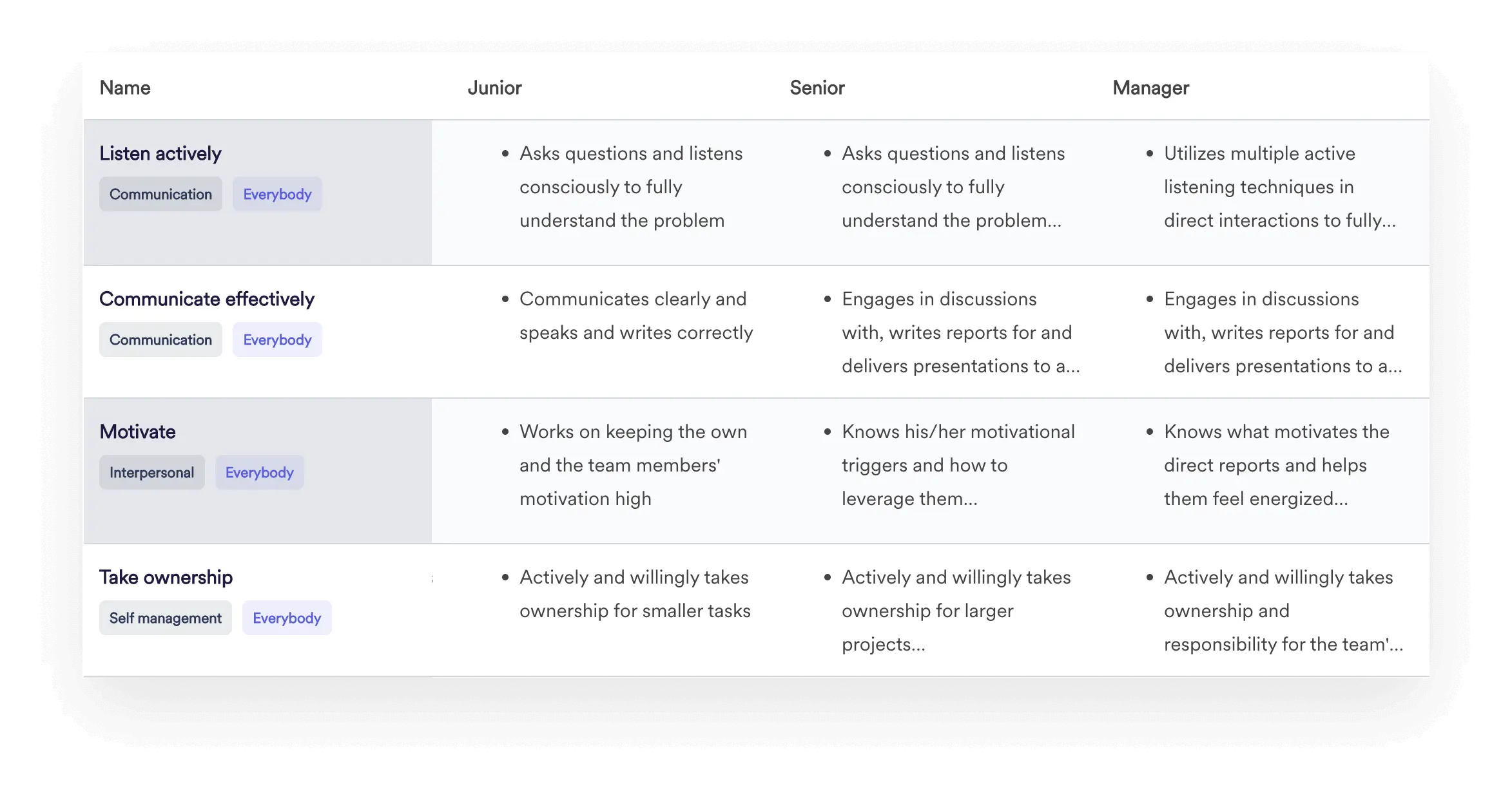
Personal development goals focus on gaining or sharpening the skills and knowledge you need to move forward in your career. While these objectives are often linked to junior roles, upskilling is equally important for leaders who want to keep growing.
Here’s what strong personal development goals look like:
- Gain more experience managing client relationships in Q3 by becoming the main point of contact for a new client on Slack, taking a communications workshop, and shadowing a more senior project manager in meetings.
- Become an expert on the new project management system we’re adopting in Q4 by setting up an interactive demo with the onboarding team, learning how to use it for company-specific use cases, and creating internal standard operation procedure (SOP) documents the whole team will be able to use.
- Improve my understanding of analytics to generate better internal reports by the end of Q4 by enrolling in a month-long analytics course, setting up bi-weekly 1:1 coaching sessions with an operations team member, and consulting industry peers to understand how their organizations approach internal reporting.
🛠️ Give employees the tools they need to develop
Leapsome Goals makes it simple for team members to establish professional objectives and stay accountable to them over time.
👉 Explore Leapsome Goals
Performance-based goals
Performance-based goals turn your daily responsibilities into measurable targets, helping you excel in your current role. While these goals are often prompted by feedback from a performance review, they’re equally effective for high performers looking to reach the next level.
Let’s look at some strong performance-focused objectives:
- Deepen product knowledge over this quarter to better serve clients by signing up for an additional product training course, participating in collaborative product workshops, and organizing informal chats with the product team.
- Improve client relationship management skills and increase customer satisfaction survey scores by revising challenging tickets in coaching sessions with my mentor and brainstorming how I could have better handled the situation.
- Increase sales deals closed by 10% this quarter by practicing different sales pitches with colleagues, researching new sales strategies, and using CRM analytics to identify opportunities for upsells and cross-sells.
Career advancement goals
Career advancement goals focus on milestones you want to reach to increase the odds of a promotion or salary increase. Some organizations use competency frameworks to show employees what’s required at each level, and help them understand what they need to work on.
If you’re not sure what to prioritize, check out these career goal examples for inspiration:
- Take an active role in making the company an incredible place to work and become a champion of our organizational culture over the next two quarters.
- Take ownership of revamping our onboarding process this quarter to improve the employee experience, make new team members more effective in their first 90 days, and boost team productivity.
- Learn more about our organization’s hiring process and better understand our approach to recruitment, interviewing, and hiring decisions.
Alternative goal-setting methods
While SMART goals are usually the best place to start, there are many other approaches you can try. Here are a few frameworks you might use to align your professional goals:
- Stretch goals: These are more ambitious targets designed to push you beyond your comfort zone. Often, these goals aren’t about hitting the target precisely, but motivating the innovation and growth required to get close. Just make sure your objectives are still achievable and trackable, and break them down into smaller steps so you know what to tackle first.
- Feedback-driven goals: Rather than setting goals in a vacuum, you can base your plans on 360° feedback from your manager and peers. This framework involves working closely with a supervisor to track progress and adjust targets, and it’s a great way to make sure your goals stay relevant as the business grows.
- SWOT-based goals: This method uses one of the most holistic strategic planning models, SWOT analysis, to ground your objectives in reality. Digging deep to identify your Strengths, Weaknesses, Opportunities, and Threats helps you set goals that both play to your current skillset and shore up areas where you’re behind.
Set effective workplace goals with Leaspome

All in all, the term workplace goals means different things to different people. The founder of a large organization might see office goals as big-picture annual goals for work that they establish and want to see trickle down through the rest of the company. However, an individual contributor may think of professional goals they’d like to set for themselves so they can develop and move forward in their career.
No matter the kind of workplace goals you’d like to establish within your company, a dedicated goal-setting software solution can make the process much easier and more efficient. Leapsome Goals empowers individual contributors, departments, and entire organizations to set effective goals no matter the process or framework they prefer. It also empowers users to come up with objectives faster with the power of AI and reduce quarterly admin by automating goal cycles.
Regardless of your organization’s approach to goal-setting, Leapsome wants to help you simplify the process and use it to your advantage.
🚀 Great achievements start with goals
Leapome Goals makes it simple for employees to establish objectives and set up a plan that’ll propel them toward success.
👉 Book a demo
FAQ
How do I set effective goals for professional growth and development?
Effective goals make you more valuable in your current role, while preparing you for the next step in your career. Focus on the intersection between your personal interests or strengths and the challenges your workplace faces. Then, find ways to build specialized expertise, like data analysis or leadership skills, that will get you noticed during the next round of promotions.
What are some examples of short-term career goals?
Short-term career goals help you solve immediate problems, and they build your confidence so you can tackle bigger challenges later. You might:
- Master a tool: Use your organization’s tech stack more effectively by learning advanced features or getting comfortable with software shortcuts.
- Improve a process: Clean up a messy workflow or create a structured spreadsheet to save yourself (and others) time.
- Learn a skill: Volunteer to lead a project sync to sharpen your public speaking abilities.
- Increase your productivity: Hit a modest output target, like a 5% increase in productivity, by the end of the month.



.jpg)