New employee orientation guide: Set the right tone for all your hires


Onboarding is a make-or-break moment.
On the positive side, research from Deloitte shows that a strong onboarding process leads new hires to feel 18 times more committed to your organization.* But that also means mishandling this early experience can have a lasting negative impact. Without a solid start, new hires aren’t as likely to become the long-term partners you envisioned.
Since new employee orientations set the tone for onboarding, they’re the ultimate “first impression” your company needs to get right. Ideally, new hires will walk away from their job orientations understanding the organization’s culture and feeling confident about their roles.
In this guide, we’ll explore the strategies that make new hire orientations work, and talk about how to build a consistently great first-day experience.
* Deloitte, 2023
What does new employee orientation for a job look like?
A new employee orientation is the first stage in a team member’s journey, giving them the introduction they need to settle into your organization. During this session (or series of sessions), employees learn the essential details about their roles and your company’s culture. The goal is to give new hires a mental framework that makes general expectations and everyday duties clear.
Although orientation and onboarding overlap, the former is a shorter process that lasts anywhere from a few hours to a few days. The onboarding process includes orientation, but continues afterward as employees gradually develop skills and become contributing members of their teams.
How does orientation impact long-term retention and engagement?
It’s a cliché to say “first impressions matter,” but the data shows this is as true for orientations as for anything else. Research from Gallup found that new hires are 2.6 times more likely to be “extremely satisfied” at their jobs if they had “exceptional onboarding experiences.” That stronger engagement often translates into higher productivity and better long-term retention.
Since orientation is the first time new hires see your company in action, it sets the tone for the rest of the onboarding process. When a team member steps through the door and experiences an organized, welcoming orientation on day one, it tells them they made the right decision.
Are your orientation processes scalable?
Startups may not think much about their orientation processes — there’s plenty more urgent-seeming work to do — until scaling efforts expose weak points. It’s easy for ad-hoc introductions to become inconsistent when you’re suddenly hiring for multiple departments with misaligned managers. After a while, your HR team winds up spending more time reacting to mistakes than developing performance.
These warning signs might suggest that your new hire orientation process is in disarray:
- Information overload: When it presents too many details on policies, benefits, tools, and norms in a short timespan, orientation can make people feel disoriented. If you don’t provide clear support and communication channels for follow-up questions, you set new hires up to feel frazzled.
- Inconsistent orientation experiences: Does every employee get the same thoughtful introduction and clear resources? If not, you’re creating uneven employee experiences that will likely manifest as confusion and resentment.
“We build trust from day one, with live 30, 60, and 90-day check-ins where employees speak openly with HR — and even with the CEO at the one-year mark. When people see action after those talks, they start to trust that feedback truly leads to change.”
– Janelle Daugherty, Head of People and Culture at Notion Health
- Disengaged management: HR handles the logistics of orientation, but managers provide the guidance new hires need to understand their roles. Managers who take a more hands-off approach risk creating unclear expectations and misalignment between teams.
Companies that don’t take these signals seriously often drive away promising talent. In fact, data from SHRM shows that 91% of new hires are prepared to leave a new job in the first month if it doesn’t match their expectations.
What to include in a new employee orientation
If you’re not careful, orientation can feel pretty impersonal. While there’s a lot of essential information you (or managers) have to share, the real value of these sessions is getting new hires to a place where they feel comfortable navigating your company.
To realize that value, follow these new hire orientation best practices:
- Introduce your company culture: Share details, like your mission statement, core values, and leadership structure, that make your company’s “how” and “why” clear for each new hire. This helps employees grasp what’s expected of them and how their jobs fit into the bigger picture.
“It’s a space where new hires can complete admin tasks, see a welcome message, and meet their manager — all before they even start.”
– Aubrey Bryan, Senior Customer Success Associate at Leapsome
- HR policies: This is the more practical “how things happen” part of orientation, filled with admin details about PTO and benefits packages. Amidst all the paperwork, there’s also an opportunity to highlight development potential, by sharing how performance reviews work and reviewing expectations for ongoing growth.
- Team intros and role expectations: Meeting with managers and fellow employees gives the orientation process a more personal dimension. New hires should walk away knowing who’s got their back, and what short-term goals they should focus on first.
To create a consistent onboarding experience, HR can’t be running around constantly searching for the right paperwork. Instead, keep all that essential data in one place using Leapsome. With our all-in-one, people-first HR platform, you can centralize employee records and onboarding materials for better-organized orientations.
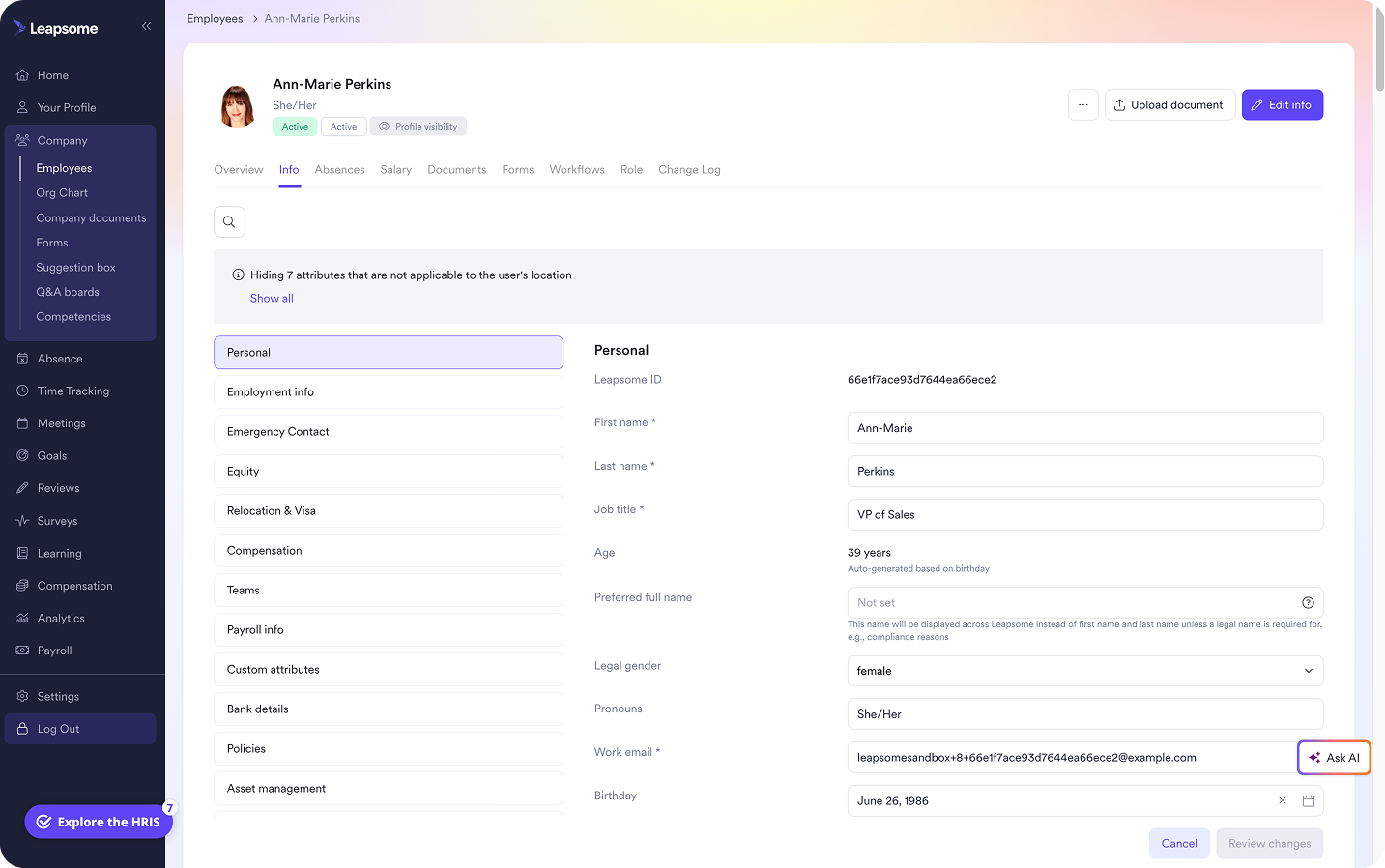
🗂️ Centralize your employee data for onboarding consistency
Make onboarding easy by keeping all your employee records and orientation files in a single source of truth.
👉 Explore Leapsome’s HRIS
New employee orientation checklist
Make sure you’ve covered the basics by following this new hire orientation checklist:
- Complete documentation: There’s no avoiding HR paperwork during orientation, so get all the tax forms, benefits enrollment docs, etc. in line upfront.
- Review company policies: Although core policies like conduct, time off, and compliance expectations form the bulk of this section, sprinkle in mentions of long-term processes to show that the organization cares about professional development. For example, this is a perfect opportunity to set expectations for performance reviews and growth conversations, plus how both affect compensation decisions.
- Introduce the team: A proper introduction with direct managers and teammates helps create connections, and it ensures that new hires know where to go for help.
- Set up key tools: Schedule time to set up email access, communication channels like Slack, project management portals, and so on — and leave plenty of room for troubleshooting.
- Explain communication workflows: Walk through how collaboration happens, both from a technical perspective (what tools they’ll use) and a practical view (e.g., weekly in-office meetings or occasional video calls via Zoom). You can also use this opportunity to set expectations for response times, feedback cycles, and employee surveys.
Leapsome’s suite of customizable pre-boarding and onboarding tools makes it simpler to check all the boxes on your orientation checklist. Before the day begins, you can share key documents and tailor welcome messages for each role. Leapsome also helps you set automated task reminders, so everything stays on schedule without the need for weighty HR oversight.
“The new pre-boarding portal lets new employees access key documents and get to know their teams before their first days — so the first-day experience feels smooth and connected.”
– Aubrey Bryan, Senior Customer Success Associate at Leapsome
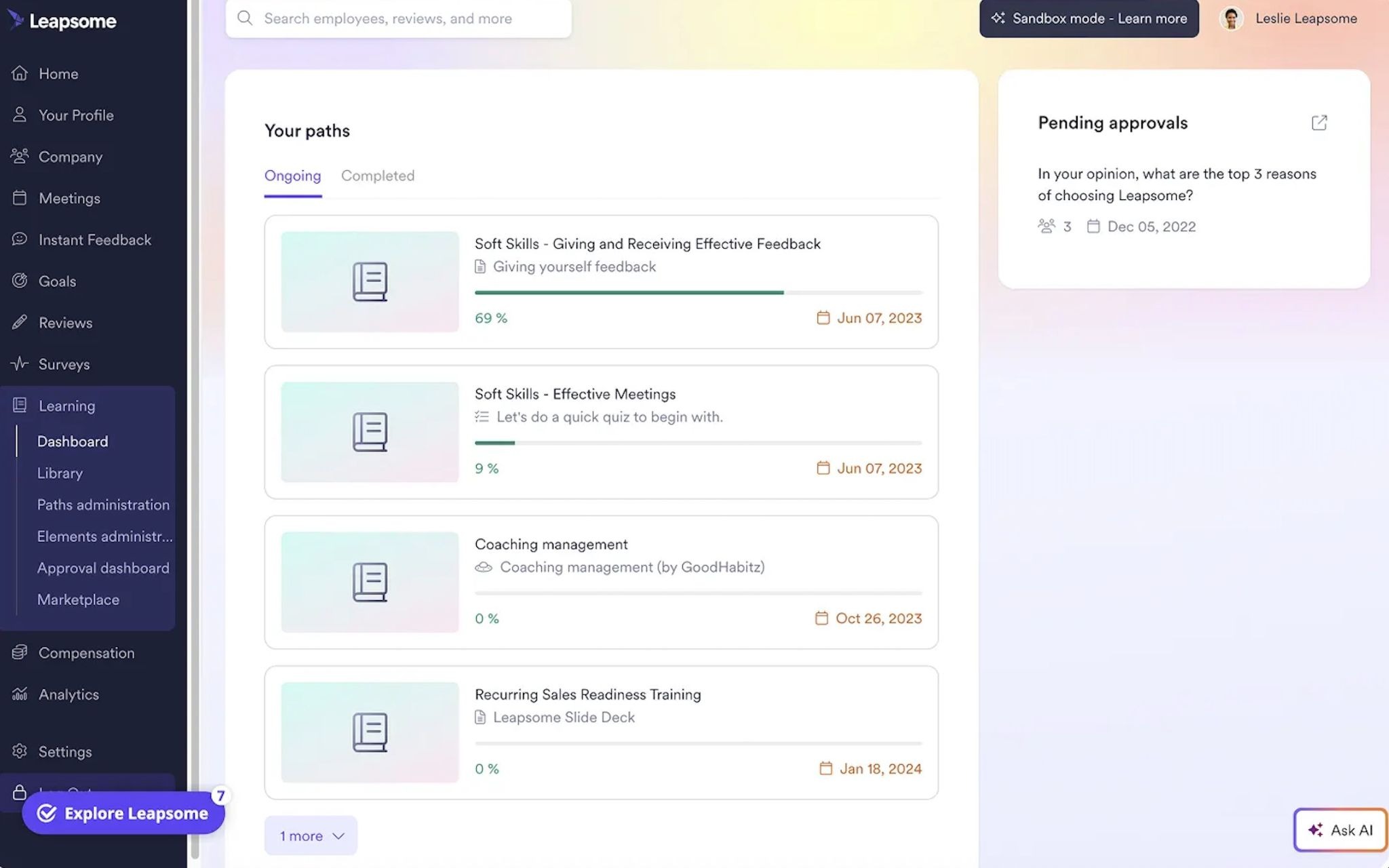
🤝Take tedious work out of your onboarding prep
Leapsome’s all-in-one HR platform lets you automate onboarding task reminders, so your team has more time to respond to real-time employee insights.
👉Learn about Pre-Boarding and Onboarding
Streamline orientation and onboarding with Leapsome
Smooth starts don’t happen on scattered systems. Sure, disconnected processes might be good enough when you’re just starting out. But as an organization scales, it’s near-impossible to create consistently strong orientations without a unified source of truth.
Leapsome connects HRIS tools with people data, letting HR teams easily track progress throughout onboarding and collect insights to improve the process. Leapsome helps you transform “orientation overwhelm” into order, thanks to:
- Pre-boarding messaging: Make new hires feel at home before the first day of work, by sending welcome messages with all the info and docs they need.
- Role-specific onboarding checklists: Set and implement consistent onboarding checklists, while focusing on the specific needs of different roles.
- Task management features: Make sure team leaders across departments are always in the know with automated task reminders.
“If I had to estimate how much time we save through the new onboarding, I would say it's probably a minimum of 10 hours a month due to having those workflows set up in Leapsome.” – BEAT81
👋Make onboarding less manual and more manageable
Automate onboarding tasks while keeping employee data centralized with Leapsome, and make the most out of your new hire orientations.
👉Request a demo

.png)