Creating an effective employment contract + free template


Disclaimer: This content is for general informational purposes only and does not constitute legal advice. Leapsome does not guarantee legal compliance and cannot confirm how specific situations would be assessed in court. If you're unsure how the requirements apply to your organization, please consult qualified legal counsel.
Most people searching for a free employment contract template need a document they can quickly customize without missing essential clauses. But a polished template is just a launching point. Only 33% of employees say their organization consistently delivers on its promises, like those made in a contract.*
When daily work no longer reflects the signed agreement, the contract becomes a vague commitment HR files away rather than something employees can trust. The most valuable employment contracts shape onboarding and give managers a clear baseline as roles develop long after signing.
You’ll find an employment contract template in this guide, along with practical guidance on how to write and reinforce an employee contract throughout the employee lifecycle.
* Gartner, 2024
What’s an employment contract?
An employment contract is a written agreement between an employer and an employee that sets the terms of the working relationship. It usually covers job duties, pay, working conditions, and the rules that apply if either party ends the agreement.
This contract is meant to turn hiring promises into clear, documented commitments. That clarity becomes especially important months or years down the road, when the role’s scope starts drifting from what the employer presented in the offer letter.
Why every employee should have a written employment contract
“Transparency doesn't mean sharing every number. It means explaining the logic — how pay decisions are made, what criteria are used, and how people can grow within the structure."
— Alexandra Edl, Senior HR Consultant at EDL Consulting
Putting the terms in writing gives both the employer and employee a clear record of what they agreed to from the start.
A 2026 ZipRecruiter survey found that 15% of new hires said their original job description barely matched or failed to reflect their actual role. Feeling misled about the role is a fast way to foster low employee engagement and poor sentiments. A written employment contract can help avoid that expectations mismatch by:
- Clarifying what the employee agreed to: The contract records the role and employment terms at the point of hire, so employees can reference what they agreed to as things change.
- Protecting both parties: Employees get a written record of the employer’s commitments. Employers get evidence of the conditions attached to the role. If either party breaks those promises, there’s a paper trail that keeps them honest.
- Managing changes more consistently: HR teams can compare new responsibilities or working arrangements against the original agreement and manage document updates when necessary.
How to write an employee contract: Free contract template (+ what to include)
Writing an employee contract starts with documenting the terms both sides need to understand before work begins. The exact wording will depend on the role and location, so treat any contract template as a starting point and reach out to qualified legal counsel for review.
✍️ Build your employee contract with confidence
Use our free employment contract template to cover the essential terms, then adapt it to the role and applicable employment law.
👉 Download the template now
What should an employee contract include?
“At the end of the day, it's a contract — we're paying for a service, and employees provide it. The market changes the power dynamics, not the value of people."
— Melanie Naranjo, Chief People Officer at Ethena
A well-drafted employee contract should cover three core areas:
- Employment details: Identify the employer, the employee, and the job title, then define the role’s obligations. Specify the role’s status (like full-time and fixed-term or temporary and part-time), along with the expected working hours.
- Compensation and workplace terms: Record the salary or hourly pay rate and explain any relevant benefits. Reference leave policies and include confidentiality, intellectual property, and non-compete clauses where you need them.
- Legal provisions: Lay out what would lead to a termination and any local employment laws everyone should be aware of. Both parties should sign and date the final employment agreement for full legal compliance.
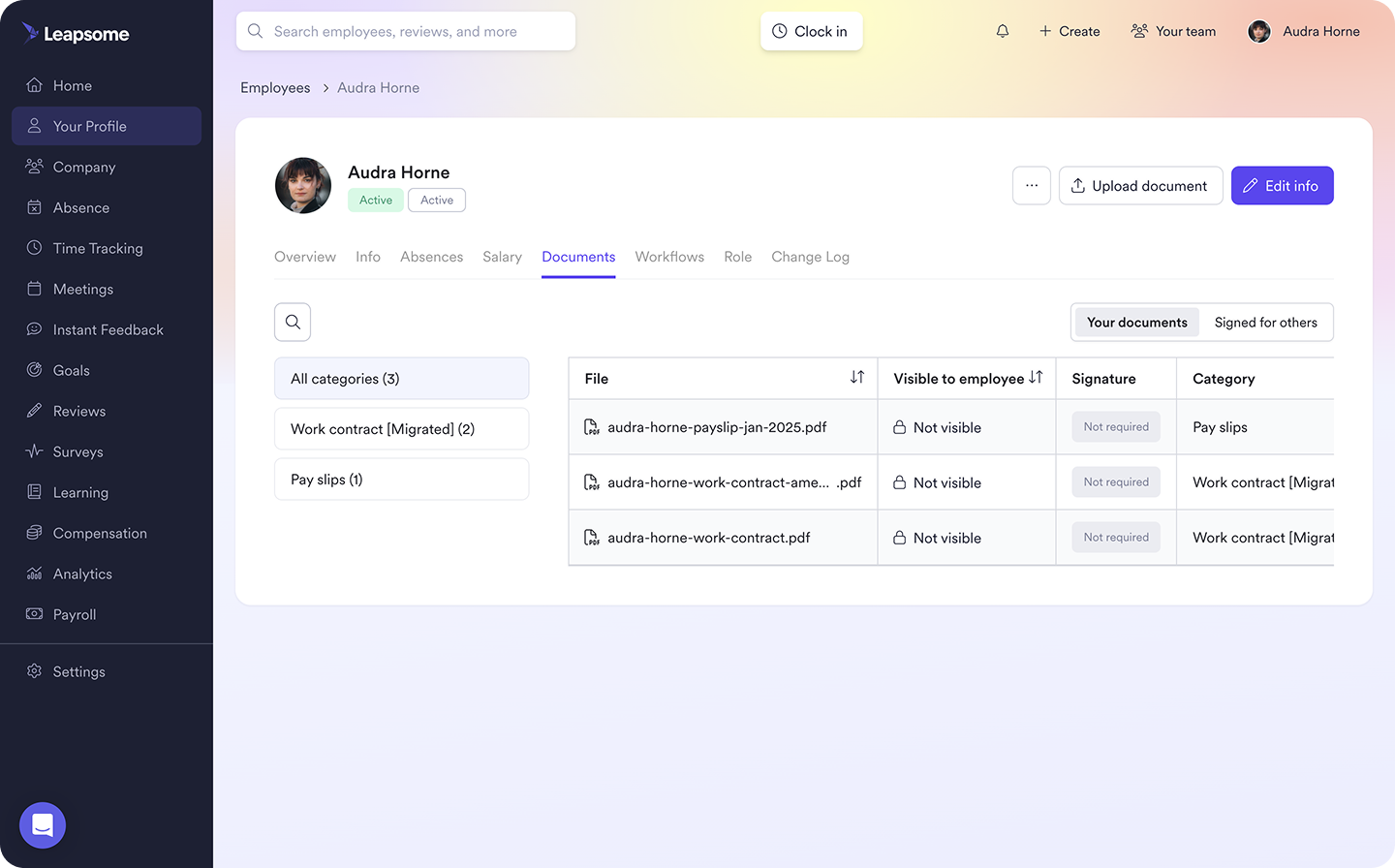
Instead of treating contract clauses as a legal checklist, you can use them as an opportunity to shape a candidate’s first impression and set expectations that fuel future engagement. When every document stays organized and accessible in an HRIS and people management platform like Leapsome, new hires see an employer that handles the employment relationship with care from day one.
🔗 Connect the contract to the employee lifecycle
Leapsome’s Documents & Signatures feature helps you securely store employment contracts, collect electronic signatures, and manage all employee documents in one easy-to-reference place.
👉 Explore Documents & Signatures
A contract is only effective if HR processes reinforce it
You may have a pristine employment contract in place and expect its terms to carry into everyday work. Yet even the most compliant contract loses value when the employee experience fails to reinforce the expectations it sets. Gallup found that only 46% of U.S. employees know what their employer expects of them — a problem solvable through clearer contracts.
Here are a few ways to keep your contracts top-of-mind and role scopes appropriate.
Turn written terms into consistent people practices
Employees should experience the terms of their contract through the processes that shape their work. HR can reinforce the most important expectations in several ways:
- Job responsibilities: Carry the agreed role into onboarding and role-specific training. When responsibilities change substantially, frame it as a development path, not just new tasks for the same role. Explicitly talk with the employee about it and update all relevant records.
- Working expectations: Revisit priorities in manager 1:1s and regular feedback to identify when day-to-day demands have moved beyond the expectations set in the employment contract.
- Performance expectations: Use competency frameworks to define what success looks like, then reinforce those expectations through goal setting and performance reviews. This gives employees a clear view of how to do their jobs well across the employee lifecycle.
"Competency frameworks aren’t just checklists, they're roadmaps for growth and accountability. They help managers coach more effectively and give employees a clear picture of how to succeed at every level."
— Monica Sarkar, Co-Founder of Purple Umbrella
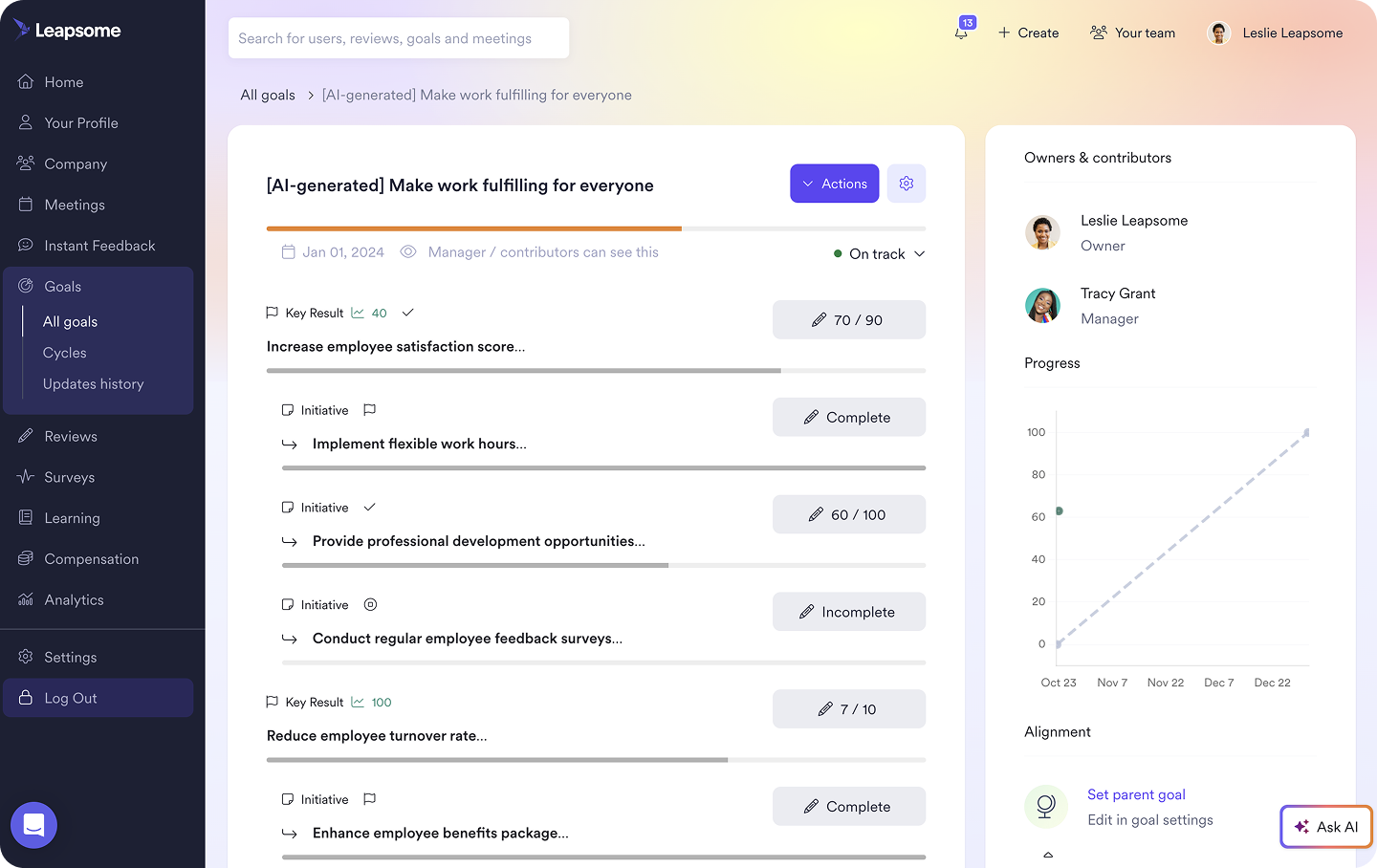
When everyone’s on the same page, it’s easier to understand what kinds of development will actually help employees succeed in the role. Leapsome supports this transparency through features like Goals & OKRs, where employees and their managers can track how their progress lines up with business objectives and plan the best next steps for continued growth.
🧗 Make role growth visible
With Leapsome’s Goals & OKRs feature, you can turn responsibilities into clear, connected goals, so employees understand how their work supports their next stage of development.
👉 Explore Goals & OKRs
Spot when contracts drift away from the workflow
A strong contract can set a trustworthy foundation, but HR teams still need to make sure daily practices reflect the contract’s promises. Watch for these signs that official terms and the employee experience have started to drift:
- Different systems tell different stories: The contract says one thing, while payroll or onboarding reflects another. Choose one source of truth and update all workflows whenever employment terms change.
- Employment changes live outside the official record: HR approves a new title or working arrangement, but the employee file doesn’t show the update. Record every agreed change in the employee’s central records, and use that source of truth to keep every piece of documentation updated.
- Employees hear about changes after they take effect: A new policy starts shaping their work before HR explains what it means. Communicate a change’s impact first, then update the relevant documents and collect acknowledgments where required.
Build a more consistent employee experience with Leapsome
A polished employment contract can’t compensate for a fragmented employee lifecycle. When the agreement stays disconnected from processes that shape daily work, employees receive mixed signals, and HR teams lose sight of whether the organization is delivering what’s promised.
Standalone templates can help you complete the paperwork. Leapsome helps you carry those commitments into onboarding, performance, and employee development, so the experience matches the expectations once everyone signs the contract.
With Leapsome, HR teams can connect employment contracts with people processes, including:
- Documents and Signatures: Store employment contracts securely and collect electronic signatures instead of bogging down all parties with scattered email threads.
- Employee Records: Keep current employment information in one place, so HR and employees can access the latest terms throughout the employee lifecycle.
- Pre-boarding and Onboarding: Give every new hire the right documents and policies from day one, instead of leaving managers to build their own version of the process.
“With Leapsome, we were able to automate performance reviews, goal setting... onboarding and offboarding, and that together helped us save about 20% of the manual effort of our team." — Weronika Czerny-Nowakowska, Chief Operating Officer at Neurons Lab
🏃 A signature is just the first step
Leapsome launches the full HR process that follows a signed employment contract, so the expectations set at hiring continue to support employee success.
👉 Request a demo
FAQ
Can I use the same employment contract for every employee?
In some ways. A standardized template creates consistency. Careful customization prevents that consistency from turning into legal or operational blind spots.
You can use a free employment contract template as a starting point, but the final agreement should be customized for the employee’s exact role and employment status. It should also account for local laws and any unique terms that apply to compensation, confidentiality, or termination for the role.
Do employment contracts differ for full-time, part-time, and fixed-term employee
Yes, they do. Like all employment contracts, they should accurately reflect the employment arrangement, including working hours and benefits eligibility. Fixed-term contracts also need a clear end date or completion condition.
Using the same wording for every employee can create confusion or compliance gaps when role scope varies. Start with an approved template, then tailor the final agreement to the role (and local employment law as necessary).

.png)


Automate, connect, and simplify all HR processes across the employee lifecycle.