Building successful candidate experiences: A guide for HR teams


Most HR teams already monitor candidate experience during the hiring process. That means keeping a close eye on signals like interview feedback, offer acceptance rate, and time to fill. And it works, since people typically rate this stage highly: Gallup found that two-thirds of employees report having an “exceptional” or “very good” candidate experience.*
Yet teams are more likely to fall short in this area after a new hire joins. Expectations set during hiring about the role and development opportunities get tested soon enough, and they tend to go unmet if no one’s paying close attention.
This guide explores why candidate experience still matters long after the talent acquisition stage. HR managers will learn how to foster positive experiences across the hiring journey, and how to make sure expectations hold up into the first 90 days and beyond.
*Gallup, 2024
What’s candidate experience, and why does it still matter post-hire?
Candidate experience captures how job seekers perceive the hiring journey, from the job posting to the final offer or rejection.
The importance of candidate experience isn’t limited to immediate hiring metrics. It extends to:
- Offer acceptance: A hiring process that feels fair and respectful can make suitable candidates more likely to accept a job offer. When that process feels impersonal or careless, it may instead send those applicants to competitors.
- Employer branding: Applicants may share experiences on career-focused social media platforms like Glassdoor and LinkedIn. A poor reputation can dry up your talent pipeline, while a pattern of respectful encounters may make candidates more likely to reapply or refer others.
- Post-hire culture connection and satisfaction: According to Gallup research, employees who reported an exceptional candidate experience were 3.2 times more likely to feel strongly connected to their organizational cultures. The same study found that these employees were three times as likely to be extremely satisfied with their roles.
Unfortunately, most hiring tools stop at the offer stage. Leapsome is different, letting you connect hiring and on-the-job experiences and monitor their success in one place.
“Look for one platform that covers your key needs and integrates with your stack. Don’t scatter data across 10 or 20 disconnected tools.”
– Katerina Arsova, Head of People, Talent Operations, and Partnerships at Leapsome
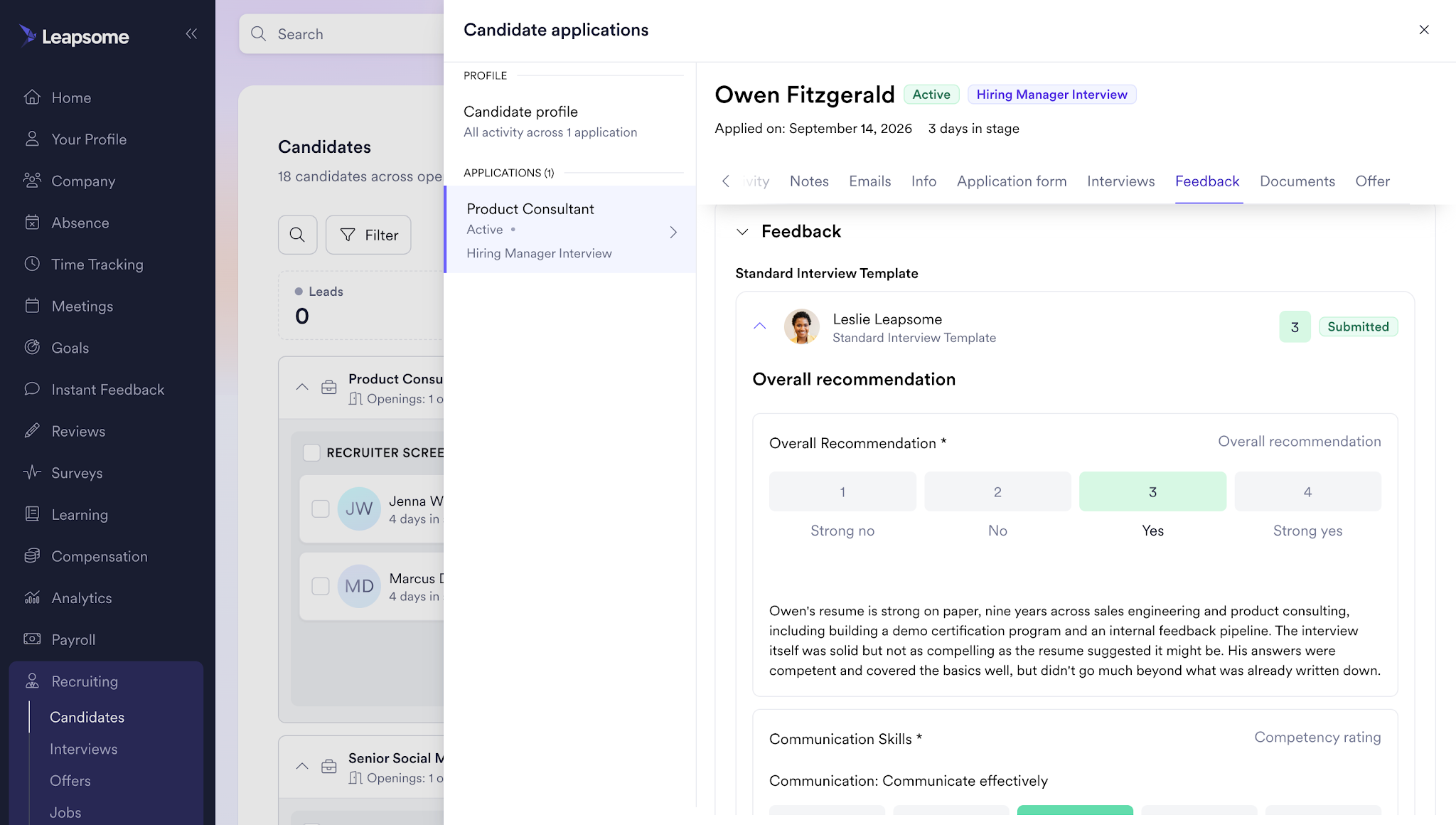
🔗 Hire directly into your HR platform
Base core HR processes and talent management on the same records you use for recruiting, carrying context through the offer and beyond.
👉 Explore Recruiting
How can you track whether hiring expectations hold up at 90 days?
Gallup research shows that recently hired employees who report exceptional candidate experiences are twice as likely to strongly agree that their job responsibilities match what they were promised during recruitment. They’re also 2.7 times as likely to say their jobs are as good or better than they expected.
Research shows the trend, but only doing the legwork can reveal whether your organization has kept its promises. Here’s what to watch for and focus on during performance reviews.
How to improve candidate experiences across the hiring journey
Each component of candidate experience has its own friction points, so it’s easier to make improvements if you break the process down first. Here are four practical ways to improve candidate experience:
- Create clear, realistic job postings: A straightforward job description that describes the role accurately sets the tone. Candidates should know exactly what they’re signing up for, including a transparent salary range and timeline.
- Offer regular status updates: Timely communication after every stage, from interview scheduling to next steps, keeps candidates from feeling neglected or dismissed. This responsiveness is important even if you end up sending a rejection letter, since it can still affect your employer brand.
- Hold structured interviews: Use the same interview scorecard and evaluation criteria across candidates to keep assessments evidence-based.
“If the people you hire aren’t aligned, you’ll constantly play catch-up. Use tough interview questions to test alignment and maturity early.”
– Melanie Naranjo, Chief People Officer at Ethena
- Provide a single point of contact: Assign one recruiter or hiring manager to answer questions. Even if most of your updates are automated, knowing there’s a real human they can reach out to makes the process feel less impersonal for applicants.
A quick candidate experience survey after the interview or offer helps you gauge how people really felt during the hiring process. Candidate experience improvement depends on honest feedback and understanding where applicants get stuck or confused. So keep the questions focused on how smooth the process felt, along with perceptions about communication and fairness.
One of the best ways to promote fairness is to make sure every interviewer scores candidates on the same criteria. And with Leapsome, you can carry results forward into later performance conversations for candidates who become employees.
“We’ve been able to optimize and automate a lot of the functions that were taking up our time, turning them into one streamlined workflow that connects departments like onboarding, offboarding, training, and hiring.” – Janelle Daugherty, Head of People and Culture at Notion Health
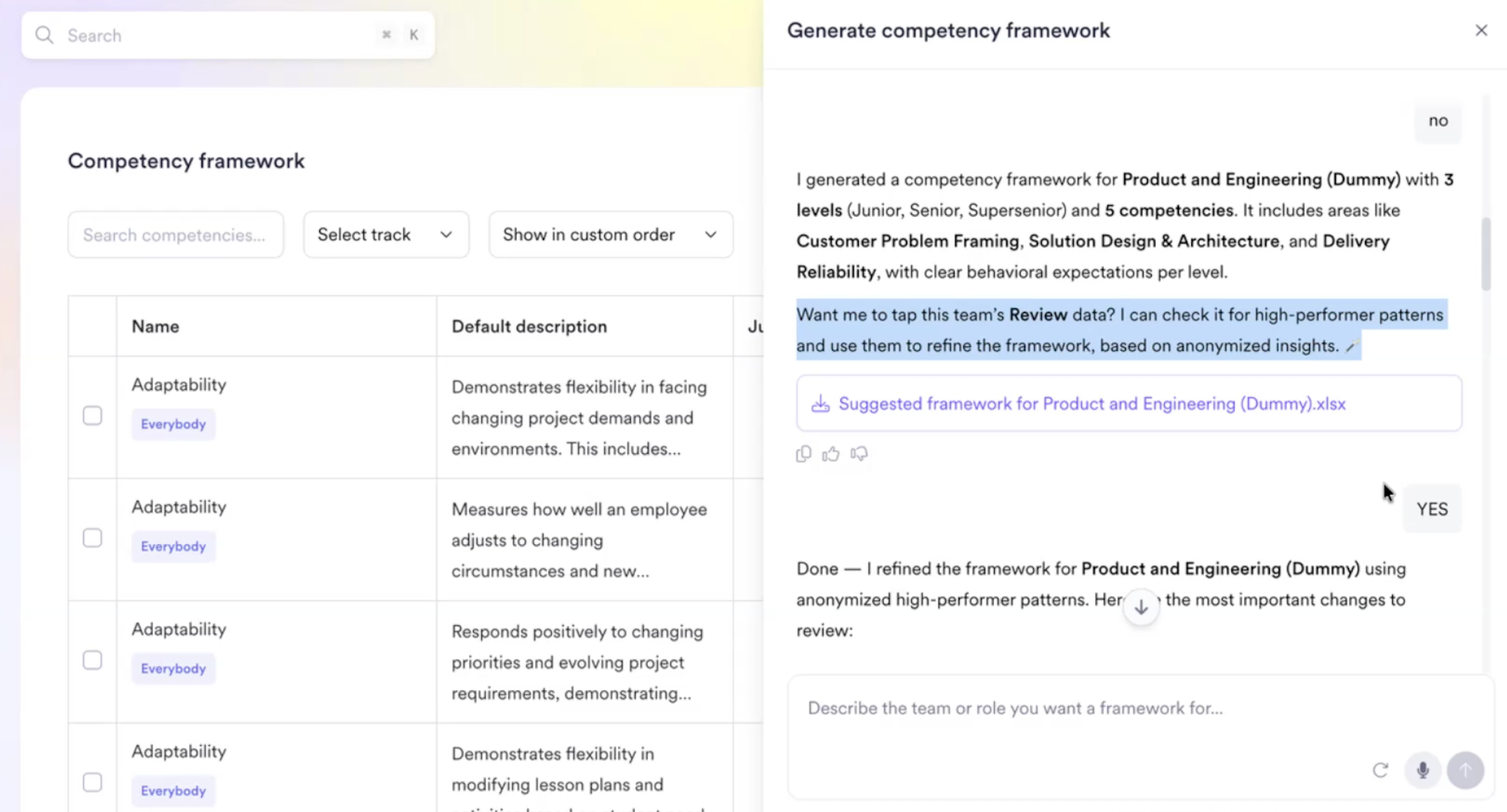
📏 Use the same standard from interview to performance review
Build interview scorecards around the same competencies you use in reviews to create a shared, consistent evaluation framework.
👉 Learn about Recruiting
Bridge candidate and employee experience with Leapsome
No matter how well-run the hiring process is, you can still lose a new employee’s trust fast if nobody checks in about expectations. Leapsome’s all-in-one HRIS and people management platform links recruiting to the rest of the employee lifecycle.
With Leapsome, your team gets tools for:
- Preboarding and Onboarding: Personalized portals with welcome messages and role-specific information set new hires up for success before they step foot in the office. Automated tasks and reminders help HR and managers stay on top of commitments.
- Engagement Surveys: Onboarding and engagement check-ins show whether the new hire feels you’re meeting expectations, so you’re not left guessing.
- Performance Reviews: Interviews and reviews are based on the same Competency Framework.
“Our first impression was, okay, the team will enjoy using this tool. It’s intuitive. We don’t need to do much onboarding.” – Siddharth Dhanuka, Head of Finance and Operations at SQUAKE
🤝 Make it easy to keep your promises
Build hiring context into onboarding and what comes after, so you can spot expectation gaps before they hurt new hire trust.
👉 Request a demo
FAQ
What’s the difference between candidate experience and employee experience?
Candidate experience covers how job applicants perceive each stage of the hiring process, from job posting to final offer. Employee experience measures what happens after someone joins the company. These two concepts overlap: New employees form expectations during hiring, and their experiences post-hire should match those expectations closely.
Leapsome Team