10 best Workday alternatives for 2026
.png)
.jpg)
There are plenty of reasons HR teams start looking beyond Workday — from disconnected systems to rising costs that no longer match the value delivered.
This guide compares the leading Workday alternatives to help HR leaders shortlist with confidence. We break down top competitors across different segments and share a practical framework to evaluate which platform truly fits your operational needs.
🧩 Replace fragmented HR tools with Leapsome
See how organizations streamline their operations and connect employee data across the entire lifecycle.
👉 Take a tour
The best Workday alternatives for 2026
Many of today’s top HR automation tools aim to reduce complexity, but the most effective platforms also connect automation across performance, engagement, and learning.
This list covers options for small companies through large organizations planning HRIS modernization in 2026 to help you learn how to choose an HRIS software that suits your specific needs. To reflect what really matters to HR teams under pressure to do more with fewer resources, we evaluated Workday alternatives based on these key criteria:
- Human resources information system (HRIS) depth and flexibility
- Payroll readiness
- Integrations
- Usability and adoption
- Scalability
Information is based on publicly available vendor materials and review platforms as of January 2026. Verify current features, coverage, and pricing directly with each vendor.
{{TABLE}}
Leapsome
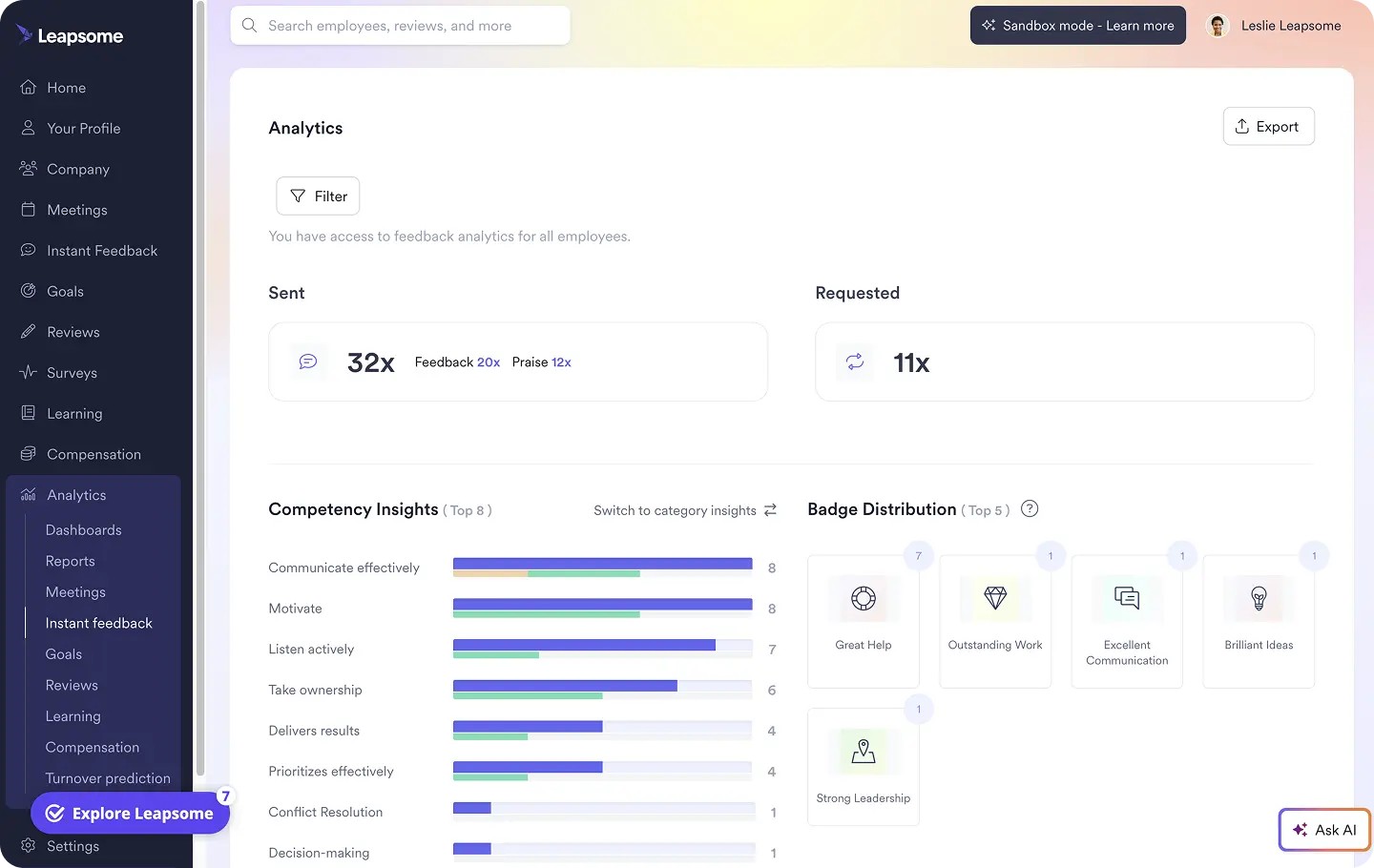
Leapsome is an all-in-one HRIS that replaces fragmented HR stacks with a single, connected system and supports how modern teams actually operate. It centralizes core HR data and directly links it to performance, engagement, and learning, helping HR teams cut administrative work while gaining a clear view of how people, work, and priorities connect.
As teams become leaner and responsibilities shift, HR often sees pressure building before it becomes visible elsewhere. Leapsome supports this role by helping HR teams interpret people data and turn day-to-day realities into informed decisions alongside leaders.
Every module is powered by a shared data layer, so employee information flows smoothly across the platform without manual handoffs or duplicate entry. Teams can start with core HRIS and add capabilities as they grow, maintaining clarity and consistency even as priorities change and resources tighten. This approach helps HR, managers, and leaders stay aligned and act with confidence across the employee lifecycle.
"Leapsome has actual AI insights (not just basic charts) where everything genuinely connects, like onboarding data automatically populates in performance reviews and feedback flows into development plans without me touching a spreadsheet.”
— Reddit user in r/human_resources, August 2025
"What I like most about Leapsome is its ability to unify various people management needs into a single platform in an integrated and intuitive way. Instead of relying on separate tools for performance reviews, goal setting (OKRs), continuous feedback, engagement surveys, and learning, Leapsome brings all of this together in a single connected environment."
— G2 review, January 2026
Key features
- Core HRIS with employee data, documents, e-signatures, onboarding, time tracking, absence management, and payroll preparation
- Performance reviews with configurable cycles, calibration tools, and cross-cycle analytics
- Engagement surveys using science-backed questions, heatmaps, and benchmark comparisons
- Goals and OKRs that connect to company strategy with automatic progress tracking
- Learning module with personalized paths and integrations, such as LinkedIn Learning
- Compensation management for review workflows, budget tracking, and pay equity analysis
- Leapsome AI that combines data across modules to identify patterns
- Native integrations with global payroll providers and employer of record (EOR) services
Pros
- Unifies core HRIS with performance, engagement, learning, and compensation in one platform, reducing vendor management
- Modular adoption allows teams to start with essential modules and expand without switching systems
- Data flows automatically between modules, connecting changes to the right workflows and reporting
- Configurable workflows adapt to different team structures, regional requirements, and growth stages
- AI capabilities draft reviews, summarize survey feedback, surface retention risks, and automate routine tasks
- Built-in analytics provide actionable insights without requiring dedicated data teams
Limitations
- Payroll execution depends on integrations with external providers in some regions
- May require additional setup for organizations with highly complex multi-entity structures across dozens of countries
Best for
Organizations replacing Workday to automate HR processes and eliminate disconnected tools without the complexity or cost of enterprise systems. Particularly strong for teams that want to unlock the advantages of using an HRIS through flexible workflows, clear visibility across the employee lifecycle, and connected core HR data with performance, engagement, and learning.
“With Leapsome, we were able to automate performance reviews, goal setting, onboarding, and offboarding. That together helped us save about 20% of the manual effort of our team.”
— Weronika Czerny-Nowakowska, Chief Operating Officer at Neurons Lab
📈 Start simple and add what you need as you grow
Leapsome lets you begin with core HRIS and expand to performance, engagement, and learning without switching platforms.
👉 Explore Leapsome HRIS
SAP SuccessFactors
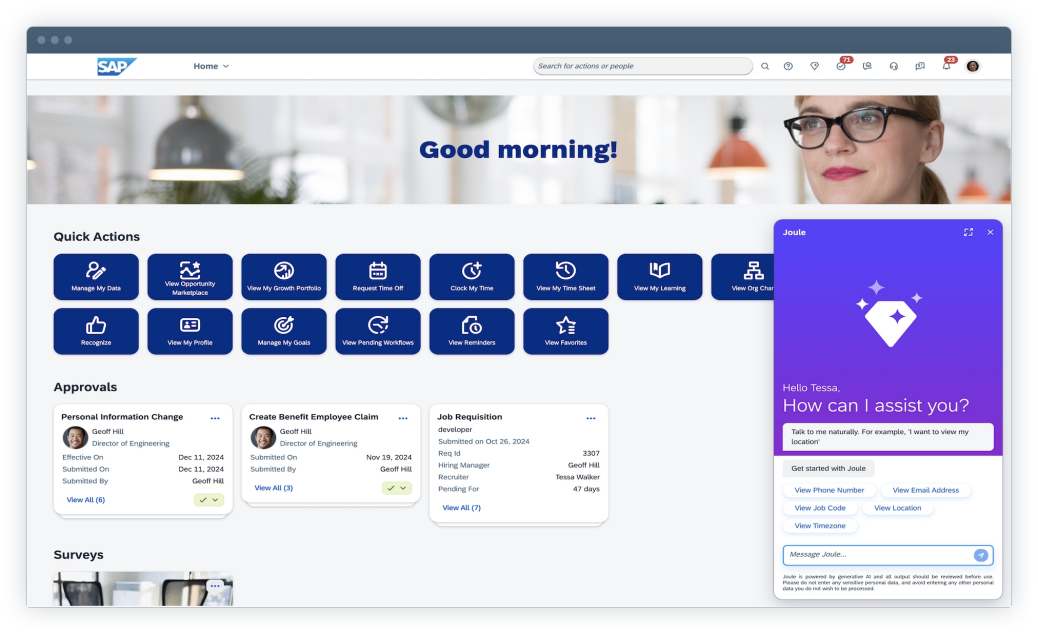
SAP SuccessFactors is for large enterprises that manage complex global workforces across multiple countries. The platform covers core HR, talent management, learning, workforce planning, and analytics, with localization for over 100 countries. It's designed for organizations that need deep compliance capabilities, structured talent frameworks, and the ability to manage diverse workforce structures from a single system.
"What I like best about SAP SuccessFactors is how comprehensive and well-integrated it is for HR processes. It’s relatively easy to use once configured, and the implementation is structured with good documentation and partner support."
— G2 review, January 2026
Key features
- Employee Central for core HR management and organizational structure
- Talent management suite covering recruiting, onboarding, performance, and succession planning
- Learning management system with compliance tracking and certification workflows
- Workforce analytics with customizable dashboards and predictive insights
- Global payroll integration with support for localized tax and compliance requirements
- Compensation planning with budget modeling and pay equity analysis
- Compliance tools built for multinational operations
Pros
- Global capabilities with localization for over 100 countries
- Deep talent management functionality, including succession planning and career frameworks
- Strong compliance and audit trail capabilities for regulated industries
- Integrates well with existing SAP enterprise resource planning (ERP) systems
Limitations
- User interface is considered outdated compared to competitors
- Some customers noted slow loading times within the platform
- Software efficiency is hampered by limited customization and a confusing interface
Best for
Large enterprises with over 1,000 employees, particularly those with complex global workforces, multiple legal entities, and requirements for advanced talent management and compliance across many countries.
UKG Pro

UKG Pro serves organizations managing complex payroll and workforce operations across multiple locations. The platform combines HR, payroll, time and attendance, scheduling, and talent management in one system. Organizations typically choose UKG Pro when they need robust workforce management capabilities such as shift scheduling, labor forecasting, and detailed compliance tracking alongside their core HRIS functions.
"My favorite thing about UKG Pro is Business Intelligence aka People Analytics. The ability to customize reports and build robust calculations to fit business needs makes the tool incredibly valuable."
— G2 review, November 2025
Key features
- Unified HR and payroll platform with multi-entity support
- Time and attendance tracking with biometric and mobile clock-in options
- Workforce scheduling with predictive tools and labor optimization
- Benefits administration and enrollment management
- Talent management, including recruiting and succession planning
- Advanced analytics and compliance reporting
- Integration capabilities with ERP and finance systems
Pros
- Strong payroll engine with built-in tax compliance and direct deposit capabilities
- Time tracking and workforce management for complex scheduling needs
- Handles multi-location operations with different pay rules and compliance requirements
- Robust reporting and analytics for labor cost optimization
Limitations
- Users report that the interface can be difficult to navigate
- Learning curve can be steep for newer users
- Some users experienced inefficient customer support
Best for
Organizations with 500+ employees that need comprehensive workforce management, particularly those in industries with complex scheduling, shift work, and strict labor compliance requirements.
ADP Workforce Now
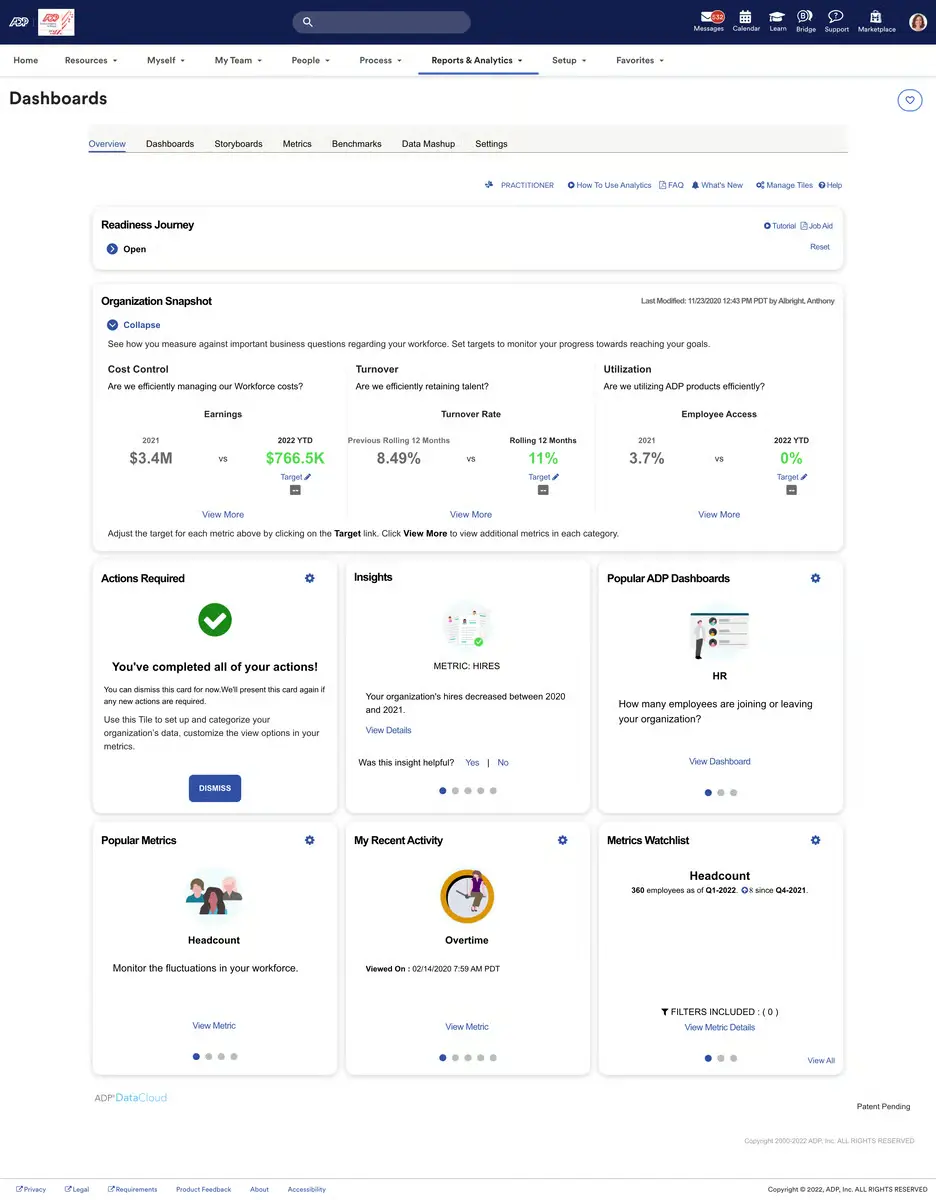
ADP Workforce Now focuses on payroll accuracy and tax compliance for organizations with established HR operations. The platform combines full-service payroll processing with HR management, benefits administration, time tracking, and talent tools. It’s a good fit for organizations with non-negotiable payroll reliability and regulatory compliance requirements, particularly those operating across multiple states or dealing with complex tax responsibilities.
"The employee self-service portal is especially helpful for reducing HR overhead, and the platform's compliance support adds peace of mind."
— G2 review, July 2025
Key features
- Full-service payroll processing with automated tax calculations and filing
- Tax compliance management across federal, state, and local jurisdictions
- Benefits administration with carrier integrations
- Time and attendance tracking with mobile punch options
- HR compliance tools and reporting
- Employee self-service portal for pay stubs and documents
- Recruiting and onboarding workflows
Pros
- Established payroll infrastructure with proven tax compliance capabilities
- Strong direct deposit functionality and payroll reporting
- Comprehensive benefits administration with carrier connections
- Employee self-service reduces HR administrative burden
Limitations
- Some users say there’s a lack of dedicated customer support
- Custom reporting is limited and has a significant learning curve
- Users report that the interface feels clunky and dated
Best for
Organizations prioritizing payroll accuracy, tax compliance, and benefits administration with established HR operations and a need for reliable, full-service payroll processing.
HiBob
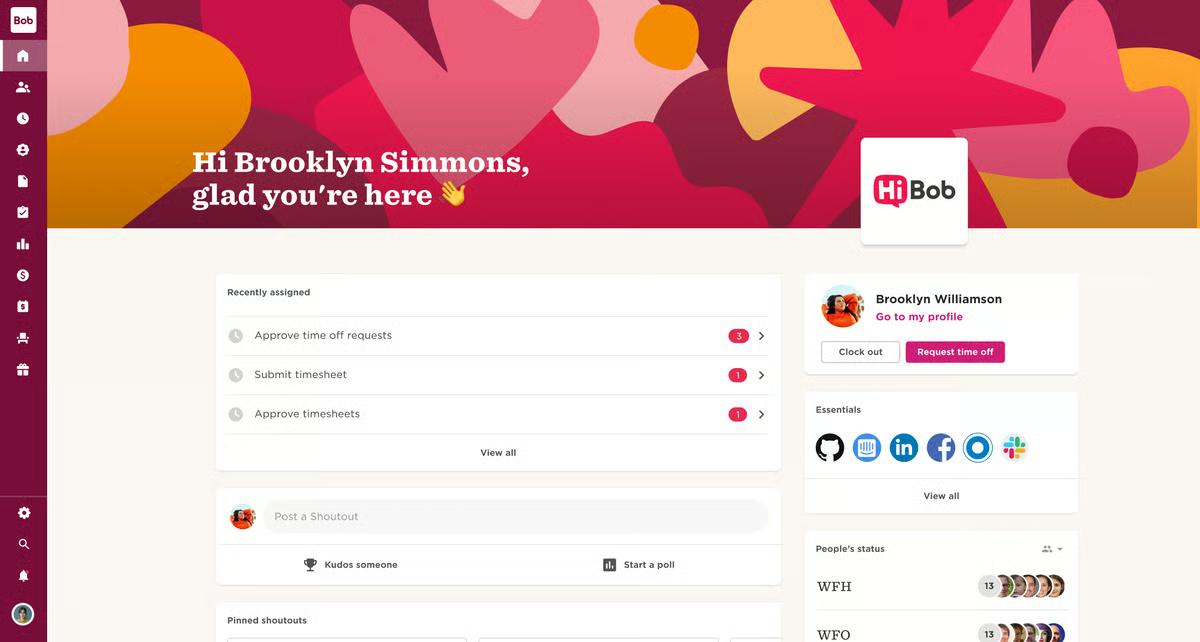
HiBob provides a modern HRIS platform for growing mid-sized companies that want to balance core HR operations with employee engagement. The platform covers onboarding, time tracking, performance management, goal tracking, and engagement features in an interface designed to feel less like traditional HR software and more like tools employees already use daily.
“I really like the company org view through HiBob HRIS, where I can filter by location, role level, and interests. This is really helpful for keeping a pulse on how the company is organized and understanding how different people work together, especially in a small to medium organization with a frequently shifting structure."
— G2 review, January 2026
Key features
- Core HR with employee profiles and organizational charts
- Streamlined onboarding with customizable workflows and task automation
- Time tracking and paid time off (PTO) management with mobile accessibility
- Performance reviews, goal tracking, and continuous feedback
- Engagement surveys and employee sentiment tracking
- Analytics dashboards with people metrics and trend reporting
- Integration ecosystem connecting payroll, benefits, and productivity tools
Pros
- Clean, intuitive interface that drives faster adoption across teams
- Strong focus on employee experience integrated into core workflows
- Good support for distributed teams with mobile access and global capabilities
- Engagement features like recognition and social feeds help maintain company culture
Limitations
- Reporting could be simpler and more flexible
- Implementation guides can be hard to understand
- Employee recognition features are weaker than some HiBob alternatives
Best for
Mid-market organizations with 200–1,000 employees that prioritize engagement and modern user experience, particularly companies with distributed or hybrid teams needing centralized people data and communication.
Rippling
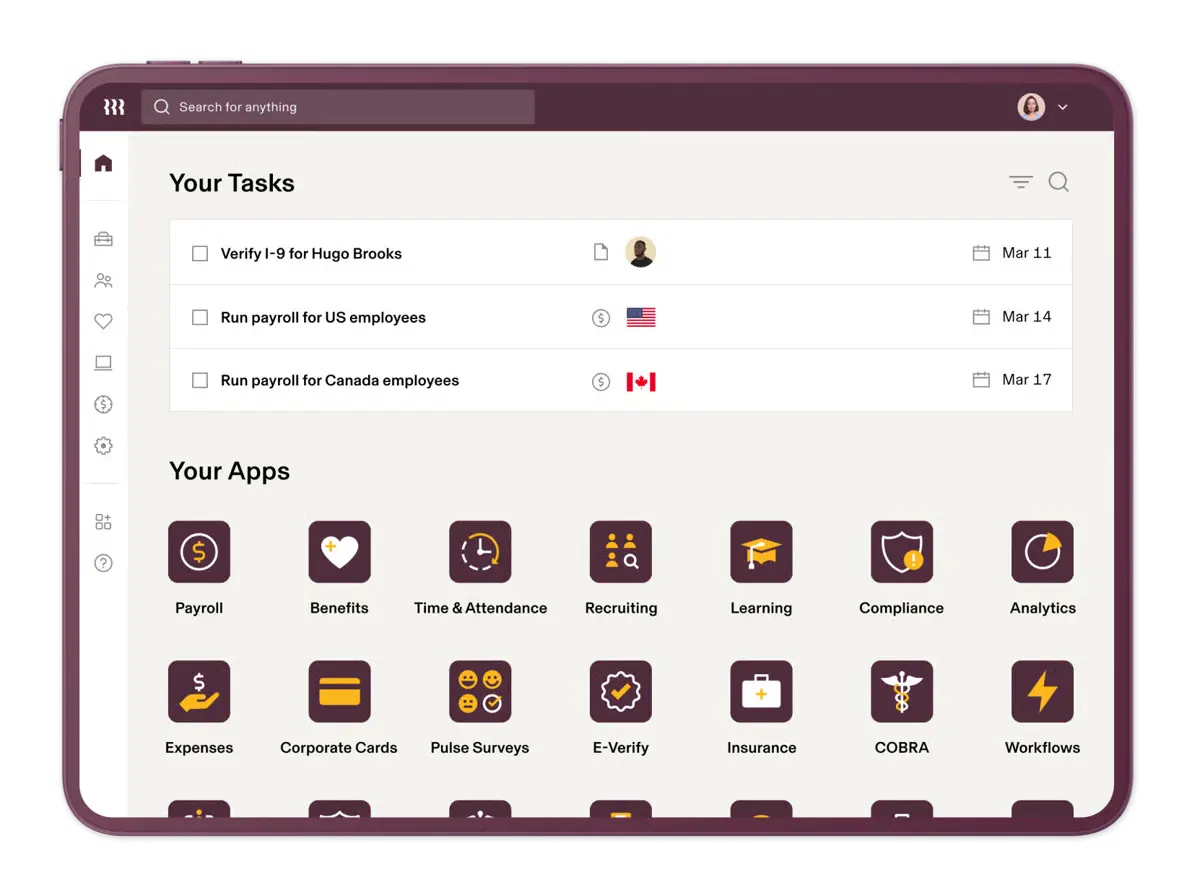
Rippling combines HR, IT, and finance management into a single platform, with extensive automation across the employee lifecycle. The system handles employee onboarding, app provisioning, device management, payroll, benefits, and time tracking without requiring teams to switch between multiple tools. It works particularly well when you need to unify workforce management across departments and want to eliminate the manual busywork that comes with managing employees at scale.
"Overall, my experience with Rippling has been very positive. It’s a comprehensive platform that brings payroll, benefits, HR, and IT together in one place, which has saved us a lot of time and reduced errors."
— Capterra review, September 2025
Key features
- All-in-one platform covering HR, payroll, IT, benefits, and spend management
- Device management with automated laptop ordering and software provisioning
- 600+ integrations with business applications
- Global payroll in 185+ countries
- Contractor management and payments
- Workflow automation builder for complex processes
- Role-based permissions and approval workflows
Pros
- Unified platform reduces tool sprawl and eliminates data silos between systems
- Strong automation capabilities save time on onboarding, offboarding, and lifecycle changes
- Clean interface that employees find intuitive to navigate
- An extensive integration ecosystem connects with existing business tools
Limitations
- Per-user monthly costs can add up quickly, especially for small businesses
- Initial setup can be complex, especially for businesses with imperfect data records
- Can be a steep learning curve with platform navigation and features
Best for
Companies seeking unified management of HR, IT, and finance with extensive automation, particularly mid-market to enterprise teams managing remote or distributed workforces across multiple locations.
BambooHR
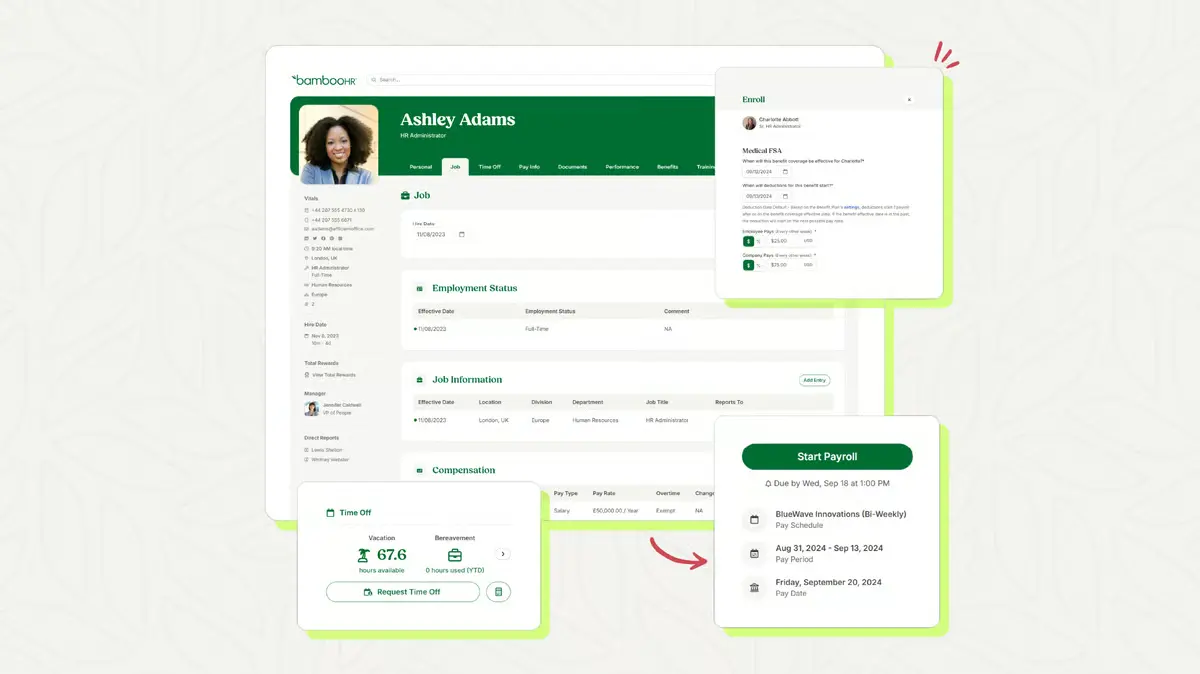
BambooHR is an established HRIS for small businesses that want to centralize HR operations without dealing with enterprise complexity. The platform handles core HR, benefits, time tracking, onboarding, and performance management with a clean interface that’s easy to navigate for both HR teams and employees. It's a solid choice when you need an HRIS that feels approachable from day one and doesn't require weeks of training just to get your team up and running.
"Getting the system up and running was surprisingly easier than expected. At our company, we use it for everything from onboarding to annual leave approvals."
— G2 review, January 2026
Key features
- Core HR database with employee records and document storage
- Built-in applicant tracking system with job posting and e-signature offers
- Automated onboarding and offboarding workflows
- Time tracking with mobile clock-in and PTO management
- Performance management with customizable review templates
- Employee self-service portal for updating personal information
- Mobile app for time-off requests and directory access
Pros
- Clean, intuitive interface reduces training time for new users
- Strong onboarding automation with digital paperwork and signature collection
- Centralized employee database eliminates scattered spreadsheets
- The responsive customer support team helps during setup and troubleshooting
Limitations
- Reporting can feel simplistic and sometimes requires workarounds for deeper analysis
- Payroll and benefits administration features are quite basic
- Limited customization of reports and dashboard
Best for
Small to mid-sized businesses (under 500 employees) looking for ease of use and streamlined onboarding, particularly teams transitioning from simple spreadsheet-based HR management.
Gusto
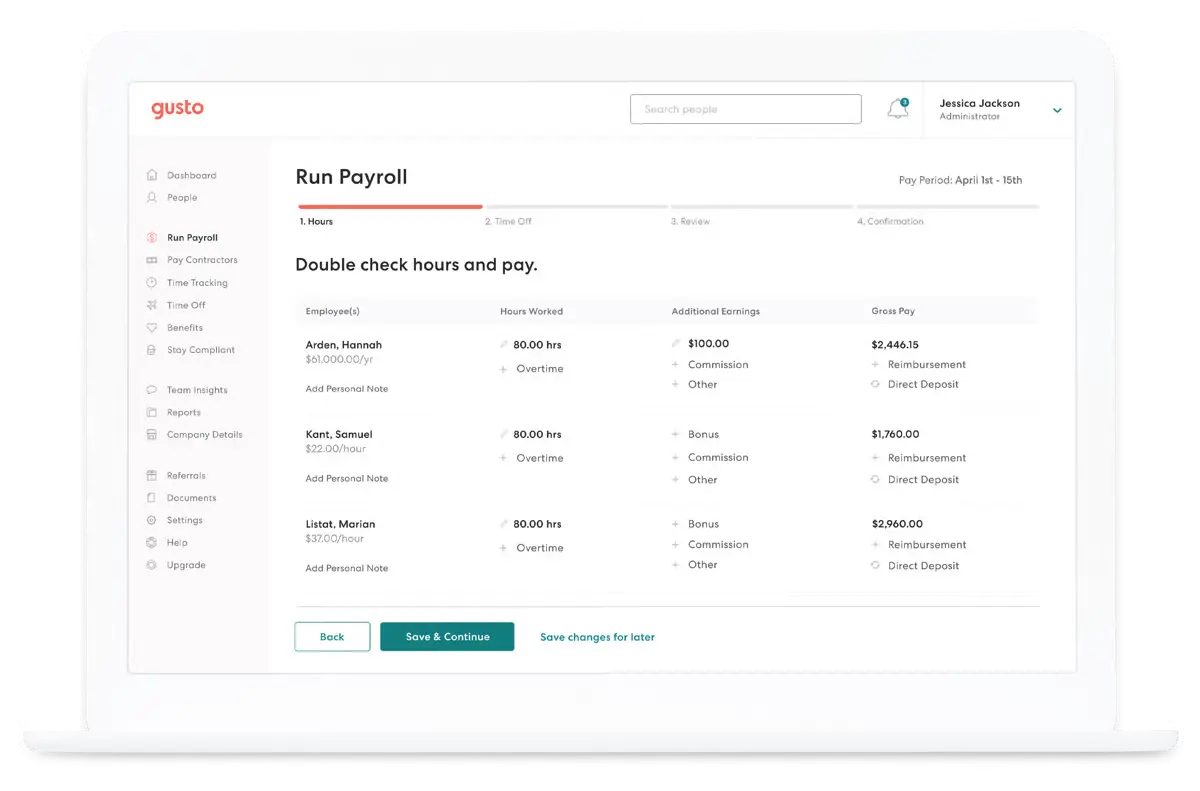
Gusto is a payroll-first platform built for US-based small businesses that need straightforward payroll processing with basic HR capabilities. The system automates tax filing across all 50 states and handles both W-2 employees and 1099 contractors. While it includes benefits administration, time tracking, and onboarding, Gusto's core strength is US payroll rather than comprehensive HRIS functionality.
"Gusto has always been a great platform for managing payroll for small and mid-sized businesses. I have always had high confidence in ensuring people are paid, taxes are filed, and reporting is complete and accurate."
— Capterra review, December 2025
Key features
- Full-service US payroll with automated tax calculations and filing
- Benefits administration including health insurance, 401(k), and commuter benefits
- Basic time tracking with PTO management
- Digital onboarding with offer letters and e-signatures
- Employee self-service portal for pay stubs and tax documents
- Contractor payments in 120+ countries
- Global EOR services for full-time employees in 11 countries outside the US (powered by Remote)
Pros
- Simple payroll setup that can be completed in under 30 minutes
- Automated tax filing handles federal, state, and local US compliance
- Strong integration with accounting software such as QuickBooks and Xero
- Affordable entry point for US businesses just starting with payroll automation
Limitations
- Features may be too basic for companies needing advanced HR tools
- Users say the log-in experience can be long and frustrating
- Can be expensive for organizations outside of the US
Best for
US-based small businesses (under 75 employees) that prioritize payroll accuracy and tax compliance over comprehensive HR functionality, especially those transitioning from manual payroll processes.
Personio
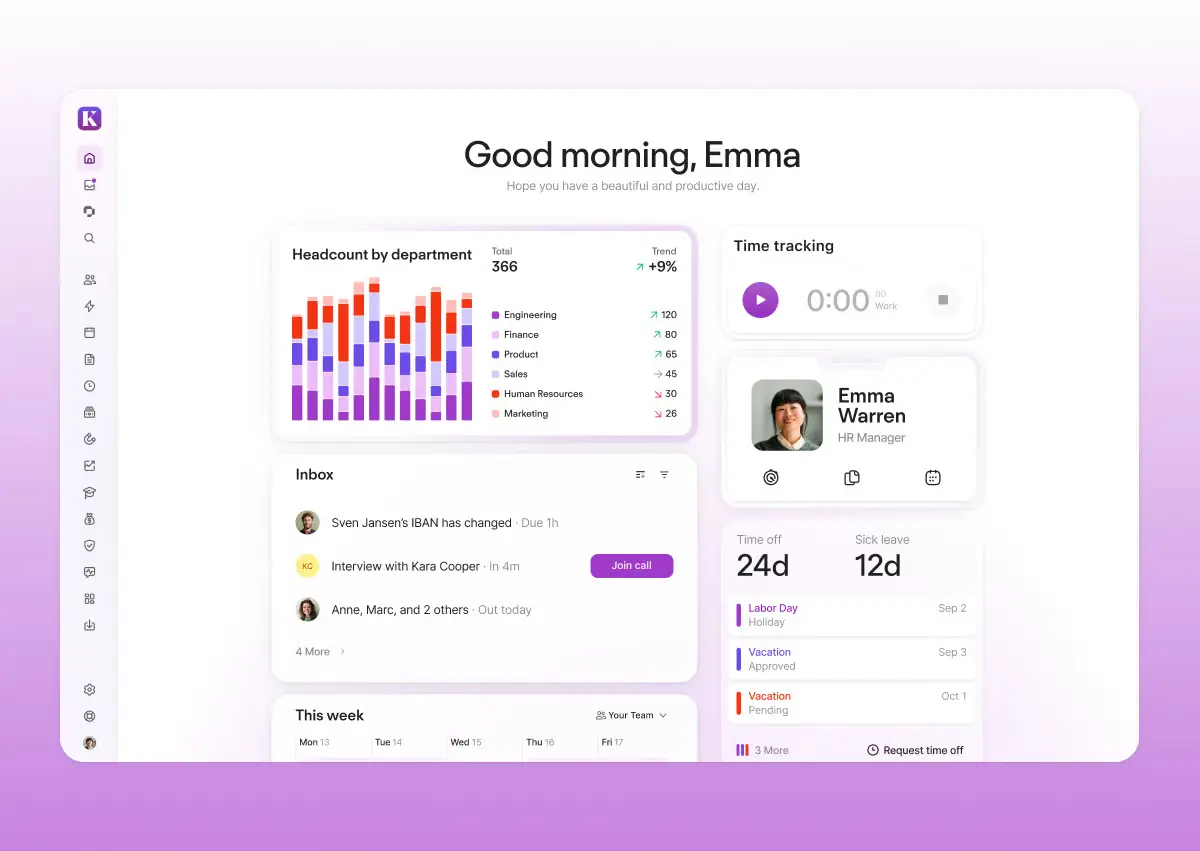
Personio is an all-in-one HR platform built for small and mid-sized businesses in Europe looking to evolve from spreadsheets without diving into enterprise-level complexity. The system brings together recruiting, employee data, time tracking, payroll preparation, and performance management so you're not juggling different tools to get basic HR work done. Personio is designed around European compliance requirements and offers built-in payroll for Germany, with integrations available for other countries.
"Personio excels at centralizing all employee data, which dramatically streamlines everything from onboarding new research assistants to managing departmental leave requests."
— G2 review, July 2025
Key features
- ATS with job board integration and candidate pipelines
- Centralized employee database with document management and e-signatures
- Time tracking and absence management with approval workflows
- Payroll preparation with automated calculations (full payroll available for Germany)
- Performance management with customizable review cycles
- Workflow automation for HR processes
- People analytics and reporting dashboards
Pros
- Intuitive interface that reduces onboarding time for HR teams and employees
- Strong customer support with responsive assistance during implementation
- Modular structure lets businesses add features as they grow
- European compliance is built in with GDPR-focused data protection
Limitations
- Limited customization options for workflows and fields
- Reporting functions could be more flexible
- Outside of payroll, the other features can be difficult to use
Best for
European small to mid-sized businesses that want more clarity and strong recruiting and onboarding capabilities from their HR software.
Oracle HCM Cloud
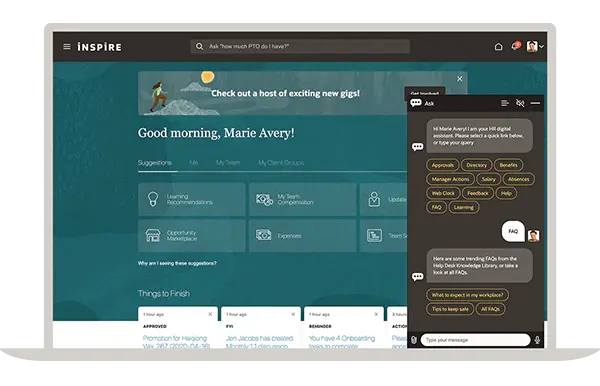
Oracle HCM Cloud is an enterprise human capital management (HCM) platform built for large, complex organizations managing workforces across multiple countries and business units. The system covers the full employee lifecycle from recruitment through payroll and talent management, with deep integration across Oracle's broader enterprise software suite.
"The web clock feature and the timecard feature are really good and provide a good pathway for companies to digitise their timesheet process."
— Capterra review, April 2025
Key features
- Global HR management with localization for 200+ countries and territories
- Comprehensive talent management features, including recruiting, performance, learning, and succession planning
- Enterprise payroll with multi-country tax compliance
- Workforce analytics and AI-powered insights
- Compensation and benefits administration
- Time and attendance management with scheduling
- Recognition and rewards programs
Pros
- Comprehensive feature set covers every aspect of workforce management
- Strong global capabilities with extensive localization and compliance support
- Deep integration with Oracle ERP and other Oracle Cloud applications
- AI-powered analytics provide workforce insights and predictive capabilities
Limitations
- Steep learning curve for new users on the platform
- Requires significant technical expertise
- Users say the user interface is very confusing
Best for
Large enterprises with complex global operations, multiple legal entities, and existing Oracle infrastructure, particularly those in highly regulated industries requiring robust compliance and audit capabilities.
How to evaluate Workday alternatives beyond feature checklists
In our experience working with HR teams, we've seen workloads increase significantly while resources stay flat. When systems are hard to maintain, employees and managers end up doing more manual work, waiting longer for answers, and losing trust in the process.
If you’re still defining your requirements, understanding how to choose HRIS software can help you compare platforms beyond features based on long-term adoption, flexibility, and total cost of ownership.
Implementation effort and time to value
Implementation timelines are where HRIS projects typically succeed or fail. Enterprise-focused systems can require up to a year with consultants and dedicated project teams. Alternatively, mid-market platforms typically launch within a few months and with less technical overhead.
If you're replacing Workday because of its complexity, consider whether your team can support another year-long implementation or if you need something up and running in weeks. Getting 90% of what you need in two months often beats waiting a year for 100%.
Consider ongoing maintenance as well. Platforms that rely heavily on customization often require regular attention after quarterly updates. If you don't have dedicated technical resources, choose a platform that handles updates gracefully without breaking custom workflows.
Integration readiness across payroll and core HR systems
Integration capabilities determine whether your new HRIS becomes the hub of your HR tech stack or just another disconnected system. HRIS integration best practices emphasize understanding not just whether an integration exists, but how robust it is and whether it syncs the specific data points you need. As such, it’s crucial to examine how employee data flows between modules and whether you'll need workarounds to connect processes that should naturally link.
The key questions to ask: Can payroll data sync automatically? Do time-off requests update scheduling in real time? And will your applicant tracking system (ATS) feed directly into onboarding? These capabilities determine whether you'll spend hours each week manually moving data between systems.
Unified platforms like Leapsome reduce complexity by integrating core functionality into the system rather than relying on third-party integrations. This means fewer moving parts, less troubleshooting, and data that flows more seamlessly without extra technical support.
Ongoing admin effort after go-live
Go-live is often treated as the finish line. But for many HR teams, it’s when the real workload begins. Ongoing updates, data changes, and exceptions can quickly become part of daily operations, adding manual effort long after implementation is complete.
This is where the benefits of HR process automation matter most. When routine workflows aren’t automated end-to-end, HR teams spend more time maintaining systems than supporting employees, managers, and growth initiatives.
Payroll tends to amplify this challenge. Even small changes can trigger manual checks and follow-ups if systems don’t work seamlessly together. That’s why effective payroll automation strategies are a key consideration when evaluating long-term system fit, helping reduce hands-on admin after go-live without sacrificing accuracy, compliance, or employee trust.
Manager and employee experience across the lifecycle
Employee lifecycle management directly affects how much time managers spend on administrative tasks rather than leading their teams. A clunky system that makes it difficult to approve time off, complete reviews, or update team information creates bottlenecks throughout the organization.
To avoid this, consider whether managers can see their team's information at a glance or need to navigate multiple screens. It’s also worth checking if approval workflows are straightforward and if employees can update information or request time off without HR intervention.
The best platforms make these interactions invisible. Employees and managers shouldn't need to become system experts to accomplish what they need and get back to work.
Making the right choice when replacing Workday
Replacing Workday is a strategic decision that affects your entire organization. What matters most is finding a system that your team will actually use, not one that looks impressive on paper but sits untouched.
Getting this right means being honest about what your team can realistically support. Look for systems where automation tools eliminate repetitive tasks and adoption doesn't require months of training. If your team is seeking that balance (flexible enough to adapt as you grow, unified enough to reduce tool sprawl, and approachable enough for your team to actually use), Leapsome offers a different approach to HRIS that prioritizes both functionality and usability.
✅ Try an HRIS that drives adoption, not admin work
Explore how Leapsome delivers flexible workflows, unified data, and automation that saves your team time.
👉 Request a demo
Frequently asked questions about Workday alternatives
What is the best alternative to Workday for small companies?
Small businesses typically need HR software that doesn't require enterprise-level resources to manage. BambooHR works well for companies with under 500 employees that prioritize ease of use and straightforward onboarding. Gusto fits US-based small businesses (under 75 employees) that need reliable payroll and tax compliance without much setup.
Leapsome serves organizations across different sizes, from growing startups to mid-market and enterprise teams. It's particularly suited for those aiming to connect HRIS, performance, engagement, and learning in one platform. The modular approach is ideal for small companies that want to start simple and expand capabilities as they scale. The right choice depends on whether you need basic HR administration or a system that unifies core processes and grows with your team.
Are there cheaper alternatives to Workday?
Most Workday competitors are positioned for mid-market and small-business budgets rather than enterprise-scale deployments. When evaluating total cost of ownership, look beyond subscription fees to include implementation time, required consultants, training needs, and ongoing maintenance. Platforms built for smaller organizations often implement faster (weeks instead of months) and require less technical support, which can significantly impact your overall investment in time and resources. The real savings typically come from reduced administrative overhead and lower ongoing maintenance requirements rather than just lower per-employee costs.
Which Workday alternatives support global payroll?
For global payroll management, SAP SuccessFactors and Oracle HCM Cloud cover 100+ countries with built-in localization, while UKG Pro and Rippling handle multi-country payroll for distributed workforces. ADP Workforce Now offers international capabilities through ADP GlobalView. Gusto supports 11 countries outside the US for full-time employees. Leapsome focuses on payroll preparation and integrates with global payroll providers, giving you the flexibility to use the payroll software that best suits your needs.
While there’s no single answer for every company, evaluating the best payroll software solutions depends on your geography, compliance needs, and how closely payroll connects with your broader HR workflows.
What HR software combines performance, engagement, and learning?
All-in-one HRIS software like Leapsome connects performance reviews, employee engagement tools, goal management, and learning development in a unified platform. This means performance feedback automatically informs personalized learning paths, engagement survey results link to retention analytics, and goals connect directly to reviews without manual transfers between systems. Many alternatives require separate tools for each area, which recreates the fragmentation that teams are trying to move away from by switching systems.
Daisy Moon

%20(1).webp)

.jpg)
.jpg)