Build a fair compensation strategy with this free pay raise calculator


Disclaimer: This calculator gives a non-binding estimate for planning purposes only. It uses standard rates and thresholds last reviewed in July 2026. Rates and thresholds may change over time and vary by location, industry, and individual circumstances. It is not tax, legal, or accounting advice.
The math for calculating a pay raise is straightforward. But when one manager requests an 8% raise to retain a strong performer, while everyone else in the department gets an average annual increase of 3%, HR needs to decide whether the request is fair. If it’s not, it could affect employee morale and performance. Gartner found that workers who perceive their pay as inequitable have 15% lower intent to stay and 13% lower engagement.*
That’s why HR should set shared criteria for compensation that managers can use consistently and confidently. This guide offers a free pay raise calculator and explains how to set and enforce a fair compensation strategy.
* Gartner, 2022
Pay raise calculator and how to use it
"Seventy-five percent of the company spend is on salaries. If that's not effectively spent, you're throwing money away. HR exists to make sure it's invested wisely."
— Melanie Naranjo, Chief People Officer at Ethena
A pay raise calculator is a planning tool for modeling salary changes before HR approves them. HR can use it during a review cycle to check manager recommendations and understand how each proposal affects the compensation budget. It also gives managers a shared calculation method so they don’t have to guess.
🎲 Take the guesswork out of pay raise calculations
If salary planning feels like a lot, our free calculator does the math once you enter the employee’s pay details and proposed increase.
👉 Use the free pay raise calculator
How to calculate a pay raise
You can calculate a pay raise in three common ways:
- Percentage increase: Multiply the current pay by the raise percentage. Then add the raise amount to the current pay.
Raise amount: current pay raise percentage
New pay: current pay + raise amount
- Fixed dollar increase: Add the fixed raise amount to the current pay. To find the percentage increase, divide the raise by the current pay.
New pay: Current pay + Fixed raise amount
Raise percentage: fixed raise amountcurrent pay x 100
- Target salary: Subtract the current pay from the target salary. Then divide the difference by the current pay to find the raise percentage.
Raise amount: target salary - current pay
Raise percentage: raise amountcurrent pay 100
What factors should determine a pay raise?
The US Bureau of Labor Statistics (BLS) reported that wages and salaries for private-industry workers increased 3.1% in the fiscal year ending June 2026. This gives HR a birds-eye view of the market, but it doesn’t prescribe how much each employee should receive.
While applying 3.1% across the workforce may simplify budgeting, it’s better to consider the following factors for individual pay raise recommendations:
- Market conditions and business context: Check whether the employee’s salary remains competitive for their role and location. Market pressure may justify an adjustment even when their responsibilities haven’t changed.
- Internal equity and budget: A raise should keep the employee’s pay in line with colleagues doing comparable work. It also needs to fit within the salary review budget. HR may need to adjust a manager’s recommendation if it creates an unfair gap or uses too much of the budget.
- Employee performance and career growth: Look at the employee’s contribution across the full review period. If their role has expanded, consider whether the change warrants a promotion increase rather than a standard merit raise.
That becomes much easier when the supporting evidence for pay raises lives in one place. A centralized HRIS like Leapsome connects performance reviews with employee records. Managers can use goals and feedback to support their recommendations, while HR can check whether teams apply the same standards across the organization.
"When people know reviews actually lead to growth, they stop dreading them and start investing in them. Linking feedback to concrete outcomes like pay, promotions, and learning plans turns performance conversations into moments of empowerment. It sends the message that great work is recognized, rewarded, and developed."
— Monica Sarkar, Co-Founder at Purple Umbrella
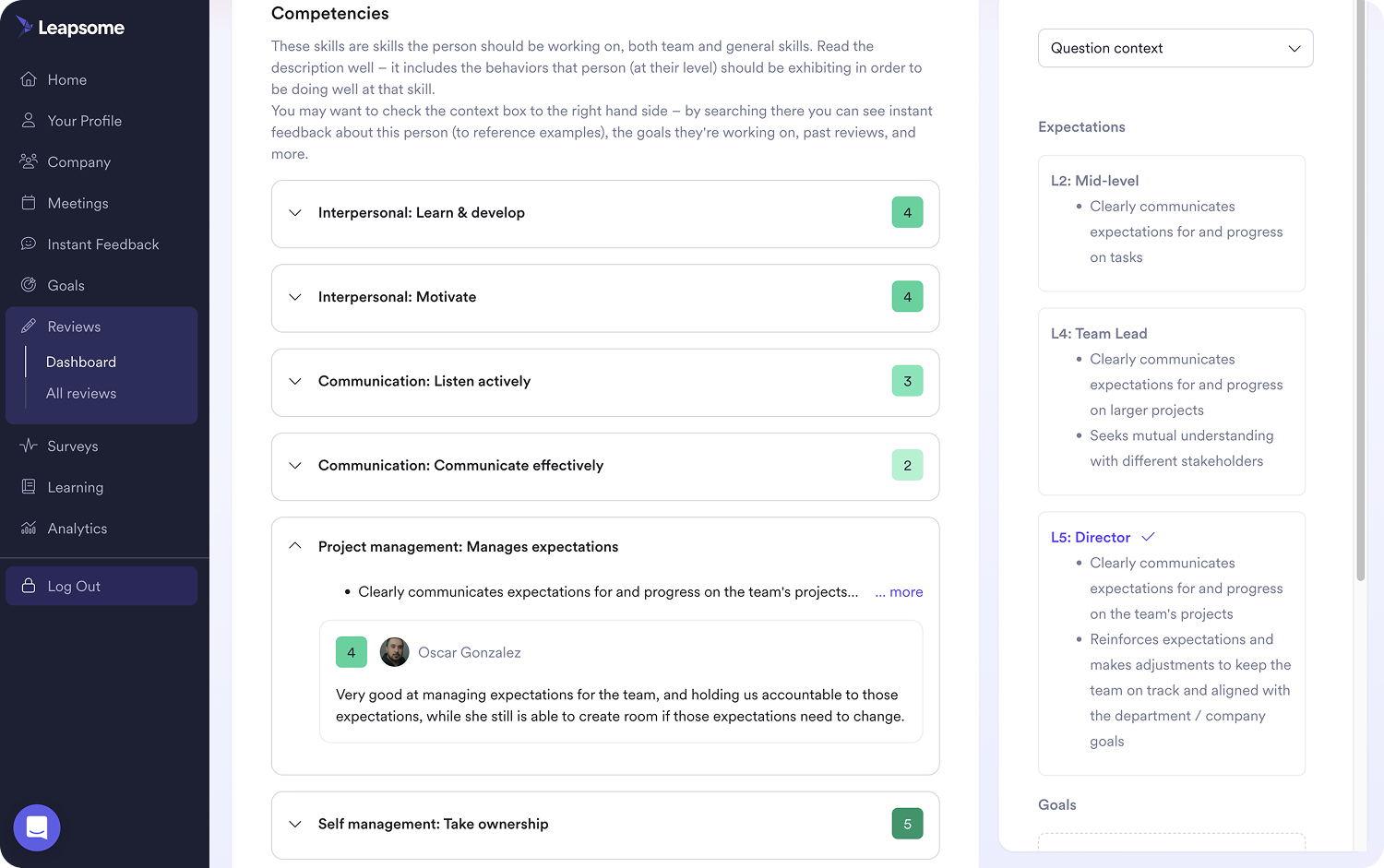
⚓ Support pay discussions with evidence
Leapsome’s Performance Reviews give managers consistent criteria for evaluating performance and supporting salary recommendations.
👉 Explore Performance Reviews
Why fair pay raises require a compensation philosophy
"Transparency doesn't mean sharing every number. It means explaining the logic — how pay decisions are made, what criteria are used, and how people can grow within the structure." — Alexandra Edl, Senior HR Consultant, Interim Manager, Coach &Trainer at EDL Consulting
According to Gartner, only 32% of employees believe their pay is fair. They want to know why they received 5% while a colleague received 7%.
An accurate salary increase percentage calculation can’t answer those questions, but a fair compensation strategy can. It explains what your organization rewards and sets boundaries for manager discretion.
Without that shared logic, every raise becomes a private negotiation between a manager and HR. Employees hear different explanations depending on their managers, which can make technically correct pay decisions feel arbitrary.
Here’s how you can establish fair compensation management.
Set the rules before managers make recommendations
"Creating pay bands means defining minimums, midpoints, and maximums for each role. It's not just a number, it's a system that supports fairness, clarity, and long-term growth."
— Alexandra Edl, Senior HR Consultant, Interim Manager, Coach & Trainer at EDL Consulting
HR should set transparent rules for pay raises before managers make recommendations.
Define what qualifies someone for a merit increase before the review cycle begins. Clarify how market adjustments differ from performance-based raises and document when exceptions require HR approval.
Use evidence without letting one metric take over
Managerial judgment is important, but it shouldn’t override the organization’s compensation principles. Test each recommendation against performance evidence and current market data. Then, verify whether the result maintains internal equity. These checks give HR a more defensible basis for the final decision.
Equip managers to explain pay decisions consistently
"Money is a sensitive topic, so communication is everything. Use clear, simple language and make sure leaders know how to talk about pay with confidence and care."
— Alexandra Edl, Senior HR Consultant, Interim Manager, Coach & Trainer at EDL Consulting
Before 1:1s start, managers should understand how HR reached a pay decision and which criteria mattered most. They should also know what they can share with employees.
Give managers a clear rationale rather than a rigid script. They need enough structure to communicate consistently and enough flexibility to treat each employee like their own person. Leapsome brings salary recommendations and relevant employee data into one process, helping HR prepare managers before pay conversations begin.
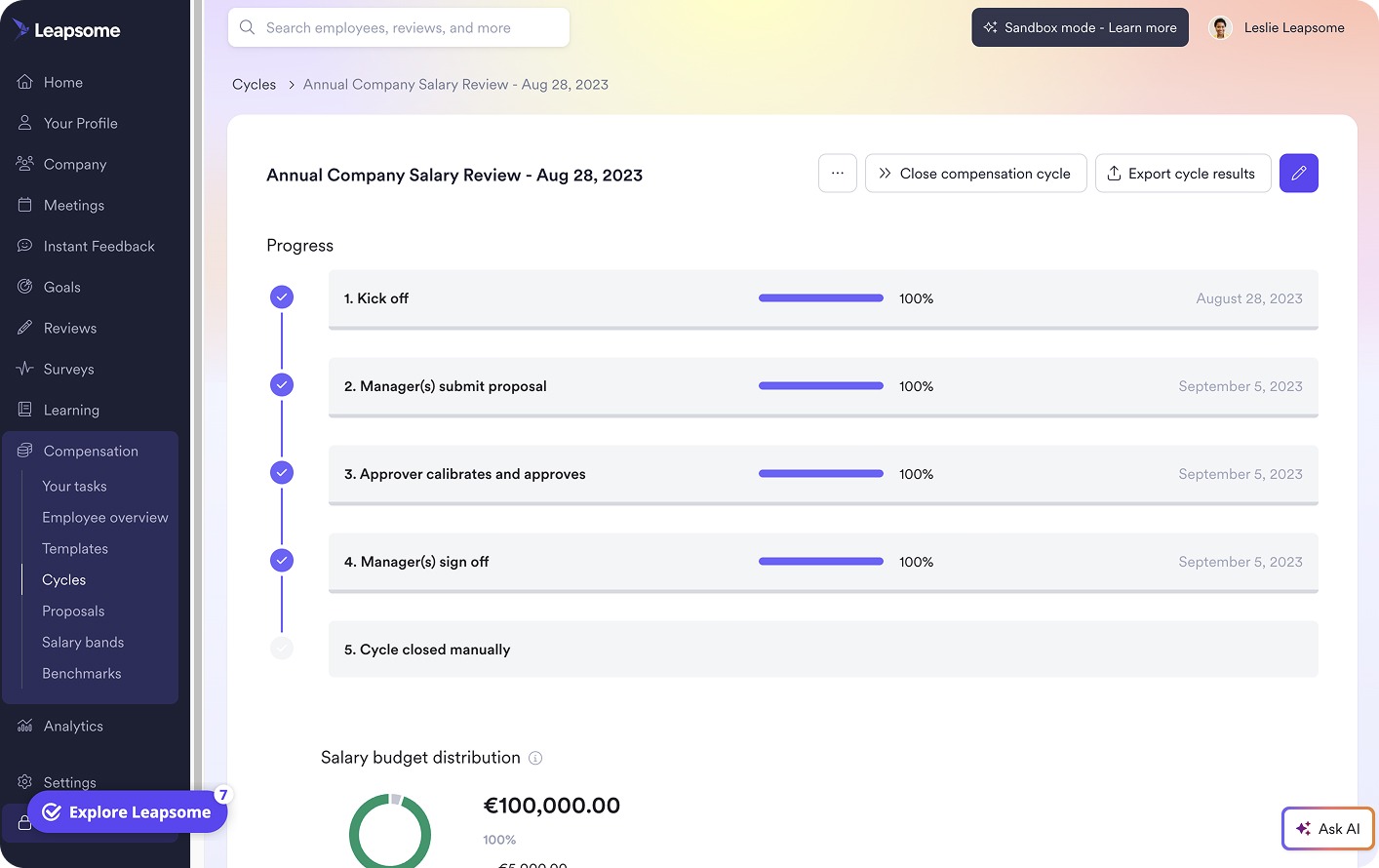
💰 Make compensation reviews consistent
Leapsome’s Compensation Management gives HR and managers a shared process for making informed salary recommendations.
👉 Explore Compensation Management
Make better compensation decisions with Leapsome
A pay raise calculator shows the financial impact of a proposed increase. It can’t tell you whether the recommendation is fair or whether a manager can defend it. That requires reliable evidence and a consistent process.
At a smaller company, HR may be able to review each recommendation manually. Growth often exposes the limits of that approach. Performance evidence sits in one tool, while salary proposals move through spreadsheets. HR may not spot an inconsistency until after they’ve given budget approval.
Leapsome gives HR a more structured way to run compensation reviews. Our all-in-one HR platform helps teams:
- Connect pay with performance: Compensation and Performance Reviews bring salary recommendations into the same process as performance evidence.
- Assess growth against shared expectations: Goals & OKRs show progress, while Competencies clarify what development looks like at each level.
- Keep employee context with the decision: Employee Records give HR and managers access to relevant people data during compensation planning.
"Our main goal with the reviews was to foster a continuous feedback culture and ensure that the different inputs were linked in a structured way. Having this intuitive, user-friendly platform and being able to refer to the feedback received helps employees understand where to go next in their careers at Flink." — Theresa Bothe, Head of Organisational and People Development | Flink
💸 Make pay decisions with confidence
Leapsome connects compensation planning with performance evidence, so managers can make clearer recommendations and HR can keep reviews consistent.
👉 Request a demo
FAQ
What is a paycheck increase calculator?
A pay increase calculator estimates how much more an employee will earn per pay period after a raise. Enter their current pay and pay frequency. Then add the proposed increase to see the new gross paycheck amount.
The result doesn’t show the exact change in take-home pay unless the salary increase calculator accounts for taxes and other deductions.
How do I calculate a three percent raise?
To calculate a 3% raise, multiply the current income by 0.03. The formula is:
current salary 3100 + current salary
For example, a 3% raise on $50,000 would create a new annual salary of $51,500.

.png)


Automate, connect, and simplify all HR processes across the employee lifecycle.