Pay for performance: Models, set-up, and how to get it right

.png)
Linking pay to work outcomes sounds like a winning concept. Employees are more incentivized to get results, and organizations improve employee retention with the promise of financial rewards.
But does pay for performance actually work?
Although 64% of organizations report performance-based pay is effective for top performers, the model is only as valuable as the evaluation system underneath it.* Companies with well-defined performance management frameworks are better positioned to build out a meaningful pay for performance system.
As you evaluate whether pay for performance makes sense for your organization, review the core models and fundamentals behind successful compensation strategies. This guide offers a practical readiness framework to evaluate whether your business can support fair, data-backed pay for performance pay decisions.
*Aon, 2025
What is pay for performance?
“Seventy-five percent of the company spend is on salaries. If that’s not effectively spent, you’re throwing money away. HR exists to make sure it’s invested wisely.”
— Melanie Naranjo, Chief People Officer, Ethena
Unlike base salaries employees receive for fulfilling core responsibilities, performance-based compensation rewards measurable work. Employees who meet defined goals, such as revenue targets and project milestones, may receive commissions, bonuses, or company stock.
It’s not just sales teams that can use pay for performance effectively. Any company that can meaningfully assess employee contributions can set up a merit-based system that rewards individual, team, or company-wide performance.
Pros and cons of pay for performance
When implemented well, a performance-based compensation plan can deliver the following benefits:
Pros
- Drive stronger performance.
- Boost morale and retention.
- Promote accountability and efficiency.
Cons
- Can create unhealthy competition.
- Can encourage short-term gains over long-term strategy.
- Can cause mistrust if pay criteria isn’t clearly defined.
Main types of pay for performance?
Variable pay models differ across organizations, but each is designed to give employees a financial stake in shared success:
- Merit pay: Rewards sustained contributions based on annual performance increases.
- Performance bonuses or commissions: Provides payouts for meeting quarterly or annual targets, such as client deals, revenue generation, or project delivery.
- Team-based incentives and gainsharing: Distributes a bonus pool for attaining group achievements.
- Profit-sharing: Offers employees a percentage of company profits or stocks for strong long-term performance.
Many companies blend these pay-for-performance examples to support both short- and long-term objectives.
How to implement pay for performance fairly
“Pay transparency eliminates pay inequities, creating a fairer work environment. Disparities based on gender, race and other protected characteristics are identified and removed. In the process, pay transparency contributes to inclusive cultures, boosts trust and engagement, and results in more motivated and productive workers.”
— WorldatWork, 2023
HR teams eager to motivate employee performance often jump right into conversations about bonus amounts and commission structures. Before creating a merit-based compensation calculator, you need to understand how your organization fairly evaluates employee contributions.
Success hinges on having a consistent framework for setting goals and reviewing performance. Here’s how to build an equitable compensation framework at your organization:
- Define performance for each role: Create measurable criteria for performance expectations, tailored to responsibilities and experience levels.
- Create a consistent evaluation process: Set up feedback cycles, target tracking, and performance reviews that capture employee achievement.
- Make reward criteria transparent: Share your defined pay-for-performance model with your employees to ensure fairness and visibility into who qualifies for rewards.
- Set an audit schedule to adjust the model: Schedule regular audits to adjust your organization’s compensation strategy.
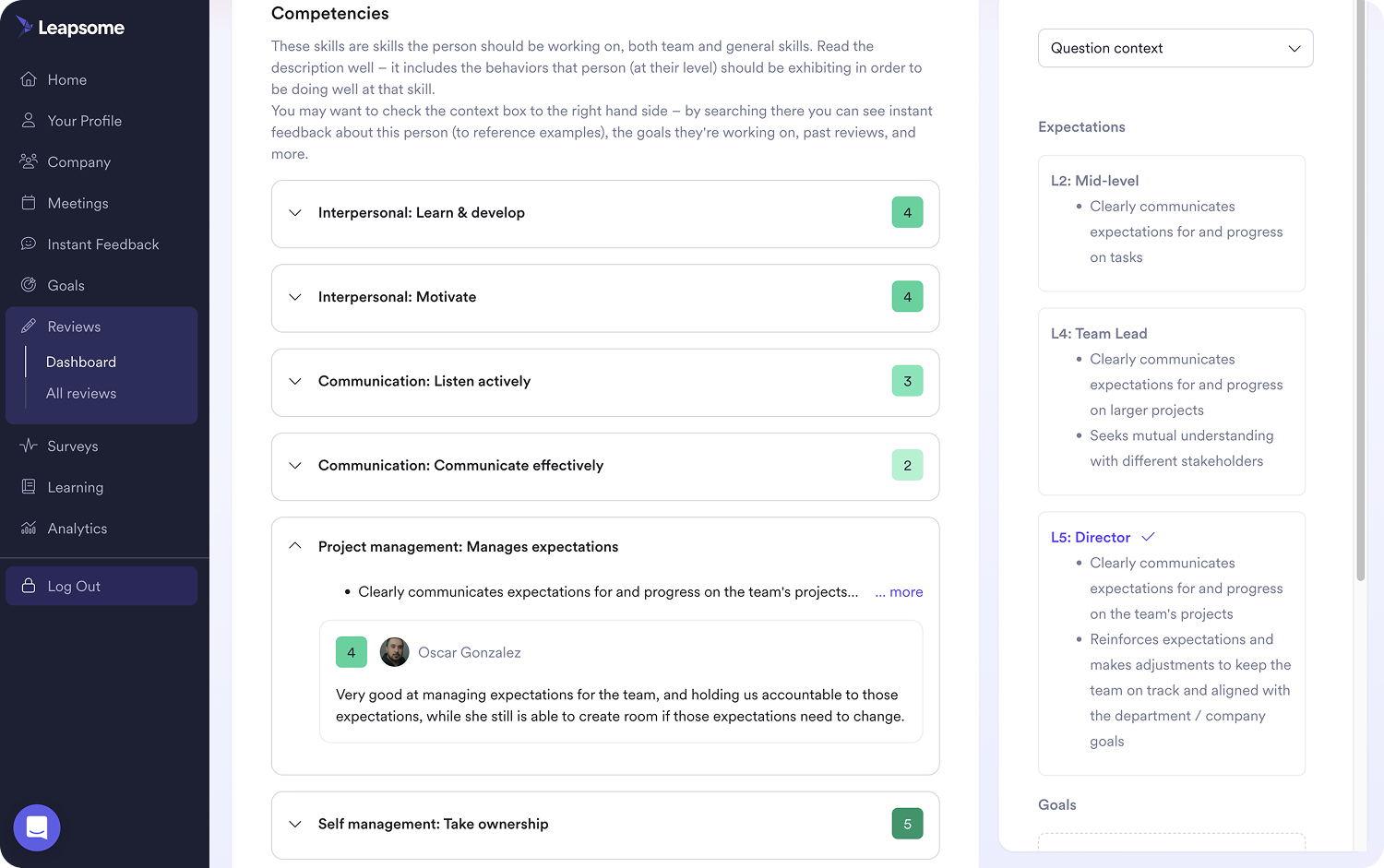
🔄 Set up people-centric review cycles
Collect a reliable, real-time base of performance evidence. See past ratings, feedback, and goal progress so you have full context to write employee reviews and recommend pay decisions.
👉 Customize your Performance Reviews
Is your performance system ready for pay for performance?
“Competency frameworks are not just checklists. They’re roadmaps for growth and accountability. They help managers coach more effectively and give employees a clear picture of how to succeed at every level. When expectations are written down, everyone understands what great looks like.” — Monica Sarkar, Co-Founder, Purple Umbrella
Before linking compensation to performance, first assess whether you can accurately measure employee contributions. Start with these key considerations that underpin unbiased performance evaluation.
Employees know what good performance looks like
“The most fundamental aspect of productivity is knowing what’s expected of you. Without clear expectations, there is no agreed upon standard or roadmap for success.”
— Gallup, 2024
Employees need a solid grasp of their job expectations, including goals, competencies, and role responsibilities. If this isn’t clear, they’ll struggle to understand pay-for-performance thresholds for good performance.
If expectations are unclear, reboot goal setting and feedback cycles between employees and managers so criteria are well-defined. Be aware that not every role has obvious revenue or productivity KPIs. For knowledge work, performance metrics may be more subjective, and employees need stronger guidance to support accurate evaluation and ongoing feedback.
Managers can make consistent performance judgments
“Pay gaps show the average difference between groups, but that doesn’t tell the full story. Pay equity means comparing like with like: same role, same experience, same performance.”
— Alexandra Edl, Senior HR Consultant, Interim Manager, Coach & Trainer, EDL Consulting
Aon reports that 79% of organizations struggle with inconsistent manager evaluations, which can undermine pay-for-performance schemes. For example, if one manager rates conservatively while another routinely awards top ratings, performance compensation differences may reflect manager behavior rather than employee contribution.
Organizations must have well-structured criteria and manager training to ensure that evaluations are uniform across teams. It also helps to use multiple sources of performance evidence for well-rounded judgments.
Employees can understand why pay decisions were made
“Transparency doesn’t mean sharing every number. It means explaining the logic — how pay decisions are made, what criteria are used, and how people can grow within the structure.”
— Alexandra Edl, Senior HR Consultant, Interim Manager, Coach & Trainer, EDL Consulting
You don’t need to share your full compensation calculator, but your employees should understand the key factors that impact performance pay decisions. Transparency helps employees understand bonus thresholds and supports fairness and equitable opportunities. According to PayScale’s 2026 Compensation Best Practices Report, 49% of organizations are trying to improve pay transparency as a way to counter misinformation and perceptions of unfairness.
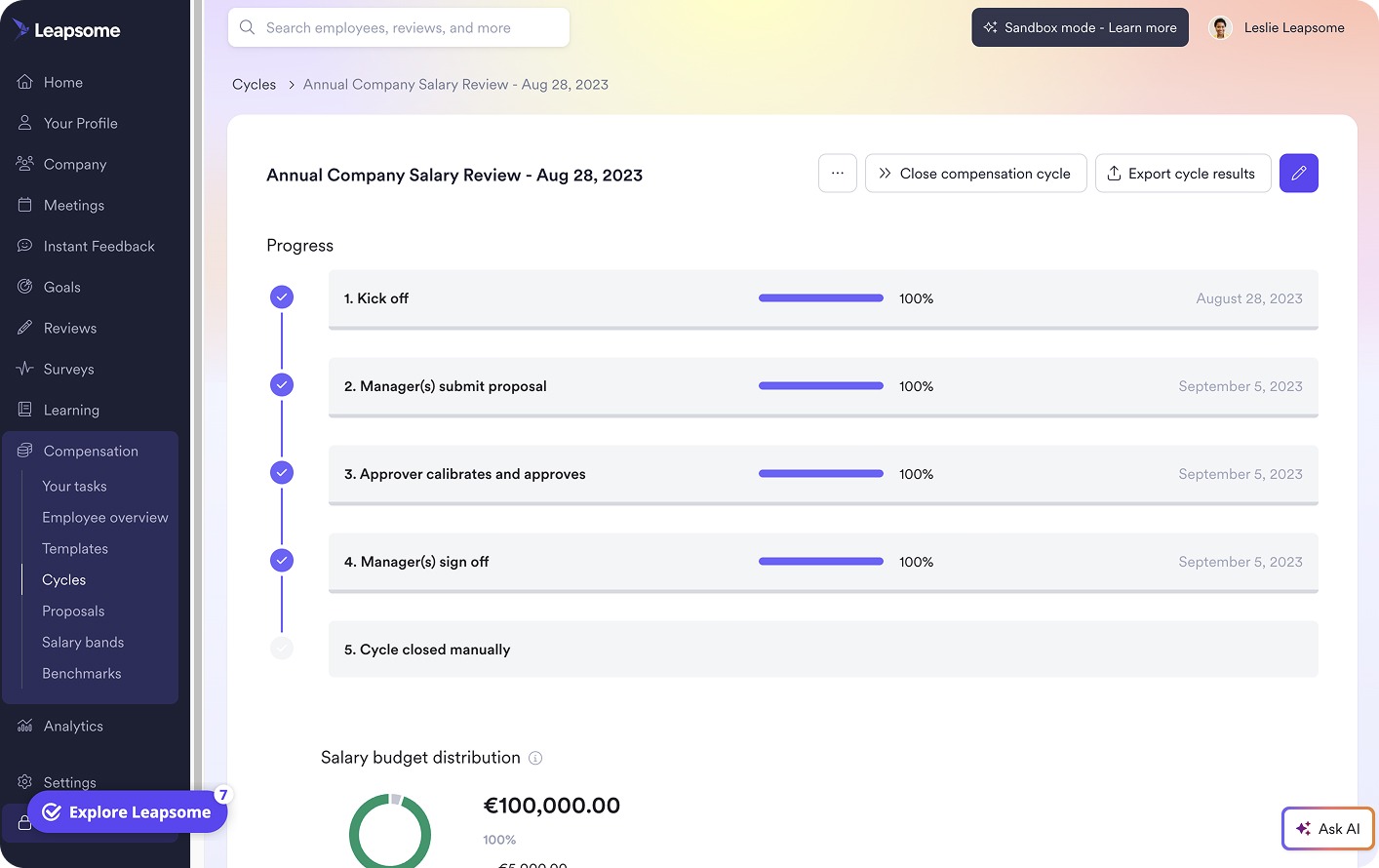
🤝🏻 Create a pay framework everybody trusts
Make data-backed pay decisions that enhance equity and transparency. Leapsome unifies past performance ratings, compensation rules, and managerial views for informed growth conversations.
👉 Decide fair Compensation
Build people-first pay for performance with Leapsome
“When people know reviews actually lead to growth, they stop dreading them and start investing in them. Linking feedback to concrete outcomes like pay, promotions, and learning plans turns performance conversations into moments of empowerment. It sends the message that great work is recognized, rewarded, and developed.”
— Monica Sarkar, Co-Founder, Purple Umbrella
Performance-based pay is more than an isolated annual calculation. For this model to succeed, it needs a steady flow of evidence that shows how people progress toward goals and meet role expectations. When that system sits in one place, HR and managers can make decisions that reflect real contributions.
Fragmented processes make this impossible. Gaps in feedback and inconsistent records lead to inequitable pay decisions that frustrate employees rather than motivate them.
Leapsome supports HR teams and managers in creating strong data foundations by:
- Gathering performance evidence: That shows ratings, feedback, and progress for fair decisions through performance reviews.
- Supporting ongoing career development: With defined paths that guide coaching and development using competencies.
- Tracking progress toward goals: So teams see momentum, spot delays, and stay accountable through goals and OKRs.
- Linking pay and promotions to results: With rules that draw directly from verified performance data in compensation.
Earn employee trust by implementing evidence-based pay for performance. Leapsome consolidates performance records, compensation rules, and manager recommendations for equitable and morale-boosting pay decisions.
“Leapsome did a really great job with performance, OKR, and feedback management — everything in one platform.” — Zhen Wang, People Servicer, Jina AI
🎯 Connect your performance and people data
Lay the groundwork for pay for performance by unifying performance records, goal setting, feedback cycles, and compensation rules into a single evidence base. Leapsome help you fairly compensate your people and grow their careers in the long term.
👉 Request a demo
Pay for performance FAQs
What is pay for performance in healthcare?
Healthcare organizations use pay-for performance compensation to reward employees for meeting quality or efficiency targets. Common performance metrics in healthcare include clinical outcomes, patient satisfaction, readmission rates, and effective resource use.




Automate, connect, and simplify all HR processes across the employee lifecycle.