Letters of recommendation for employees: Best practices + template


A letter of recommendation for an employee is a formal endorsement that helps another organization understand how someone performed and created value in a role. According to SHRM, 65% of HR professionals and a whopping 90% of supervisors report that verifying a prospect’s skills makes a moderate to very high impact on the team’s decision to hire.* Letters of recommendation are one way to reinforce the employee’s hard work, no matter what move they want to make.
If you treat this letter like a simple list of responsibilities with a few kind words attached, it can sound generic and may not pull its weight. A useful recommendation letter gives specific examples, explains what made the employee good at their role, and helps the reader understand why the endorsement is something they should take seriously.
That level of detail is hard to produce when an organization has no system to capture details about employee development over the lifecycle. If feedback lives in scattered notes and managers only review performance once a year, it’s hard to compile a detailed story when it’s time to write a recommendation.
In this article, we’ll explore how the right people management setup gives you the context you need to write a persuasive recommendation and provides a template for a letter of recommendation for your employees.
* SHRM, 2025
What’s a letter of recommendation for an employee?
A recommendation letter for an employee gives a third party a work-based perspective on someone’s abilities and potential. It can support everything from internal promotions to further education opportunities. These letters are usually written by someone who worked closely with the employee and can speak to how they handled responsibilities, like a manager or senior business leader.
Unlike a basic employment verification letter, a recommendation explains why the employee is a strong candidate for the next step. These letters usually include the employee’s key strengths, relevant accomplishments, and examples that show how they performed their role in practice.
What recommendation letters reveal about your people processes
A recommendation request can feel like a small task, especially when the employee has already done good work and you want to help them move forward. But when it’s time to sit down and write, many leaders realize they lack the right words.
It’s tempting to fill the page with warm but generic praise when context isn’t immediately available. These superficial recommendations may sound positive, but they rarely make a strong case. A credible reference letter needs a clear connection between the employee’s strengths and their impact at work, which is easier to find when your people processes capture the employee’s growth over time.
Continuous feedback creates stronger performance visibility
“The best managers care deeply, they know where you want to grow, challenge you when needed, and make space for honest feedback.”
— Luck Dookchitra, former VP of People and Culture at Leapsome
Ongoing feedback gives managers the evidence they need to write a specific recommendation letter and sample recommendation letters for employees. It helps letter-writers transform vague phrases like “they communicate well” to concrete examples of how the employee clarified a difficult handoff or helped a project move forward.
To build that evidence, managers need feedback to become part of their automatic workflow, not another note they have to remember to save. Collecting feedback as it’s given (especially when it happens automatically through an HRIS) keeps details fresh and high-impact contributors easy to spot.
Feedback also makes the recommendation fairer. Without documented feedback, managers often lean on the most visible project or last few weeks of work — a clear example of recency bias. A stronger feedback process gives them a fuller view of the employee’s impact over time.
Development conversations provide evidence of growth
“Growth isn’t just about giving you a new title or more money — it’s about mastering new competencies that make you more valuable to the business.”
— Janelle Daugherty, Head of People and Culture at Notion Health
Instead of limiting the letter to current performance, managers can use structured development and 1:1 conversations to prove the employee’s growth potential. One employee might become more confident leading client conversations after working on their stakeholder communication skills. Maybe another took on more task ownership after discussing their next growth area.
Recounting those journeys will impact a letter of recommendation far beyond naming the employee’s current skills because it proves the employee can learn and keep building capability. Employers increasingly value this ability: The World Economic Forum names curiosity and lifelong learning among the top 10 core skills for today’s work, for instance.
Recognition and achievement-tracking improve credibility
“When leaders see and call out individual contributions, it builds purpose and belonging.”
— Luck Dookchitra, former VP of People and Culture at Leapsome
Recommendation letters often fall back on vague praise. Phrases like “has a positive attitude” and “possesses technical abilities” only move the needle when the letter shows what those qualities look like in action.
Not every valuable contribution shows up in a formal review. An employee may help a teammate succeed or solve a problem before it escalates. If managers don’t capture those moments in public praise, they often don’t show up in recommendations.
Documented recognition and achievement-tracking make that easier. They give managers a clearer way to articulate attributes because they connect praise to moments at work. When people data provides structured insight across the employee lifecycle, HR leaders can give managers the context they need to write recommendations that reflect real employee growth.
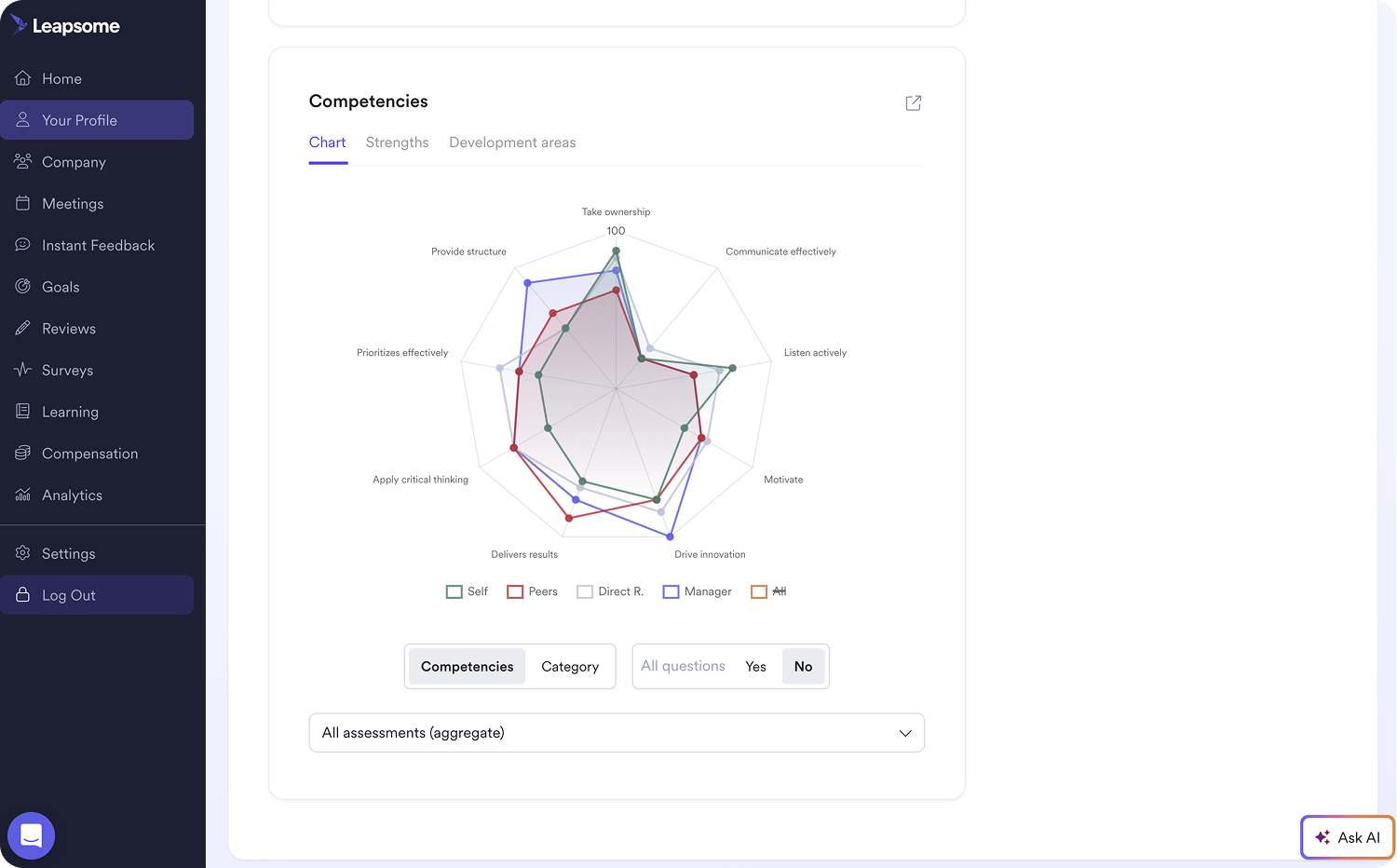
🌎 See the bigger picture of employee growth
Leapsome centralizes performance reviews and feedback, so managers have accurate, up-to-date employee context when writing recommendation letters.
👉 Explore Competency Framework
Writing the letter: Tips + a template
A strong recommendation letter relies on a clear point of view and enough evidence to support it. Before writing, make sure you have at least one example for each major claim you’re making. Each point should align with what the letter needs to prove: A recommendation letter for job applications may focus on business impact, while a promotion recommendation may talk about readiness for more responsibility.
Here are a few tips on how to write a strong employee recommendation letter.
Start with the employee relationship and context
Open your letter by providing context for the reader. For an external recommendation, start with introducing yourself (including who you are, how you know the employee, and your company name). Internal letters need less grounding context, but you should still specify if you managed the employee directly or worked with them on a team to give the reader more reason to trust your perspective.
Keep the recommendation clear, personalized, and professional
A persuasive recommendation should sound human, not inflated. Grandiose claims, like “this employee is the best person who’s ever set foot in our office,” undercut your efforts even more than vague statements — unless it’s actually true and you have the examples to prove it. Keep the praise warm but grounded.
A sample recommendation letter for an employee from a manager might compliment how the employee handled unclear priorities or how they supported teammates during a difficult project. Those details show the reader what you saw directly, not just the end result.
Neither overhyping nor underselling the employee’s qualifications gives readers the right context in a letter of recommendation. These letters are meant to help others understand how the employee may perform in a similar role or what they’re capable of achieving in a classroom.
To tailor the details in your letter to the story you’re telling about the employee, use a centralized HRIS and people management system like Leapsome. By going over all the employee’s records and performance history, it’s much easier to come up with examples that feel personal and professional.
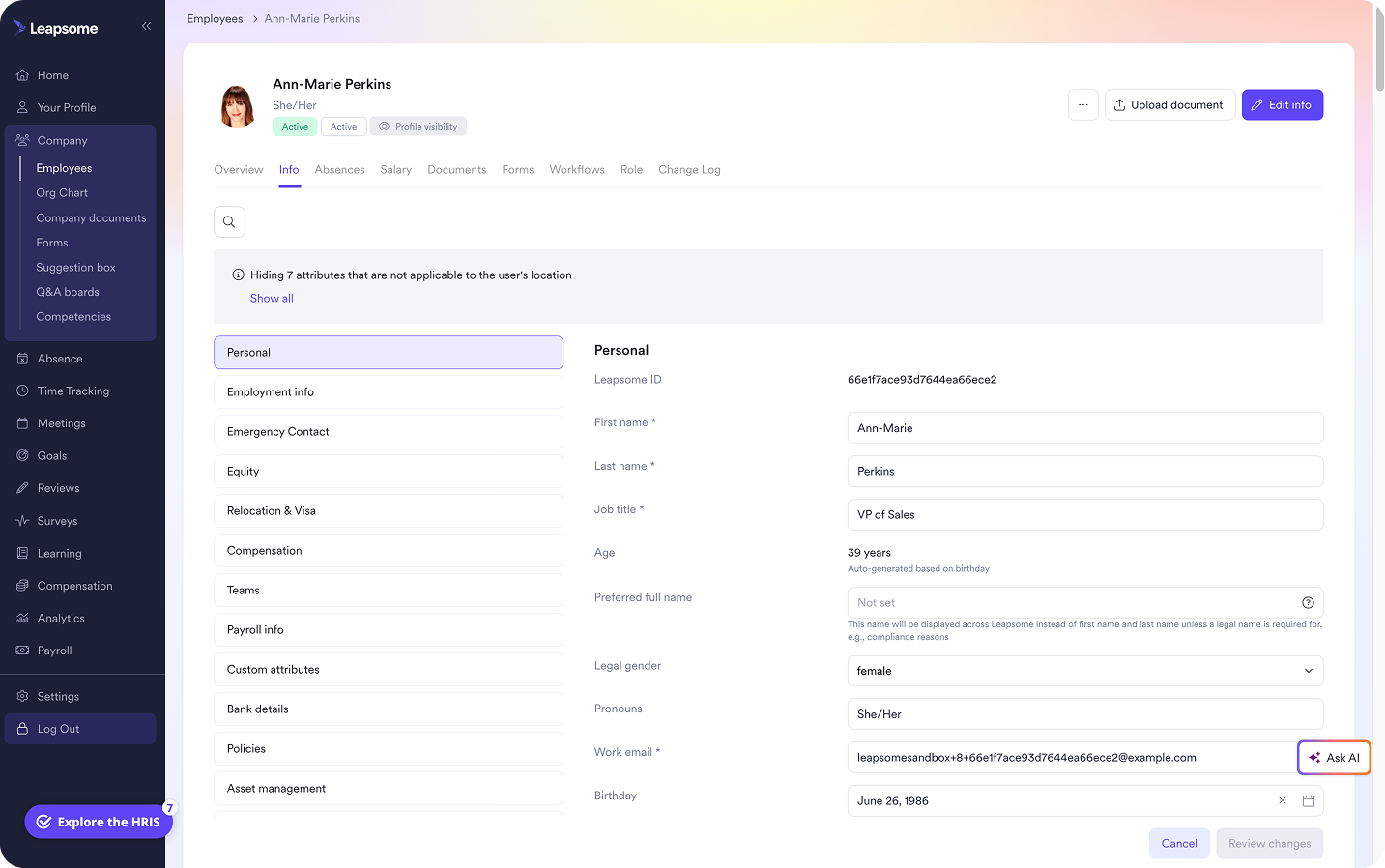
💾 Keep relevant recommendation facts in one system
Leapsome brings employee records and performance context into one platform, so HR teams can build recommendation workflows for a smoother letter-writing process.
👉 Explore Employee Records
Include specific performance examples and strengths
Review past feedback, goal progress, and recognition notes before writing, then center your letter around strengths you can back up with data. For example, instead of writing that someone is good at problem solving, show where that support improved a process, such as how they helped a new hire adjust faster by sharing practical feedback and writing down unspoken procedures to create clearer handover notes.
Like in a performance review, including numbers and figures in your letter is a fast way to establish authority and improve your claims.
✍️ Write persuasive recommendations with less guesswork
We’ve put together a template you can use to quickly compose a strong recommendation letter whenever you need to.
👉 Download the template now
Simplify writing letters of recommendation with Leapsome
HR and managers might know an employee contributed, but it can be hard to capture praise for it without sounding insincere.
Scattered records create unnecessary reconstruction work when an employee asks for a recommendation. Instead of pulling inspiration and information from a centralized system, managers have to piece together the story from memory, and are more likely to lean on vague examples and platitudes. And when feedback sits in one tool, development notes are buried in 1:1s, and performance examples only appear during annual review sessions, piecing together the details takes longer than actually writing the letter.
Leapsome is a connected HRIS and people management platform that brings employee feedback and performance management into one place. Managers can see how employees have grown, where they received recognition, and which of their triumphs you can use to support your recommendation.
With Leapsome, HR teams can:
- Connect employee records to performance context: Keep employee feedback, reviews, and goals connected to each profile.
- Make employee contributions easier to find: Use continuous feedback and recognition to capture impact while it’s still fresh.
- Track growth across development touchpoints: Bring 1:1 notes, learning progress, and goal updates into a clearer employee growth story.
- Turn people data into stronger recommendations: Connect all these insights to help managers write recommendation letters with more detail and less guesswork.
“Employees can now find everything in one place — their data, absences, goals, and reviews. I don’t have to explain which tool to use for what. It’s all in Leapsome.” — Merilyn L., Senior People Operations Specialist at Bob W.
🪟 Keep the entire employee lifecycle visible
Leapsome’s HRIS and people management platform brings relevant people data insights into one place, so managers can support growth today and write better recommendations tomorrow.
👉 Request a demo

.jpg)