Three top employee training tracking software platforms


Employee training tracking software helps HR teams assign training programs, monitor progress, and simplify record-keeping and reporting. Yet while 85% of HR and learning and development (L&D) professionals use talent development systems, only 6% rate them “outstanding.”*
Teams adopt employee tracking software to manage core tasks, such as compliance, onboarding, and course delivery. These tasks matter, but they don’t reveal whether training is improving capability. Effective training tracking software must also show whether learning is closing real skill gaps and supporting performance.
This guide covers what effective employee training tracking software looks like. We’ll show you some of the top options available and how to decide if a platform supports meaningful skill-building.
* Skillsoft, 2025
What to look for in employee training tracking software
To find the right employee training tracker, focus on the specific training goals and workflows the software needs to support. Score candidate solutions across these areas:
- Tracking and automation: This covers the basics, such as automatically assigning training plans, tracking progress, and keeping reliable records. It helps if the software sends reminders about time-sensitive issues, such as overdue assignments or expiring certifications.
- Reporting and assessment: Look for customizable reports that go beyond completion. Strong reporting includes analytics like quiz or assessment results and flags employees who need extra support. According to a Training Industry survey, 17% of organizations don’t measure training impact at all, so even modest reporting puts you ahead of many teams.
- Ease of use: Even if it has everything you need, a training tracker won’t be much help if employees and HR teams struggle to use it. The user experience should be intuitive for both HR and employees. If it’s a full-suite platform that includes course creation, it should be straightforward to tailor programs to specific employees. As Deloitte points out, personalized skills-based learning programs help employees concentrate on honing the skills most relevant to wider organizational needs.
- Scalability: Make sure candidate platforms have the capacity to keep up with growth as your company size increases.
“Enablement isn’t a one-time training. It’s about continuous coaching, peer connection, and giving managers tools that actually help them in the moment.”
— Anja Schauer, Global Head of Customer Success, Leapsome
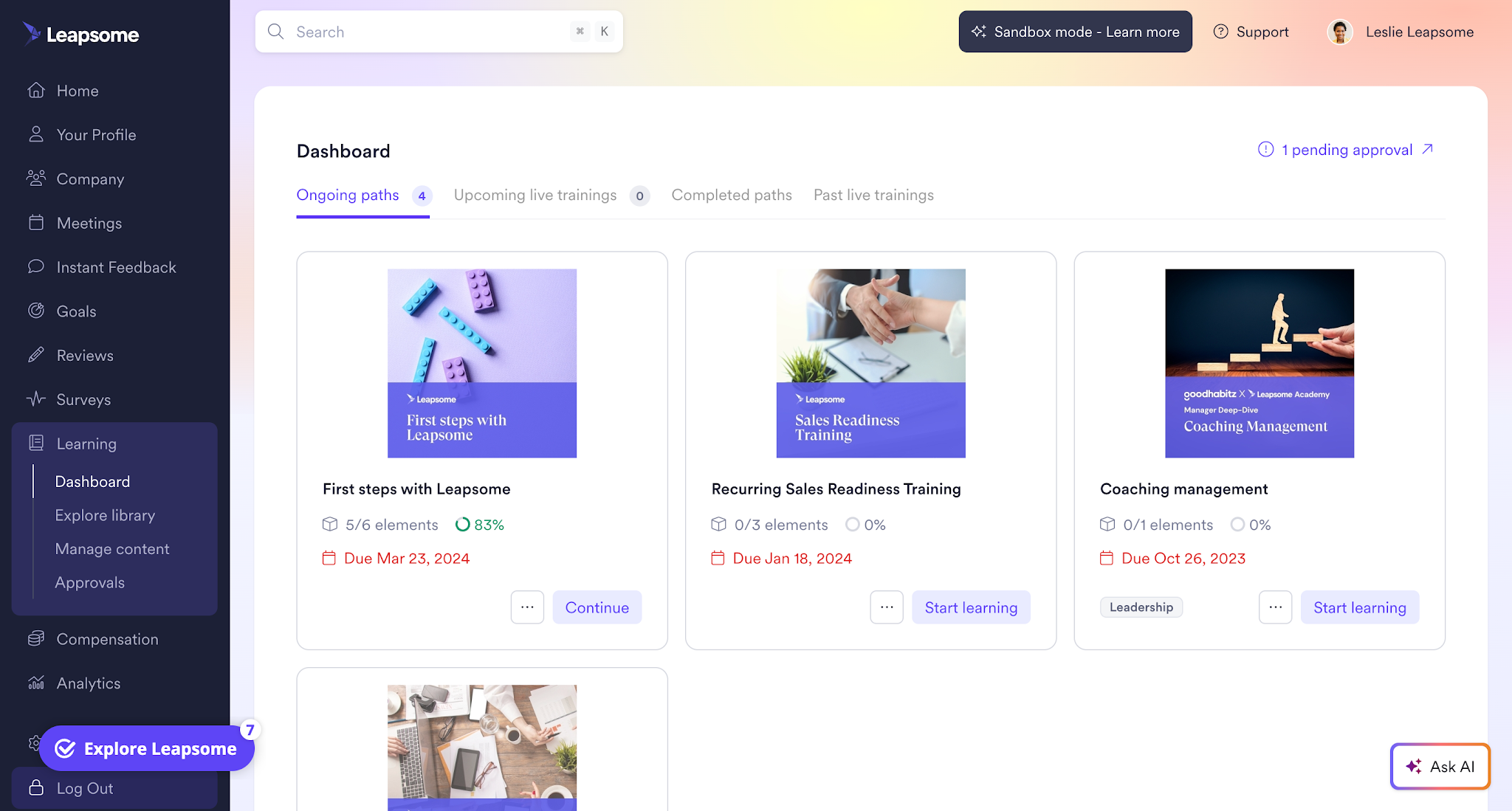
Leapsome’s corporate learning management system (LMS) comes with AI-assisted course creation supported by automatic role-based enrollment, learning assessment, and tools for just about everything that happens in between.
🥊 Train with purpose
Choose employee training software that links learning to goals, HRIS data, reviews, and competencies to create an interconnected system that shows whether training is driving real business results.
👉 Explore Learning
What’s the best software for tracking training? Three picks
In 2025, 59% of CHROs told Gallup that development was one of the aspects of employee experience their organization struggled with the most. The right software for tracking employee training can change that, but finding it isn’t always easy.
There’s no single platform that’s ideal for every organization. The optimal choice depends on factors like your company size, compliance needs, development goals, and budget.
Here’s an overview of three top training trackers worth considering.
1. Leapsome
Leapsome is a full-featured employee training management software platform. With it, teams build learning paths using AI-powered assistance or by choosing from pre-built courses created by experts. After launch, teams can easily assess how learning programs affect business outcomes without manually piecing together spreadsheet data. This works because learning data flows directly into competencies, performance reviews, and company goals.
A few users find that getting to grips with the wide range of features comes with a learning curve and that initial setup takes time.
Pricing starts at $7 per employee per month for the basic Agentic HRIS Foundation package. From there, you can add just the Talent Suite modules you need for an additional monthly charge, with Learning costing $4 per employee per month.
2. TalentLMS
TalentLMS offers a simple AI-driven interface for creating and assessing learning programs. Users can generate tests and flashcards from courses, then fine-tune them to better match specific training goals.
Some reviewers say branding and portal customization are limited. It’s also a standalone system, so you’ll need separate HR software to connect learning to the rest of your people data.
TalentLMS has a limited free plan with support for up to 5 users and 10 courses. Paid plans range from $149 per month for the Core plan for up to 40 users to $969 per month for a Pro plan that supports up to 1,000 users. Annual plans come with cost savings. Organizations that need more can talk to TalentLMS about designing a custom Enterprise plan.
3. 360Learning
360Learning focuses on connecting learning to performance through AI and collaborative learning. Teams can design interactive, multimodal employee experiences using AI assistance and collaborative authoring tools.
Some reviewers cite limited reporting and analytics and slow customer support as downsides. Others mention confusing navigation in certain areas, including session creation and role management.
Pricing starts at $8 per user per month for a Team plan supporting up to 100 users, with custom Business and Enterprise plans for scaling teams and large companies.
Evaluating whether training tracking supports upskilling
“We keep measuring whether people show up or not. We should be measuring what they’re doing when they’re there. Quantity only measures activity… outcomes should.”
— Steve Browne, Chief People Officer, LaRosa’s, Inc.
Most training tracking software comparisons focus on bare-bones features. These include seeing when an employee enrolls in or completes a course, passes an assessment, or holds a certification. These metrics only confirm training occurred. They don’t show whether employees gained relevant skills.
To evaluate training trackers effectively, focus on these diagnostic questions instead:
- Can you connect learning with development goals? Tracking training for employees is most useful when it’s tied to specific skills or competencies. The platform should be able to assign or build learning around clear role expectations, career paths, and individual goals. A LinkedIn report found learners who set career goals are four times more engaged with learning.
- Can you assess development beyond completion? Gartner data shows that employees apply just 54% of the new skills they learn. Platforms with robust assessment functionality and competency frameworks highlight skill progression and help verify whether learning closes skill gaps and improves performance.
- Can performance conversations reveal learning needs? Look for software that makes it easy to turn gaps into targeted development by mining insights from well-run performance reviews and manager feedback.
“When people know reviews actually lead to growth, they stop dreading them and start investing in them. Linking feedback to concrete outcomes like pay, promotions, and learning plans turns performance conversations into moments of empowerment.”
— Monica Sarkar, Co-Founder, Purple Umbrella
The goal of training tracking isn’t just to monitor whether employees are getting their learning work done. It’s to reveal whether that learning is actually building the capabilities you need.
Learning how to track employee training effectively requires tools that connect learning to the capabilities you want to cultivate. That’s where Leapsome can help.
“We segmented our job levels so managers and employees can see exactly what skills they need to move up. Growth isn’t just about giving you a new title or more money — it’s about mastering new competencies that make you more valuable to the business.” — Janelle Daugherty, Head of People & Culture, Notion Health
🧭 Inform learning with hard data
Define clear, role-based skills and proficiency expectations, then use structured performance reviews to identify development gaps and build learning paths around them.
👉 Explore Competency Frameworks and Performance Reviews
From stale progress tracking to skill-building with Leapsome
Lean HR teams spend more than enough time assigning training, tracking progress, and writing reports. Many of them end up looking for new tools to lighten their workload. But the wrong choice can create just another system to administer instead of saving time and revealing whether training is really improving performance.
Leapsome is an AI-powered HR platform that combines core HR functions with talent management tools that help teams move beyond basic administration. It supports strategic people enablement with features that help strengthen the following:
- Learning: Design custom learning paths from scratch, use AI for guided course creation, or choose from an expert-curated library. Enroll employees automatically, then track progress and test knowledge using assessment quizzes.
- Goals and OKRs: Link development activities to individual and team goals to surround each training program with proper context. This helps employees see the bigger picture.
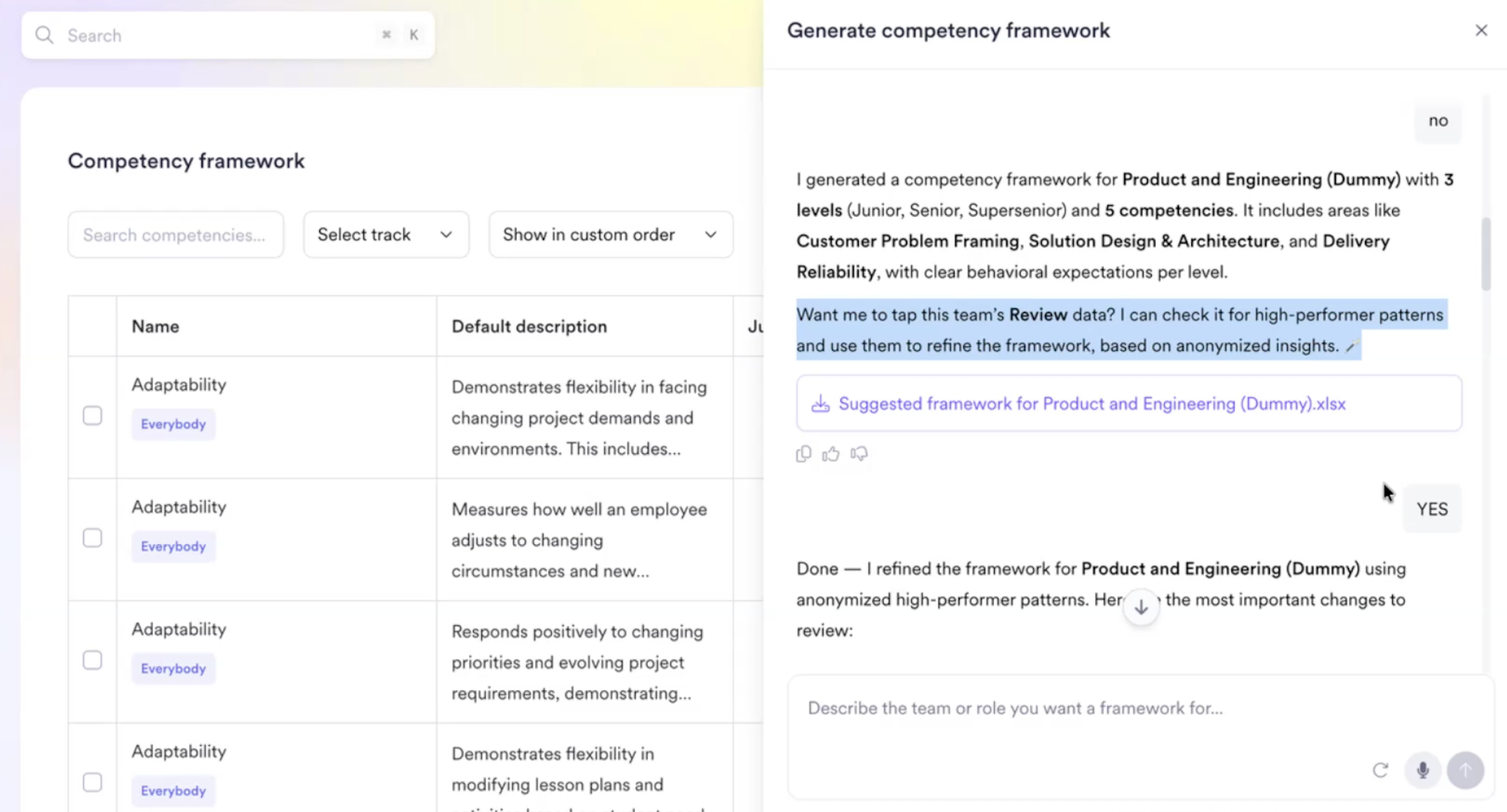
- Competency Frameworks and Performance Reviews: Run structured performance reviews to pinpoint skill gaps and build targeted training programs around them based on clear expectations.
“Competency frameworks are not just checklists, they’re roadmaps for growth and accountability. They help managers coach more effectively and give employees a clear picture of how to succeed at every level. When expectations are written down, everyone understands what great looks like.”
— Monica Sarkar, Co-Founder, Purple Umbrella
Leapsome’s interconnected platform gives HR teams the operational visibility they need without treating course completion as an end in itself. It embeds learning into your broader approach to employee development and performance management instead of treating it as an afterthought.
“Leapsome is very user-friendly — both for HR and for our employees. It gave us the flexibility to implement our specific feedback process, and it has reduced a lot of the manual work we would have had to do.” — Nina Thiessen, Head of Talent Acquisition and HR Management | EGYM
🌱 Close gaps instead of ticking boxes
Link learning programs to performance reviews, competencies, and goals in one centralized platform to build training around true skill gaps.
👉 Request a demo
FAQ
How much does employee training tracking software cost?
Employee training tracking software pricing varies depending on the features you need, your company size, and the pricing model.
Monthly per-user pricing often starts below $10, while tiered plans can reach into the hundreds depending on how many employees you need to support. Custom enterprise plans may hit four figures. Some platforms offer an à la carte model that lets you pay for just the specific features you actually need.