Cross-training employees: A practical guide


Cross-training employees means preparing them to take on essential responsibilities beyond their primary roles. If you rely on only a few specialists who carry deep process knowledge, there’s room for risk when workloads shift or someone is absent.
Today’s work environment adds to that pressure: Employers expect 39% of workers’ core skills to change by 2030*. That pace of change makes stable coverage difficult without broader training.
Many organizations still act only when gaps appear. A resignation or extended leave triggers a rushed handover, and teams try to absorb years of judgment while deadlines continue. This reactive approach slows operations and limits employee development when the business needs stability.
Employee cross-training offers a more strategic path. This guide shows how it strengthens daily coverage and reduces dependency on single experts. We’ll also take a look at how to build a structured plan that prepares employees for future roles.
* World Economic Forum, 2025
What’s employee cross-training?
Employee cross-training is a structured way to teach someone specific skills outside their usual duties. Another trained employee demonstrates how to perform these new tasks, explaining key steps and supervising until the learner can work independently.
The following benefits of cross-training strengthen teams and prepare people for transitions.
Building skills across roles
“Upskilling is where it is. Companies are flatter now — ladders are gone. Broad and deep growth is endless. AI gives people a diving board to develop more.”
— Steve Browne, Chief People Officer at LaRosa’s
Employees build practical skills they can use across the team. This gives managers more reliable coverage when work shifts. For example, an HR business partner who learns how people operations processes employee changes can step in during busy periods. They also submit cleaner requests in their main role, which reduces rework and improves coordination between the two functions.
Supporting operational flexibility
When a team member takes leave, a cross-trained colleague can take over agreed tasks without learning under pressure. Managers can also reallocate defined work during a seasonal spike.
Developing future capabilities
“We’re seeing the move from a jobs-based economy to a skills-based one and AI is the catalyst. It helps identify skill gaps, recommend learning, and personalize development at scale.”
— Luck Dookchitra, VP, People & Culture
Organizations recognize workforce adaptability as a priority. Deloitte’s survey found that 85% of respondents consider it critical. However, the same survey shows limited progress: Just 7% say their organizations lead in this area.
Cross-training builds adaptability through day-to-day responsibilities. Employees practice unfamiliar work with support, and managers observe how they perform. HR can use that evidence to choose the employee’s next development step and assess their potential for future roles.
Cross-training builds workforce resilience before problems emerge
Most organizations agree that employees need to keep learning. However, McKinsey found that only 16% of global employers invest in adaptability and continuous-learning programs. With so little structured development in place, cross-training often happens only when filling a gap is urgent.
That timing creates problems. A manager may get two weeks’ notice to transfer years of experience from a departing employee to a new one. This forces the team to mimic routine steps without fully understanding the judgment behind them. Uncommon situations show up later, usually when a deadline is close and there’s no time to sort out the details.
HR can prevent this by identifying cross-training opportunities while work is still running smoothly. Ask each manager which tasks would slow down if one key employee were suddenly unavailable. That answer needs to be specific. “Finance would struggle” is vague, while “We would miss the payroll cutoff because only one employee can correct rejected inputs” gives you a clear risk to address.
Here are the steps that will help you investigate weak points and decide where the organization needs to cross-train another person.
Identify critical knowledge concentrated in a few employees
Some work depends heavily on one person’s experience. Managers often know who owns a process but not which parts are difficult to replace. A task may have written instructions, but only one employee might know how to fix bad data or handle unusual situations. Your goal is to find those tasks before they become a problem.
Once you find out which tasks would slow down during an absence, map out who currently owns each task and whether anyone else can perform it independently. Assess how a delay would affect the business and how long another employee would need to learn the task.
Prioritize processes that have no capable backup and carry serious consequences if they stall.
Use skill gaps to guide development priorities
Compare process requirements with the skills available across the team. If nobody else can handle the work, turn that gap into a development priority.
Review competency data and recent performance feedback to find employees with relevant experience. Then ask whether the opportunity supports their career goals. This helps you choose someone who can build on their current strengths and wants to take on the responsibility.
Add the selected skill to the employee’s training plan and explain how it supports the organization. This gives the manager a clear reason to prioritize it during future development conversations.
Connect cross-training to succession planning
At this stage, focus on the responsibilities that must stay active even if a role becomes vacant. Some tasks may pass to several employees rather than transfer as one complete role. Check whether each connected position has a named successor.
Use cross-training to prepare a potential successor before a role becomes vacant. Let them take on defined responsibilities and record where they still need support. With a connected HRIS like Leapsome, you can track who is ready and where succession gaps remain.
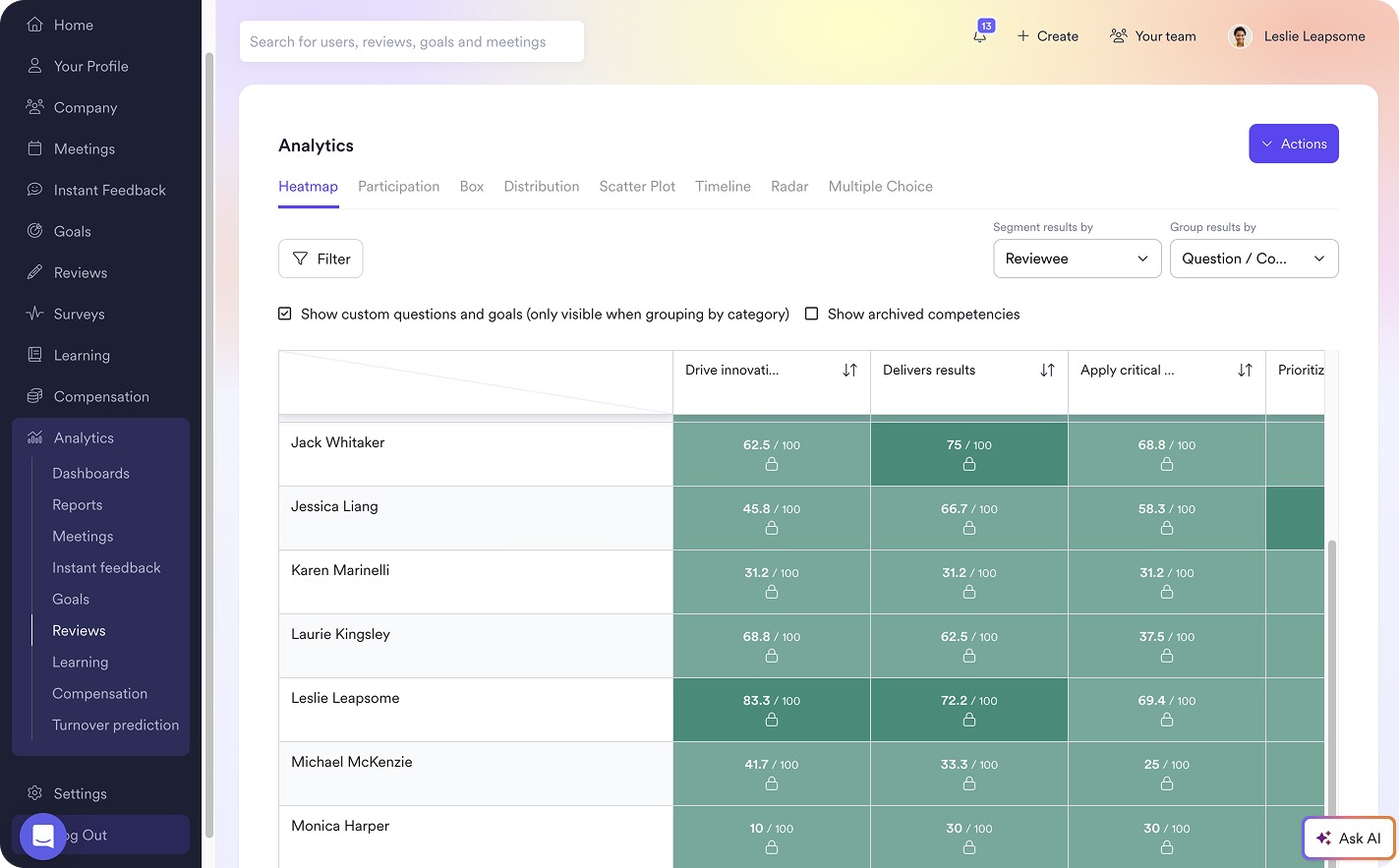
🌱 Build succession plans around demonstrated capability
Leapsome connects Performance Reviews with Learning, so HR can use skill gaps to guide development and succession.
👉 Explore Performance Reviews
How to build a successful cross-training program
Informal job shadowing can show employees how someone else works, but it doesn’t guarantee independent performance. An effective cross-training program requires a defined outcome and enough practice to reach it. You also need a clear way to check progress and adjust the plan.
The following can help you create a successful job cross-training program.
Turn workforce priorities into training objectives
“We segmented our job levels so managers and employees can see exactly what skills they need to move up. Growth isn’t just about giving you a new title or more money — it’s about mastering new competencies that make you more valuable to the business.”
— Janelle Daugherty, Head of People & Culture, Notion Health
Choose a responsibility linked to an important skill gap or essential role. Then define the outcome the employee should reach. “Learn onboarding” is too broad, but “lead a new hire’s first-week orientation using the approved agenda” sets a clear target.
Create structured learning opportunities
“Mentoring and job shadowing — that’s taking time and transferring it. Microlearning where folks come together and focus on one skill… and learning extraction sharing so people aren’t reinventing the wheel.”
— Stephanie Shuler, Chief People Officer at LifeLabs Learning
A one-time knowledge transfer makes it harder for employees to retain and apply new skills. Create ongoing learning opportunities that encourage repeated practice over time. This helps employees build confidence and independence.
Start with guided practice. Once the employee can manage routine tasks, introduce exceptions and ask the current owner to provide focused feedback. Short learning sessions reinforce the process between practical assignments.
Measure outcomes and update training plans
Turn the training objective into clear success criteria. For an employee learning to lead new-hire orientation, success could mean delivering the session without prompts and answering common questions accurately.
Use a short quiz to check their knowledge of the process. Then ask them to complete the task while the current owner records any errors or interventions.
If the employee misses key steps, add focused practice to their training plan. Once they meet the agreed standard, record the skill they developed and move them to a more advanced responsibility.
With a centralized HR platform like Leapsome, you can link each learning path to a competency and track progress in the same place.
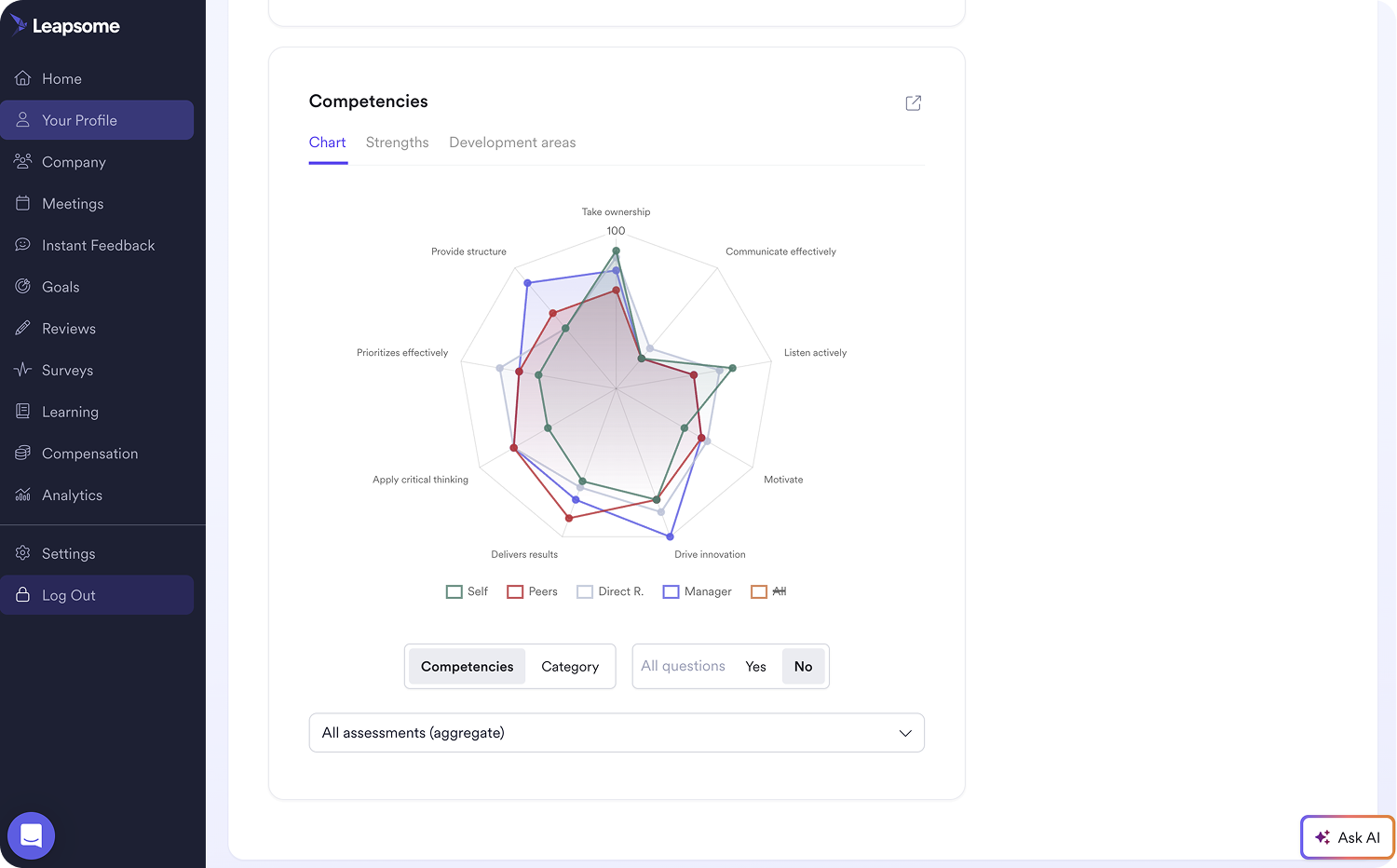
🏋️ Make cross-training part of career growth
Leapsome helps HR build tailored learning paths and monitor progress as employees take on new responsibilities.
👉 Explore Learning Management
Develop a more resilient workforce with Leapsome
When only a few employees know how to do essential tasks, their absence can slow down operations. Additionally, other employees also have fewer opportunities to build skills that prepare them for broader responsibilities. Together, these problems leave the business one resignation away from a preventable crisis.
That’s why you should start cross-training while experienced employees have time to transfer knowledge properly. But even timely cross-training plans are hard to manage when skill data sits apart from learning and performance records. HR needs one view of what each role requires and how employees are developing toward those expectations.
Leapsome’s AI-powered people enablement platform can help HR teams:
- Clarify the skills each role requires: Use Competency Frameworks to define expectations and assess current capabilities.
- Create focused development plans: Link Learning to the competencies employees need for broader responsibilities.
- Follow progress over time: Use Performance Reviews and Feedback to see how employees apply new skills at work.
“Employee engagement, feedback, and good goal-setting processes are the rocks that every company needs as the basis to support their growth.” — Benjamin Böhmer, Director of People & Culture Group | heycar Group
🧗 Create a resilient workforce with strategic cross-training
Leapsome helps HR build stronger coverage for essential work through connected learning and performance data.
👉 Request a demo
FAQ
What are some examples of cross-training in the workplace?
You might cross-train employees to support career advancement. For example, you could teach a customer service rep to process routine refunds. A warehouse worker might take part in job rotation to learn inventory checks, expanding their skill set and giving them problem-solving practice.

.png)


Automate, connect, and simplify all HR processes across the employee lifecycle.