
Unpaid time off policies: Using absence data for strategic insights


The concept of unpaid time off (UTO) is simple, but the process can be messy. Smaller HR teams can often handle occasional unpaid leave requests individually: Approve the request, record the absence, and adjust pay by hand. But scaling teams need a system that connects UTO decisions and corresponding payroll updates to broader people data so absence management isn’t reduced to another compliance checkbox.
That visibility can surface important engagement patterns long before they show up as attrition risks. Gallup’s meta-analysis of 183,806 business units found that the top quarter of engaged teams show 81% lower absenteeism rates than bottom-quartile teams.* So UTO data needs to be part of your wider people strategy for strong engagement and fewer avoidable absences.
In this guide, we’ll explain how unpaid time off works, what a strong UTO policy should include, and how absence data can help you spot issues in your workforce sooner.
* Gallup, 2024
What’s unpaid time off (UTO) and how does it work?
UTO is time away from work that an employer approves but doesn’t pay for. It can span a few hours, a full day, or longer, depending on the reason for the request and the company’s policy. In practice, unpaid leave should move through the same process every time: request, approval, documentation, and payroll update.
UTO differs from paid time off (PTO) for an obvious reason: the employee doesn’t receive any compensation while absent. But PTO also reduces an employee’s paid leave balance while UTO reduces pay, unless a specific law or company policy says otherwise.
Hourly employees usually have unpaid time deducted based on the hours they missed. For salaried employees, deductions often only apply to full-day absences, depending on exemption status and local laws.
Employees may request UTO for several reasons, including:
- Exhausting accrued PTO during extended personal, medical, or family leave
- Caregiving responsibilities and bereavement extensions
- Personal development and sabbatical-style time away
What to include in an unpaid time off policy
“If you’re asked ‘what is the process’ and you find yourself thinking, ‘Oh, I have to write it down,’ those are the kind of signals we should use to make standard operating processes.”
— Sammie Masley, People and Talent Partner at Leapsome
A standalone UTO policy isn’t always legally required, but it’s the cleanest way to manage requests consistently. Without clear rules, HR ends up deciding who gets approved on a case by case basis, which can make payroll confusing and approvals uneven between employees.
A strong UTO policy should define the following:
- Eligibility criteria: Who can request unpaid leave, when they can request it, and whether they must use available PTO first.
- Request and approval process: How employees submit requests (including how much notice they should give) and who makes the final decision.
- Job protection and return conditions: What happens to the role while the employee is on UTO and what they need to do before returning to work.
Unpaid time off laws and regulations
In the United States, some unpaid leave requests become legal obligations when they fall under the following acts:
- Family and Medical Leave Act (FMLA): Eligible employees may take unpaid, job-protected leave for qualifying family and medical reasons for up to 12 weeks. Employers need to maintain the employee’s health benefits during FMLA leave. Private businesses with 50 or more employees have to offer FMLA leave to employees who’ve worked with the company for at least one year.
- Americans with Disabilities Act (ADA): Unpaid leave may be a reasonable accommodation for an employee with a disability, depending on the circumstances.
- Uniformed Services Employment and Reemployment Rights Act (USERRA): Employees who leave work for qualifying military service may have job protection and reemployment rights if they are gone for less than five years.
There are also edge cases worth reviewing before you finalize the policy, like exempt employee salary deductions and furloughs. State leave laws and local protections also vary.
“Stop treating listening like a one-off. Create a reliable cadence that blends sentiment and demographics, so leaders get clarity on where to focus and managers can act with confidence.”
— Craig Forman, Founder and Principal Consultant at CultureC Consulting
Instead of relying on vague policy language, HR teams can use a platform like Leapsome to configure leave rules by employee group and keep each approval tied to a clear audit trail.
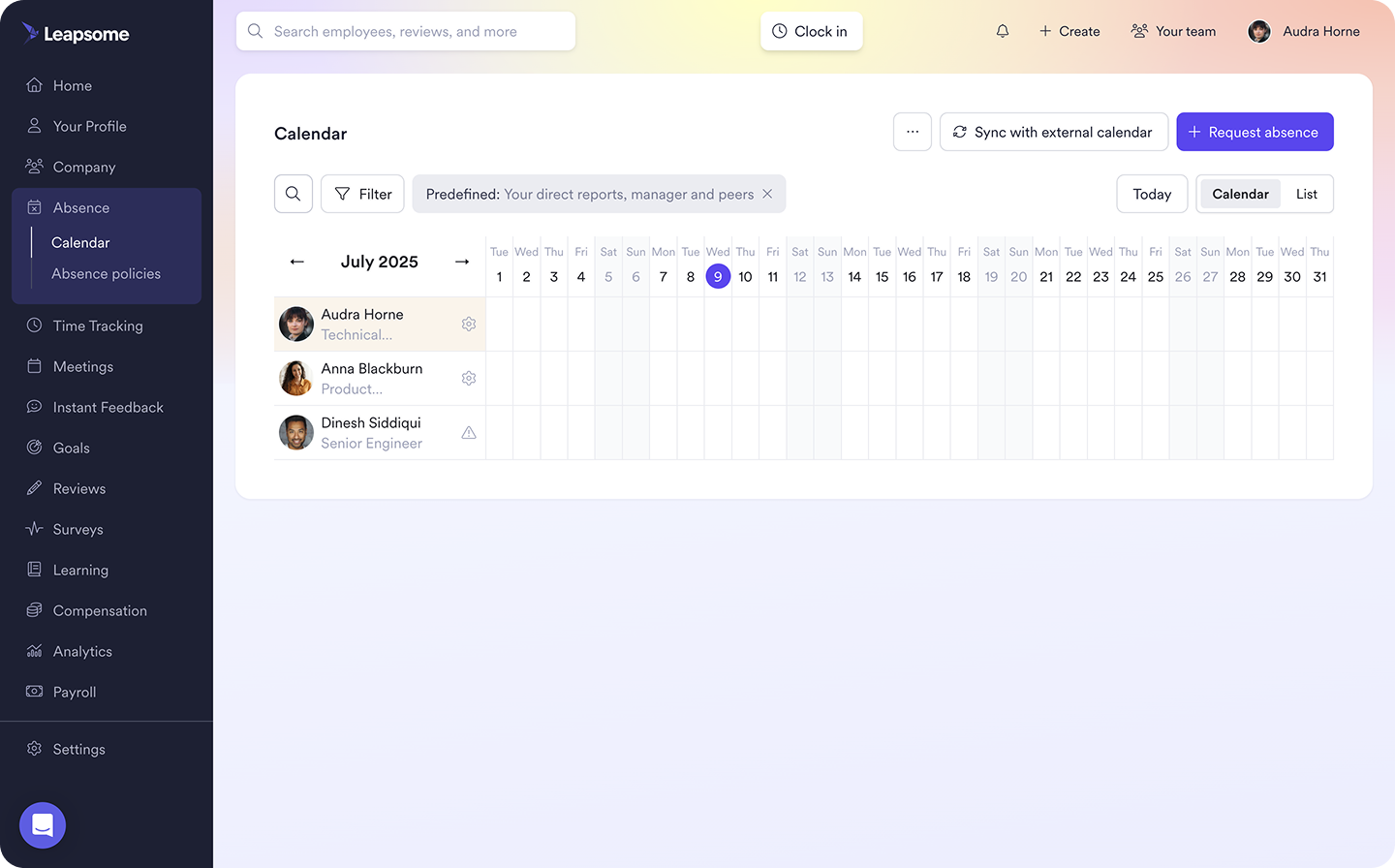
🗓️ Replace leave guesswork with clarity
Leapsome connects requests, approvals, and balances for every employee, so HR can manage UTO without chasing updates across tools.
👉 Explore Absence Management
Upsides and downsides of offering unpaid time off
Unpaid time off can be useful for employers, but it comes with real trade-offs.
The main advantages include:
- Lower payroll costs: UTO means employers only have to pay for work actively being completed, or PTO that’s already accounted for.
- Improved retention: A study from Florida Atlantic University found that providing 11 or more days of PTO reduces voluntary resignations by up to 35%. When employees need more time away than a PTO policy allows, UTO gives the company another way to offer flexibility and boost retention.
The trade-offs are just as important:
- Coverage pressure increases on the rest of the team: When managers approve UTO without first checking existing team absences and availability, remaining employees often have to overwork to cover the gap.
- Payroll gets complicated: If HR doesn’t track unpaid absences in a centralized system like Leapsome, finance may need to fix deductions manually after payroll data has already been sent off for processing. That creates more opportunities for incorrect pay, and compliance risk increases.
“Good data helps us identify pain points early, plan development initiatives, and return to the business with clear, actionable insights.”
— Victor Tomas, Learning and Development Specialist at Swapfiets
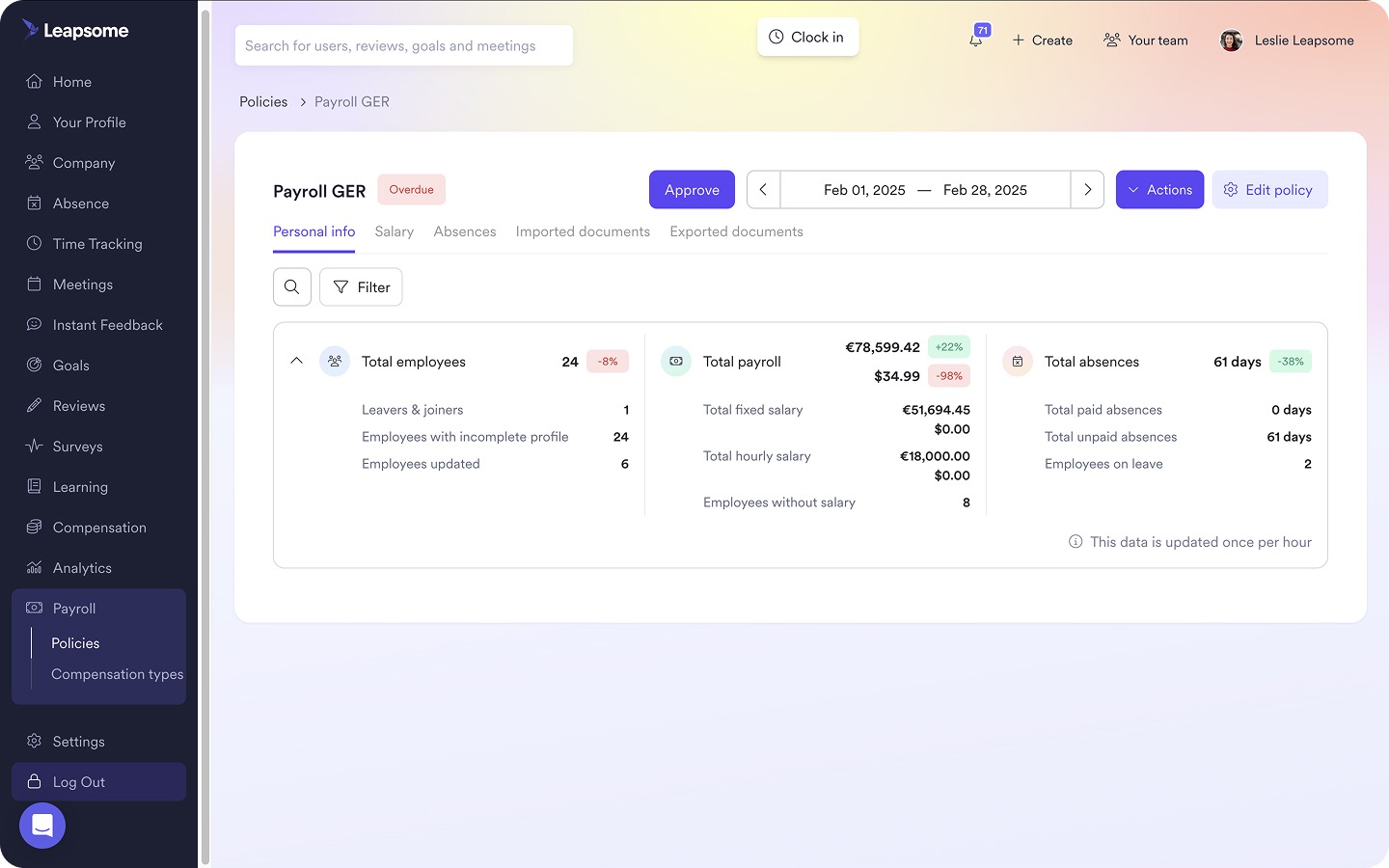
🧾 Keep UTO deductions payroll-ready
Connect absence data to the rest of your payroll information, so HR and finance can handle UTO without last-minute back-and-forth or manual clean-up.
👉 Explore Payroll Prep
Tips to manage unpaid time off effectively
“Dashboards remove the detective work. If a leader has a gut feeling about absence spikes, they can verify it in seconds and act. Real-time beats month-old exports every single time.”
— Florian Klages, Managing Partner at torq.partners
Connected tools transform a UTO policy from documentation into a working process. HR can apply the same rules more consistently, and managers can see when unpaid leave points to a bigger behavioral pattern.
Here are a few tips to help you manage UTO effectively:
- Centralize requests and approvals: When every request exists in one system, HR teams can apply the policy evenly and connect the dots between individual decisions and wider absence patterns.
- Check coverage before approving leave: UTO should support employees without creating overload for everyone else on the team. A central system makes it easier for managers to see who’s already going to be out so they can keep workloads balanced.
- Document every decision: Record requests and approvals with timestamps so HR can defend decisions, support audits, and spot patterns of inconsistency before they become bigger issues.
What unpaid time off can tell you about your workforce
“Frequent or prolonged absences can be a real indicator of disengagement… Reporting to leadership helps spot patterns early and address them.”
— Sophie O'Donoghue, Customer Success Coach at Leapsome
Most HR teams view unpaid time off requests as individual decisions. A simple loop of ‘approve, adjust payroll, and move on’ keeps the ball rolling, but misses an opportunity to connect absences to workforce health at large.
A single unpaid leave request may not say much. But several requests from the same team or role can reveal where employees feel stretched, where expectations are unclear, and where engagement is starting to slip.
Here are a few UTO patterns that deserve a closer look:
- Informal requests arrive before formal ones: Requests that come in Slack messages or emails often signal that the UTO policy is unclear or that employees don’t feel safe starting with the official process. HR can make the process more accessible by keeping leave request steps and balances in one place, so employees don’t have to guess where boundaries sit.
- Requests cluster around specific managers, not teams: Considering Gallup has found that managers account for 70% of the variance in team engagement, this absence pattern deserves attention before it affects the bigger picture. HR can use a quick pulse survey or manager check-in to understand whether the issue sits with workload, communication, trust, or even how the manager applies the UTO policy.
- UTO requests come in when PTO is still available: SHRM reported that 48% of workers didn’t expect to use all their vacation time by year-end in 2024, with heavy workloads and manager pressure among the top barriers to taking time off. If employees request UTO when they still have PTO, HR teams should schedule a one-on-one meeting to understand their decision. If they feel discouraged from taking paid leave, follow up with their manager and watch for signs of burnout. If they don’t feel like they have enough PTO to make it through everything they need that year, evaluate your current PTO policy to see if it’s time for a benefits upgrade.
Manage unpaid time off with clarity and confidence using Leapsome
If one manager approves unpaid absences in Slack while another waits for HR, then finance adjusts payroll manually, no one can tell whether absence patterns signal a bigger people issue.
Without clear visibility, a new UTO policy won’t fix much. That’s why Leapsome brings absence management, payroll prep, employee records, and engagement data into one connected HRIS, so HR teams can:
- Apply UTO rules consistently across teams
- Connect approved absences to payroll updates
- See absence patterns alongside broader people data
Leapsome helps growing organizations move from reactive, ad hoc leave management to a structured process that protects compliance. Payroll prep becomes easier to manage, and HR teams have all the insights they need to catch signs of employee strain long before attrition rates rise.
“Employees can now find everything in one place — their data, absences, goals, and reviews. I don’t have to explain which tool to use for what. It’s all in Leapsome.” — Merilyn L., Senior People Operations Specialist at Bob W.
🛣️ Streamline UTO and learn from absence patterns
Leapsome’s all-in-one HRIS and people management platform connects leave and engagement data, so HR can turn absence trends into better workforce decisions.
👉 Request a demo
FAQ
Can an employer deny unpaid time off?
Yes, an employer can deny unpaid time off if the request isn’t protected by law or covered by company policy. But if the leave falls under FMLA, ADA, USERRA, or regionally specific protection, the employer may need to approve it or follow a required review process.




_under_300kb.jpg)