A guide to tenured employees: How to support their long-term success


A tenured employee is a team member who’s worked at the same organization for several years, often five or more. Despite the many people strategies designed to strengthen long-term commitment, these team members are becoming sadly rare.
In 2024, the median worker had been with their employer for just 3.9 years, according to the U.S. Bureau of Labor Statistics.* That’s the lowest figure recorded since 2002. This decline has pushed many HR teams into retention mode, particularly when departures can take valuable institutional knowledge with them.
But if HR only aims for high loyalty scores, it’s easy to retain people without questioning whether they’re still developing or contributing at their full potential. That’s why, in this article, we’ll explore how HR can turn long service into continued growth and business impact.
* BLS, 2024
What’s a tenured employee?
A tenured employee has worked for the same company over an extended period. That may sound vague, and it is, since there’s no universal threshold. Many employers use five years as an informal benchmark, but what tenure means for a specific job depends on the organization’s size and typical workforce patterns.
Job tenure simply measures length of service; it doesn’t guarantee continued employment status or provide the legal protections associated with academic tenure. The term is generally only applied to permanent team members, but it can be used across a wide variety of role classifications.
For employers, tenure indicates how well the organization retains experience. For employees, it may reflect stronger relationships and deeper knowledge of the business. However, the number of years alone can’t reveal whether the employee remains engaged or is prepared for future responsibilities.
What are the benefits of employee tenure?
Long tenure can create significant value when employees continue to learn and share what they know. Here are a few of the most important benefits:
- Stronger institutional knowledge: Experienced employees understand why processes were developed and how past decisions affect current work. This context helps teams move forward while avoiding repeat mistakes.
- Higher productivity and trust: Tenured employees usually require less support, and colleagues know they can rely on these team members’ judgment and experience.
- Lower replacement costs: SHRM reports that employers spend an average of about $4,700 to hire a new employee, or $28,000 for an executive hire. Retaining existing talent reduces this expense and preserves role-specific knowledge.
Leapsome’s HRIS and people management platform helps HR assess tenure alongside role history and broader workforce data. That way, leaders can make informed hiring decisions and see where retention creates the most value.
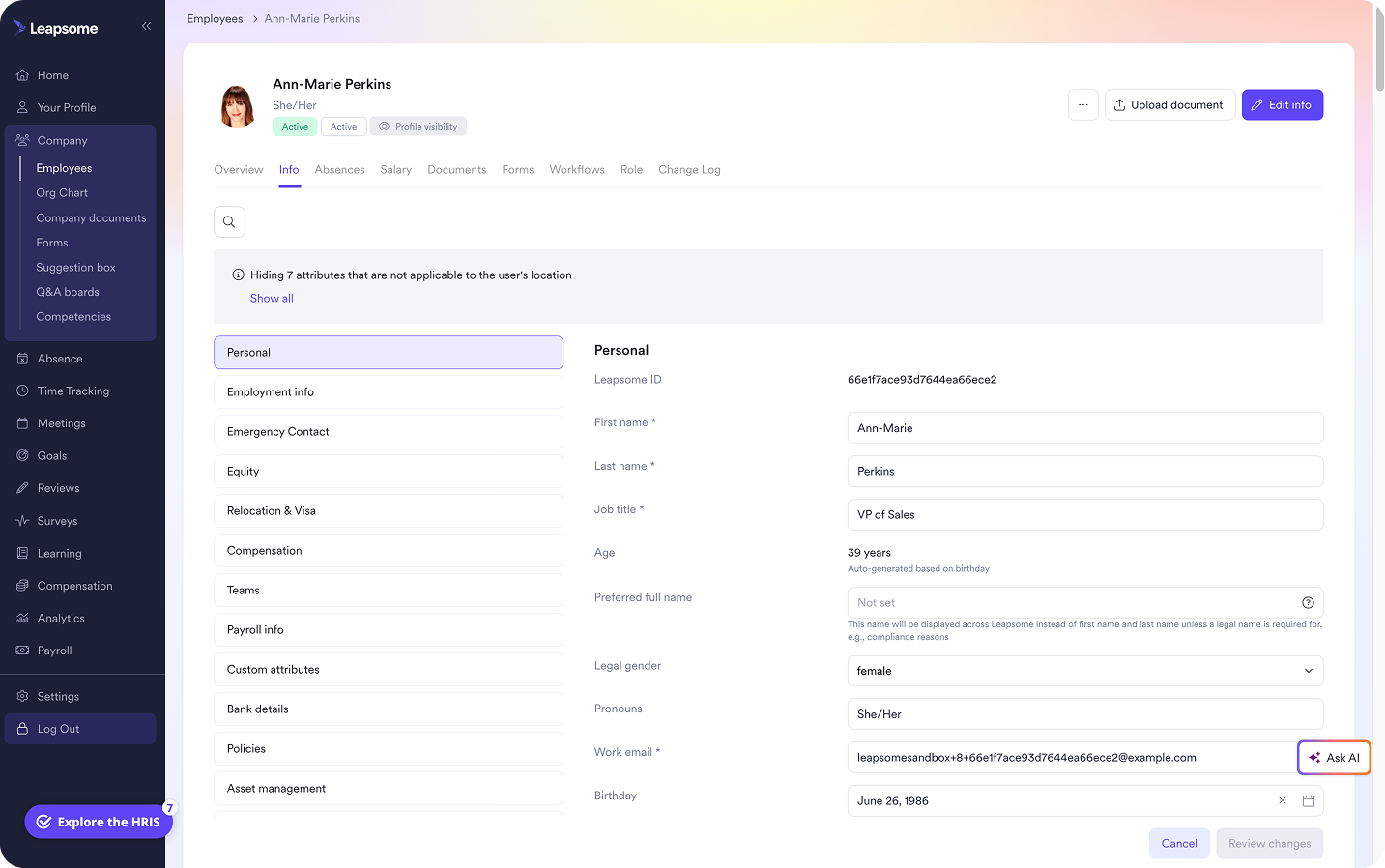
🕵️ See the workforce data behind every tenure number
Leapsome connects tenure history with other employee data, helping HR identify workforce trends and plan with better context.
👉 Learn about Employee Records
Common types of job tenure
HR teams usually use broad categories to spot workforce patterns and tailor development for each stage of the employee lifecycle. Here’s what those groups look like:
- Short tenure: Employees in their first two years are often building role knowledge and deciding whether the organization meets their career goals. A high concentration in this group may signal rapid growth or high turnover.
- Medium tenure: Employees with roughly two to five years of service understand the business and may be ready for broader responsibilities. Without a visible next step, however, they might start looking elsewhere to find better opportunities.
- Long tenure: Employees who stay for five years or more often hold valuable institutional knowledge, and they have a deeper understanding of company culture. HR should make sure they keep developing new skills and translating their experience into meaningful contributions.
"Employees who keep learning will outrun automation. The organizations that invest in skill growth will retain that talent and thrive."
– Jonathan Passmore, Senior VP and Professor of Coaching and Behavioral Change at EZRA
Why long employee tenure can become a risk, and how to manage the challenges
Long-term employees can strengthen your organization through hard-earned business context. However, that advantage quickly loses value when employees stop developing or engaging with their work.
Tenure is an outcome, not a people strategy. If HR celebrates years of service without examining what happened during that time, stability can disguise stalled careers.
One employee may know the business inside out, but rely on skills that no longer support business goals and OKRs. Another might perform well in their current role while seeing no realistic path forward. And if managers assume experienced employees need less attention, career conversations and 1:1s become less frequent, while valued employees begin to disengage without anyone noticing.
"Disengaged employees who stay quietly can drain a company faster than those who leave. Engagement isn't about who stays; it's about who contributes with energy and ownership."
– Emma Leeds, Founder, CEO, and Chief People Consultant at People Function
Gallup found that 52% of employees are watching for or actively seeking new jobs. This finding shows why HR can’t assume long-time team members will stick around simply because they’ve stayed before. Their current experience still shapes what they do next.
To judge whether tenure remains healthy, you’ll need to review engagement trends alongside goal progress. Also, learning activity shows whether experienced employees are building the capabilities they’ll need down the road. A lack of movement doesn’t prove disengagement, but it should prompt a career conversation rather than another service award.
"Commit to development versus growth. Creep, not leap. Invest constantly and develop people on their strengths so they can perform better."
– Steve Browne, Chief People Officer at LaRosa's, Inc.
HR can prevent long tenure from turning into stagnation by incorporating development into the ongoing employee experience. To do that, you can:
- Make different forms of progression visible: Not every employee wants to become a manager. Your career frameworks should show how people can develop their expertise or move laterally into more valuable roles.
- Keep performance conversations challenging: Managers should use 1:1s to discuss what tenured employees want to achieve next. Specific feedback and relevant goals prevent strong performance from becoming the only expectation.
- Turn internal mobility into a retention strategy: Long-serving employees may have outgrown their roles, rather than the organization itself. Internal opportunities for advancement provide new challenges, while keeping valuable business knowledge intact.
- Build skills around future business needs: Annual refreshers on skills team members already use leave emerging gaps untouched. Instead, map employee development to the capabilities the organization will need next, then give experienced team members relevant learning opportunities.
"We segmented our job levels, so managers and employees can see exactly what skills they need to move up. Growth isn't just about giving you a new title or more money — it's about mastering new competencies that make you more valuable to the business."
– Janelle Daugherty, Head of People and Culture at Notion Health
It’s easier to keep up with development programs when they’re highly visible and connected with daily workflows. With Leapsome, you can build ongoing learning right into your HR operations.
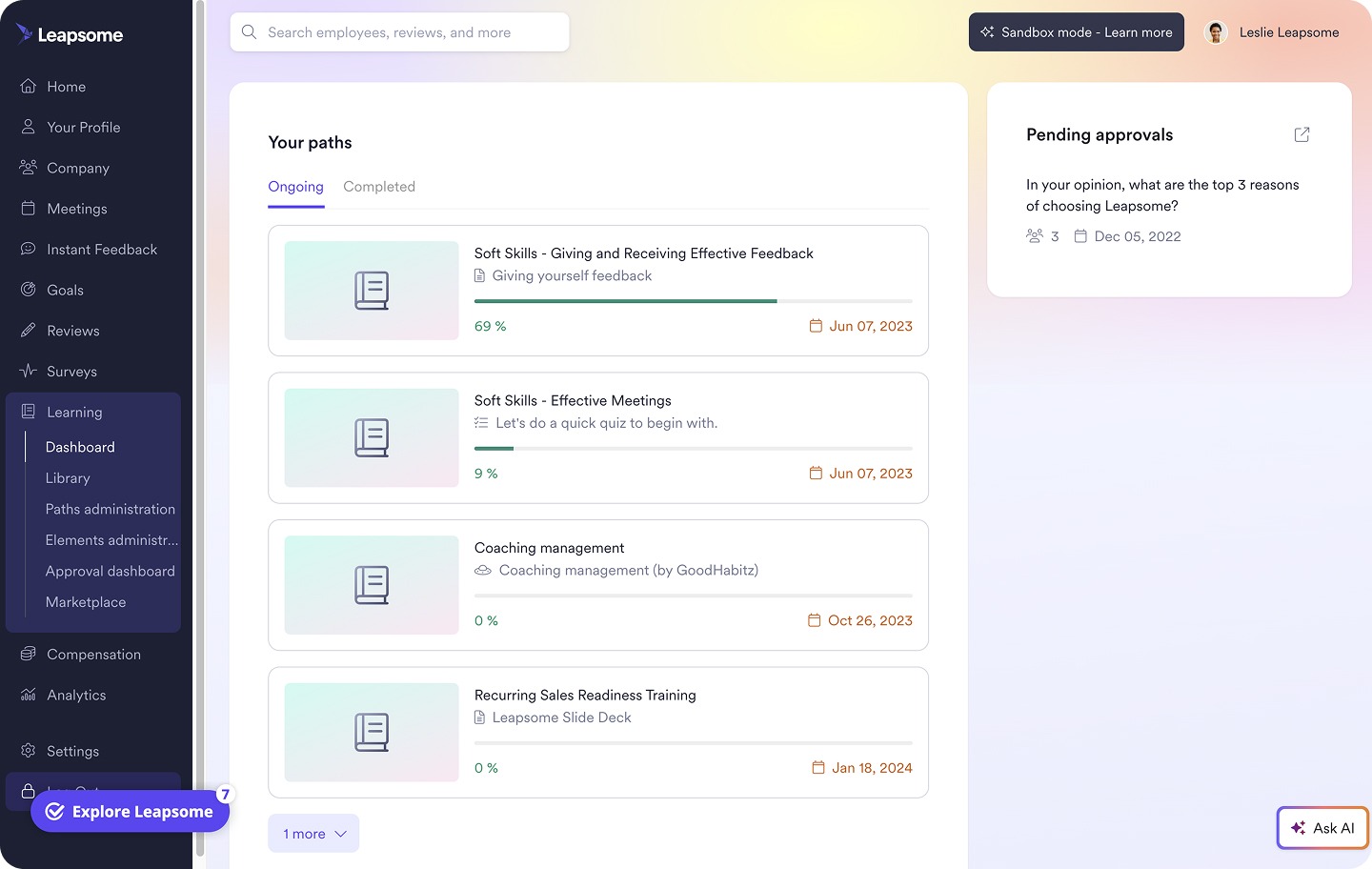
🌱 Make long tenure a period of continued growth
Leapsome helps HR create personalized learning paths that close skill gaps, and prepare experienced employees for future roles.
👉 Explore Learning Management System
How Leapsome helps organizations nurture tenured employees
Years of service are easy to track; whether those years translate into growth and business value is harder to see. When tenure data sits apart from engagement and performance insights, you may notice a long-serving employee’s disengagement only when you conduct the exit interview.
Leapsome brings HRIS and people enablement tools into one connected system. This gives you the context needed to identify disengagement early and make strong succession decisions. With Leapsome, your HR team can:
- Use centralized, real-time records to understand each team member's role history, productivity, and career progression.
- Leverage engagement surveys to spot changes in how long-serving employees feel about their work.
- Combine performance reviews with goals and OKRs to assess current contributions.
- Turn career priorities discussed during 1:1s into focused development plans.
- Plan learning programs to close skill gaps and prepare employees for internal opportunities.
"Because of the launch of the new performance management system, we redefined a lot of things, including how we wanted feedback to be given. Leapsome is the tool that made this possible." – Verena Hotter, Head of HRM at Tado
🧗 Keep tenured employees moving forward
Leapsome connects tenure data with development and performance insights, so you can translate long service into real value.
👉 Request a demo
FAQ
What’s the average tenure at a job?
In January 2024, the median U.S. wage and salary worker had been with their current employer for 3.9 years. Tenure varies considerably based on age and sector, so HR teams should compare their own workforce data with relevant industry benchmarks.
Is a tenured employee the same as an academic tenured employee?
No, in most workplaces “tenured employee” simply means someone who has worked at the organization for several years (often five or more). Academic tenure is a formal status that gives eligible faculty members specific employment protections. Long service outside academia doesn’t usually provide the same protections or guarantee job security.

.png)